




More Than Just a Landing
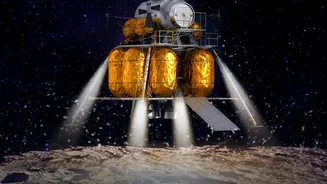
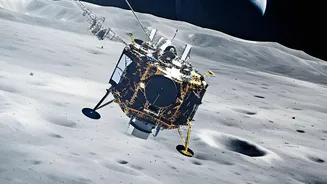
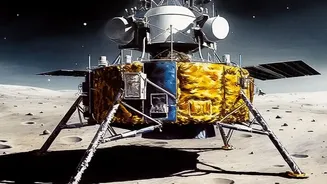
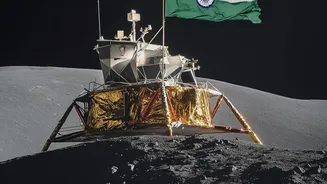
Successfully landing a spacecraft on the Moon is an immense achievement, but a sample return mission is an entirely different order of complexity. It requires not just a one-way trip, but a round trip involving multiple complex stages. First, a lander
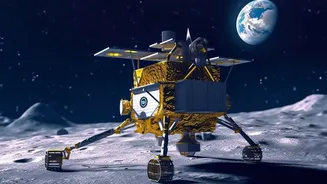
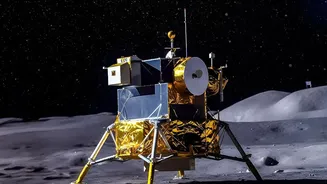
must touch down safely. Then, it must collect soil and rock samples. The most critical part comes next: launching a smaller vehicle, an ascender, off the lunar surface to carry the precious cargo back into lunar orbit. This has never been attempted by ISRO before. This sequence alone—landing, collecting, and launching from another celestial body—represents a huge technological hurdle that only a handful of nations have ever cleared.
An Intricate Dance in Lunar Orbit
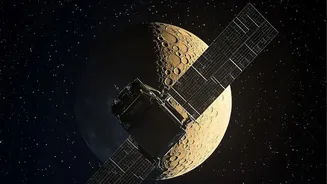
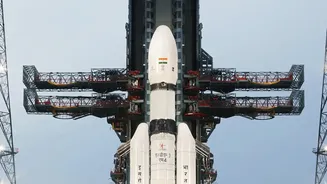
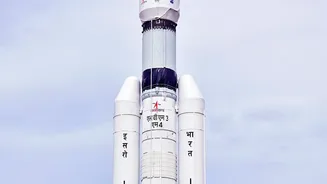
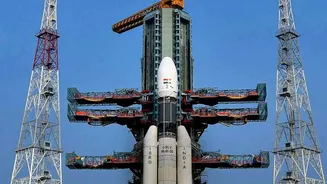
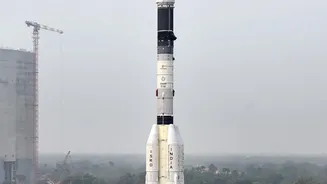
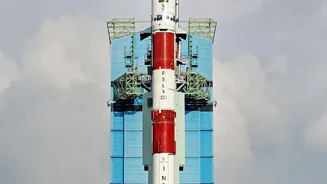
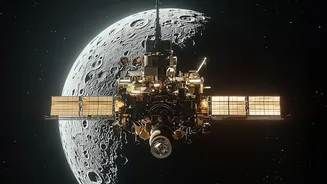
The ambition of Chandrayaan-4 is perhaps best captured by its intricate, multi-part architecture. The mission is expected to involve at least five separate modules and require two separate rocket launches from Earth. After the ascender module blasts off from the Moon, it must perform a delicate and fully autonomous rendezvous and docking procedure with a transfer module waiting in lunar orbit. This is a feat ISRO has been developing technology for but has not yet performed in deep space. The sample container must then be robotically transferred to a re-entry capsule, which will then journey back and endure a fiery plunge through Earth’s atmosphere to deliver its cargo safely. Every step must be executed with flawless precision.
The Challenge of the South Pole
While past sample return missions by other countries targeted the more accessible equatorial regions, ISRO is aiming for the Moon's formidable south pole. This region is a land of extremes. It's characterized by long, dark shadows that can obscure the terrain, making navigation for a safe landing treacherous. Temperatures in the permanently shadowed craters, which haven't seen sunlight in billions of years, can plummet to as low as -203°C. These extreme cold temperatures are necessary to preserve the water ice that makes the region so scientifically valuable, but they also pose immense challenges for the hardware and robotic systems designed to operate there. Landing, collecting samples, and then launching from this rugged, dark, and freezing environment is a far more difficult task than doing so from the sunlit, relatively flat plains of the lunar equator.
The Scientific Holy Grail: Lunar Water Ice
The reason for targeting this difficult region is the immense scientific prize it holds: water ice. Scientists believe these ancient ice deposits could be a time capsule, holding clues about the history of our solar system and the origins of Earth's oceans. Studying these samples on Earth with advanced laboratory equipment could unlock secrets that remote analysis can't reveal. Furthermore, this water is seen as a critical resource for the future of space exploration. It could potentially be used to provide drinking water for astronauts, be broken down into oxygen for breathing, and even be converted into rocket fuel for future missions to Mars and beyond. Bringing back the first pristine samples of south pole ice and soil would be a monumental scientific achievement for India and the world.
Building Blocks for a Bolder Future
Chandrayaan-4 is not just a standalone mission; it's a crucial stepping stone in ISRO’s long-term vision. Mastering technologies like autonomous docking, sample transfer, and re-entry from deep space are essential for future, even more complex endeavours. These capabilities are foundational for developing a sustainable human presence in space, including the Gaganyaan human spaceflight program and the planned Bharatiya Antariksh Station (Indian Space Station). By successfully completing a sample return, ISRO will not only join an elite club of space agencies but also validate the critical technologies needed to send Indian astronauts to the Moon by 2040 and establish India as a major power in deep space exploration.