




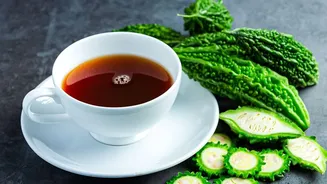
The Bitter Truth of Our Taste Buds
Our perception of taste is deeply rooted in genetics. For decades, scientists have known that people can be broadly categorized based on their sensitivity to a bitter chemical called 6-n-propylthiouracil, or PROP. This leads to three main groups: "non-tasters,"
"tasters," and "supertasters." Non-tasters, as the name implies, are largely insensitive to many bitter compounds. For them, foods like Brussels sprouts or kale might taste relatively mild or even sweet. Supertasters, on the other hand, live in a "neon" world of flavour where bitterness is intensely amplified. What might be pleasantly sharp to an average taster can be overwhelmingly unpleasant for a supertaster. This isn't just about willpower; it's about having a higher density of taste buds (fungiform papillae) on the tongue. This biological trait has long been suspected of influencing food choices, with studies suggesting that supertasters often avoid bitter, healthy vegetables.
Inside the 9,000-Person Diet Analysis
To move beyond individual foods and look at the whole picture, researchers undertook a large-scale analysis of Australian adults. The study examined the dietary records of 9,118 people from the 2011-12 National Health and Physical Activity Survey. Instead of just asking people if they liked bitter foods, researchers calculated a "bitter score" for each person's entire diet based on 24-hour dietary recalls. This score was determined by combining the known bitterness of every food and beverage consumed with the quantity eaten. This novel approach allowed them to rank diets from least to most bitter on a broad scale and then analyze what those differences meant for overall nutrition and diet quality. The diets were then divided into three groups—least bitter, moderately bitter, and most bitter—for a detailed comparison.
A Surprising Link to Diet Quality
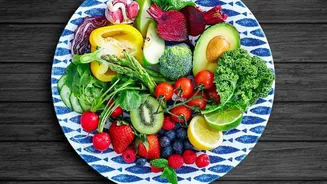
The findings were compelling. The group consuming the "most bitter" diets had a diet quality score that was noticeably higher than those eating the "least bitter" diets. People with more bitter-tasting diets weren't just eating more kale; they were consuming significantly more of the things we're all encouraged to eat: more vegetables, more fruit, more whole grains, and more water. Their diets were also higher in dietary fibre. Conversely, those with the least bitter diets tended to eat more refined cereals and less of the good stuff. This flips a common assumption on its head. While supertasters might avoid specific bitter foods, a diet that embraces bitterness as a whole seems to correlate with healthier choices overall, including a greater intake of beneficial plant compounds.
No Guarantees, Just Greater Awareness
It's crucial to understand the headline's important caveat: this method comes "without health guarantees." The study found a correlation, not a direct cause of good or bad health. For instance, the most bitter diets were also slightly higher in total fat. Furthermore, your genetic status as a non-taster or supertaster doesn't lock you into a specific dietary destiny. Research on the topic is complex, with some studies showing non-tasters may have a higher preference for high-fat foods, while others find no significant link to body weight. What this study provides is a new lens for self-assessment. Rather than getting bogged down in counting every calorie or micronutrient, considering the overall bitterness of your plate could be a simpler, more intuitive indicator of quality. If your diet is consistently bland, sweet, and salty, it might be a sign that you're missing out on the nutrient-dense, bitter foods—like dark greens, tea, and certain fruits—that are associated with better health outcomes.