



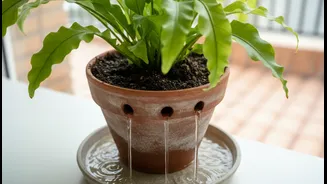


Start with Smarter Pots
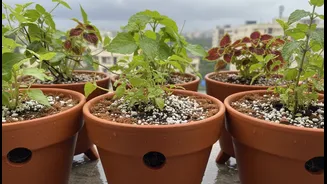
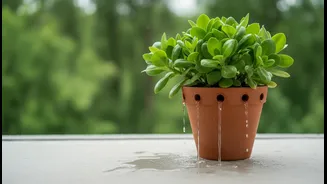
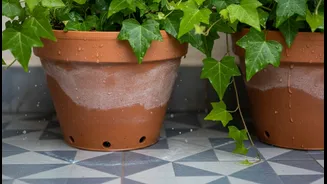
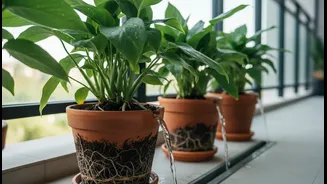
The first line of defence against waterlogging is the pot itself. Ensure every container has at least one, preferably multiple, drainage holes at the bottom. Without these, a pot is just a bucket, and a plant in a bucket during heavy rain is a recipe
for root rot. Terracotta or clay pots are porous and allow for better evaporation, but any pot can work if the drainage is clear. Before planting, you can add a layer of fine mesh over the holes to prevent soil from blocking them without hindering water flow.
Elevate Your Plants
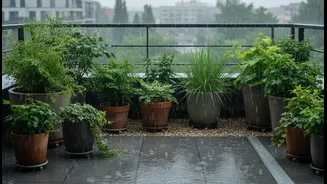
One of the most effective ways to combat standing water is to lift your pots off the floor. Even a small gap of a few centimetres can dramatically improve drainage and airflow, preventing the base of the pot from sitting in a puddle. You can buy specialised pot feet, but simple solutions like bricks, flat stones, or leftover tiles work just as well. For a creative, low-cost option, use plastic bottle caps or old wine corks to raise your planters. This simple step ensures drainage holes are not blocked and water can escape freely after a downpour.
Perfect Your Potting Mix
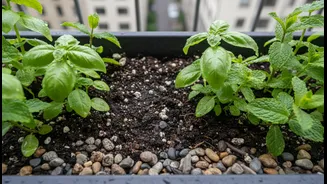
The soil you use plays a crucial role in water management. Heavy, dense garden soil can become compacted and waterlogged quickly. Instead, opt for a well-aerating potting mix. A good combination is garden soil, compost, and a material that improves drainage, like cocopeat, sand or perlite. Perlite, which looks like small white balls of thermocol, creates air pockets in the soil, allowing excess water to drain through while retaining enough moisture for the plant. Amending your soil this way makes it much harder for water to saturate the roots.
The Saucer Strategy
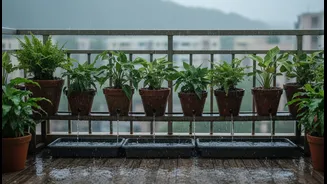
Pot saucers are useful for catching drips indoors, but they can be a major problem on a balcony during the monsoon. They collect rainwater, leaving your plants sitting in a stagnant pool, which is a direct cause of root rot. Furthermore, any standing water can become a breeding ground for mosquitoes, including those that carry dengue, in less than a week. The best practice during the rainy season is to remove saucers altogether. If you must use them, make it a strict habit to empty them within a few hours of every rainfall.
Strategic Placement and Grouping
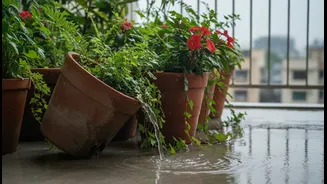
Think about where you place your pots. If possible, move more sensitive plants to a spot under an eave or some cover during the heaviest downpours. Grouping plants together can create a humid microclimate that many plants enjoy, but ensure there is still enough space between them for air to circulate. Good airflow helps foliage and soil dry out faster, reducing the risk of fungal diseases that thrive in damp conditions. You can also slightly tilt pots to help excess surface water run off.
Dealing with Puddles
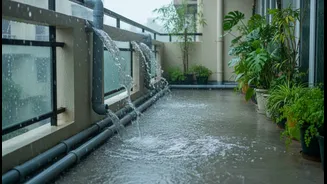
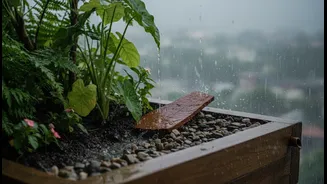
Even with the best preparation, a particularly intense spell of rain might leave puddles on your balcony floor. Don't let this water sit. If your balcony has a floor drain, ensure it is clear of leaves and debris. If water still pools, use a broom or squeegee to push it towards the drain or off the edge. For larger balconies, you can create temporary channels with a trowel or stick to guide water away from plant bases and towards a drainage point. This prevents pots from being surrounded by a moat of stagnant water.