



Kanyakumari: Where Three Seas Converge
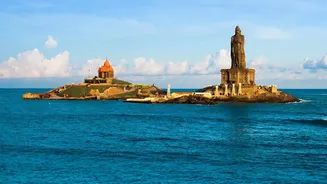
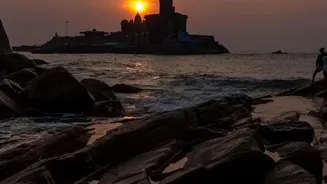
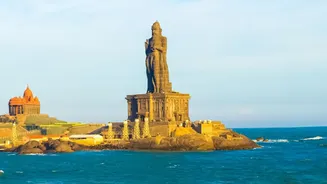
There is no better place to start than at the subcontinent's southernmost tip. Kanyakumari offers a unique geographical spectacle where the Bay of Bengal, the Arabian Sea, and the Indian Ocean meet. This confluence creates an unparalleled panoramic sea
view. It is one of the few places in India where you can watch the sunrise and sunset over the ocean from roughly the same spot. For the most expansive, unobstructed views, head to the Vivekananda Rock Memorial, a short ferry ride from the shore. From this vantage point, the horizon seems to stretch into infinity, offering a truly humbling perspective of nature's scale. The beach itself can be crowded with pilgrims, but the view remains undeniably powerful.
Dhanushkodi: The Ethereal Ghost Town
For a view that is both haunting and beautiful, Dhanushkodi is unmatched. Located at the southeastern tip of Pamban Island, this is a narrow strip of land with the Bay of Bengal on one side and the Indian Ocean on the other. The drive to the end point, Arichal Munai, is a highlight in itself, with the sea flanking both sides of the road. The area was devastated by a cyclone in 1964, leaving behind ruins of a church, railway station, and homes that stand as silent witnesses against the vast blue expanse. The feeling here is one of being at the end of the world, with nothing but wind, sand, and the endless sea. It’s a place for quiet reflection, where the open water serves as a backdrop to a profound story of nature's power. Swimming is strictly prohibited due to strong currents.
Mahabalipuram: History Meets the Horizon
While famous for its UNESCO World Heritage monuments, Mahabalipuram's shoreline offers a distinct kind of open sea view where history frames the vista. The iconic Shore Temple, built in the 8th century, stands majestically overlooking the Bay of Bengal. This is one of the oldest structural stone temples in South India, and its location was chosen so the first rays of the sun would illuminate the main deity. Standing on the beach, you see a masterpiece of Pallava architecture silhouetted against the morning sky and the wide-open sea. The combination of ancient stone carvings and the rhythmic crash of waves creates a powerful atmosphere that connects the present to a distant, maritime past.
Tranquebar: A Touch of Danish Calm
Known locally as Tharangambadi, meaning 'land of the singing waves', Tranquebar offers a quieter, more serene coastal experience. This former Danish colony on the Coromandel Coast is less crowded than many other beaches in Tamil Nadu, making it ideal for those seeking solitude. The 17th-century Dansborg Fort stands guard over the shore, offering elevated views of the tranquil Bay of Bengal. The beach is a long, golden stretch perfect for leisurely walks, especially during sunset. The open sea view here is one of peacefulness, where you can watch fishing boats bob on the gentle waves and enjoy a sense of historical quietude far from the tourist rush.
Covelong (Kovalam): The Surfer’s Stretch
Not to be confused with its namesake in Kerala, Kovalam near Chennai, often called Covelong, presents a more active and dynamic sea view. Once a historic port, it has transformed into a premier surfing destination on India's east coast. The beach has a gentle cove perfect for beginners, while further out, point breaks attract experienced surfers. This creates a lively seascape dotted with people riding the waves. Several surf schools operate right on the beach, and the area hosts the annual Covelong Point surf festival. The view here is one of energy and recreation, a community built around the love for the open water, all under the watchful eye of trained lifeguards on this Blue Flag certified beach.