







The Corporate Ache
Long hours spent in front of a screen have become a hallmark of modern corporate life. This sedentary routine takes a significant toll. Prolonged sitting can lead to tight muscles, particularly in the neck, shoulders, and lower back, causing stiffness
and pain. This physical discomfort is often compounded by mental fatigue. Staring at a screen for hours reduces blood flow, not just to your muscles but to your brain, leading to decreased focus, lower energy levels, and a drop in productivity. Experts note that this sedentary lifestyle increases the risk of various health issues beyond simple aches, including musculoskeletal disorders. It’s a cycle where physical inactivity breeds mental and physical exhaustion, making the workday feel even longer and more draining.
Why Stretching is Your Secret Weapon
A ten-minute stretch break is more than just a way to relieve stiff muscles; it's a powerful tool for holistic well-being. Physiologically, stretching increases blood flow and oxygen to your muscles and brain. This boost in circulation helps reduce muscle tension, alleviate pain, and deliver the nutrients your brain needs for better concentration and cognitive function. Mentally, stepping away from your work to stretch acts as a mindful break. It helps lower levels of cortisol, the stress hormone, promoting a sense of calm and clarity. Studies have shown that even brief physical activity breaks can significantly improve attention, mood, and overall job satisfaction, making you feel more energised and resilient.
Your 10-Minute Desk Reset
Consistency is key to reaping the benefits. Experts suggest taking short stretch breaks every hour or so for maximum effect. The following routine is designed to be performed at or near your desk and targets the areas most affected by prolonged sitting. Remember to breathe deeply and never push a stretch to the point of pain.
Neck Tilts and Rolls
Staring at a monitor can create significant tension in your neck. To release it, sit up tall and gently tilt your head to bring your right ear toward your right shoulder. Hold for 15-20 seconds, feeling the stretch along the left side of your neck. Repeat on the other side. Afterwards, slowly lower your chin to your chest and gently roll your head in a half-circle from shoulder to shoulder. Avoid full circles as that can strain the neck.
Shoulder Shrugs and Rolls
We often hold stress in our shoulders, causing them to hunch. To counteract this, inhale and lift your shoulders up towards your ears. Hold for a few seconds and then exhale as you release them down. Follow this by rolling your shoulders backwards in a circular motion five times, and then forwards five times to loosen the entire shoulder girdle.
Seated Spinal Twist
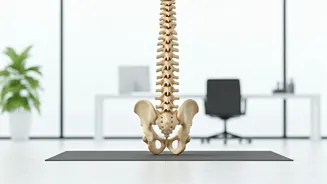
Sitting for long periods compresses the spine. A gentle twist can help relieve tension. Sit upright in your chair with your feet flat on the floor. Turn your torso to the right, using your hands on the armrest or the back of the chair to deepen the stretch. Hold for 15-20 seconds while breathing deeply, then slowly return to the centre and repeat on the left side.
Wrist and Forearm Stretch
Constant typing and mouse use can lead to strain in the wrists and forearms. Extend your right arm in front of you with your palm facing up. With your left hand, gently pull your fingers down and back towards your body until you feel a stretch in your forearm. Hold for 15 seconds, then repeat with the palm facing down. Switch arms.
Standing Hip Flexor Stretch
Your hip flexors become tight and shortened from constant sitting. Stand up and take a step back with your right leg into a slight lunge position. Gently bend your front knee and press your hips forward until you feel a stretch in the front of your right hip. Hold for 20-30 seconds, ensuring your back remains straight. Repeat on the other side.
Make it a Daily Habit
The hardest part of any new routine is starting. To make stretching a consistent part of your day, try linking it to an existing habit. For example, do your stretches right after you finish a cup of tea or at the end of a long meeting. Set a recurring alarm on your phone or calendar. Even just a few minutes of intentional movement can break the cycle of sedentary fatigue and dramatically improve how you feel, both physically and mentally, throughout your workday.