


From Pixels to Pitch
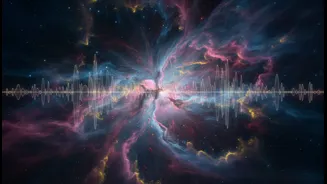
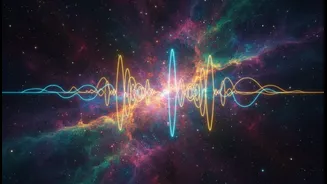
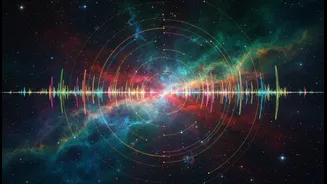
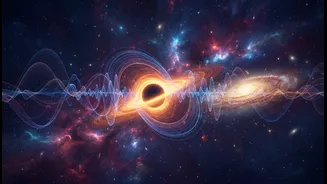
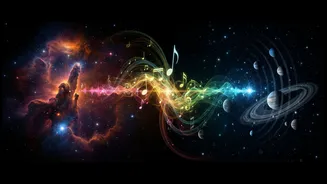
At its heart, sonification is the process of translating data into sound. Just as telescopes capture digital data—ones and zeros—that are converted into the stunning images we see, the same information can be mapped to audio. This isn't about capturing
sounds in the vacuum of space, which is impossible. Instead, it’s a creative and scientific method of representing information through hearing. NASA scientists and their collaborators, like the SYSTEM Sounds project, assign different properties of an image to different aspects of sound. For example, the brightness of a star or galaxy in an image might control the volume of a note, while its vertical position on the image could determine its pitch.
The Cosmic Orchestra
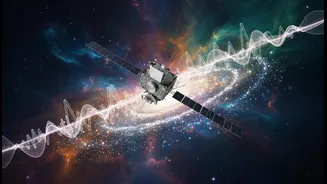
The process becomes even more complex and layered when data from multiple telescopes are combined. An image of the Milky Way's center, for instance, might blend X-ray data from the Chandra X-ray Observatory, infrared light from the Spitzer Space Telescope, and visible light from the Hubble Space Telescope. In the resulting sonification, each data source is assigned a unique instrument. Chandra’s high-energy X-ray data might be represented by a glockenspiel, Hubble’s data by a violin, and Spitzer’s infrared view by a soft piano. As a cursor scans across the image, these different 'instruments' play, creating a symphony from the stars where listeners can distinguish different cosmic features by their unique sounds. Stars and compact sources become individual notes, while vast clouds of gas and dust create evolving drones.
A Symphony of Stars
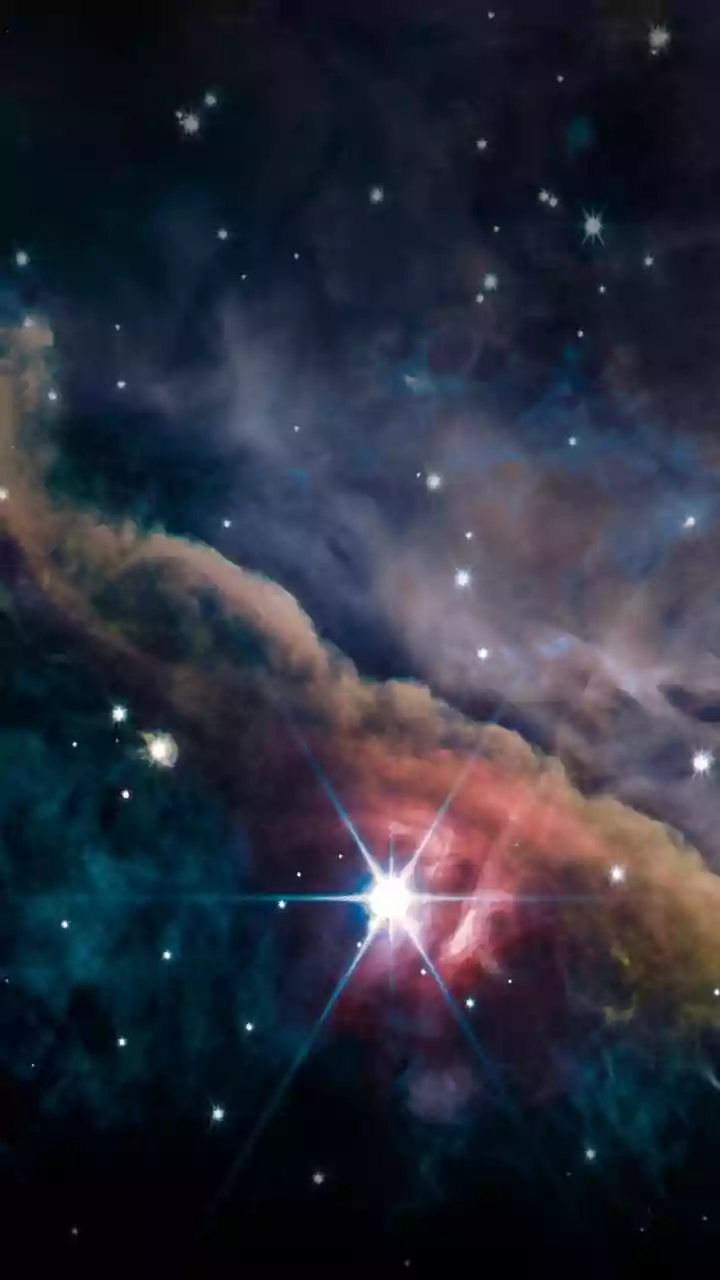
Many iconic celestial objects have been given this audio treatment. The sonification of the Galactic Center creates a crescendo of sound that builds toward the supermassive black hole, Sagittarius A*. The famous Pillars of Creation and the chaotic, beautiful remnant of the Crab Nebula supernova have also been translated into sound. In one rendition of the Crab Nebula, the rapid spin of the pulsar at its core is conveyed through layers of flute, clarinet, and strings. Other sonified objects include interacting galaxies like "The Mice," the expanding debris of the Jellyfish Nebula, and the stellar nursery of the Carina Nebula, captured by the James Webb Space Telescope. Each sonification offers a completely new way to experience these distant wonders.
More Than Just Music
While these cosmic compositions are beautiful, the project has a profound purpose beyond art. A primary goal is to make astronomy more accessible, particularly for individuals who are blind or have low vision. The "Universe of Sound" project allows people to 'listen' to astronomical images and explore the data in a meaningful way. This multi-sensory approach has proven to be an effective learning tool for everyone, not just the visually impaired. Scientists also benefit, as sonification can reveal patterns, changes, and nuances in the data that might be missed by visual inspection alone. Hearing the data can sometimes highlight subtle variations or temporal patterns that the human auditory system is especially good at detecting.