






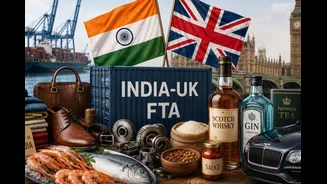


The Big Picture: A Landmark Agreement
The India-UK Comprehensive Economic and Trade Agreement (CETA) is one of India's most significant bilateral deals in recent years. Concluded after 14 rounds of negotiations, the agreement aims to significantly deepen economic ties and more than double
bilateral trade to $100 billion by 2030. It goes beyond simply cutting taxes on goods, covering 30 chapters on topics like digital trade, government procurement, and innovation. For the UK, it marks a major post-Brexit trade achievement, giving it greater access to one of the world's fastest-growing economies. For India, it unlocks preferential entry into the world's sixth-largest economy, creating new opportunities for manufacturers, service providers, and farmers.
Unlocking Markets: Wider Export Access Explained
The centrepiece of the deal for India is the massive boost to export access. The UK has eliminated tariffs on nearly 99% of Indian exports from day one. This provides a major competitive advantage for key Indian industries that previously faced high import duties. Labour-intensive sectors are poised to be the biggest beneficiaries. For example, tariffs of up to 16% on leather and footwear, 12% on textiles and clothing, and over 21% on marine products have been reduced to zero. This duty-free access extends to engineering goods, gems and jewellery, chemicals, and a host of agricultural products, strengthening India's position in the UK market against other exporting nations.
Mobility Rules: A Boost for Indian Professionals
While the agreement does not introduce new work visas or change the UK’s points-based immigration system, it provides significant clarity and benefits for professionals on temporary assignments. A key component is the accompanying Agreement on Social Security, which allows Indian professionals posted to the UK to be exempt from making double social security contributions for up to five years. This directly reduces employment costs for Indian IT, engineering, and consulting firms operating in the UK. The deal also improves access for independent professionals like architects and engineers to fulfill service contracts, and provides a new quota for chefs and yoga teachers, making cross-border business smoother. However, it's crucial to understand this is about business mobility, not a new pathway to immigration.
What Changes for Indian Consumers and Importers
The deal also means changes for goods coming into India. Tariffs on several UK products will be reduced, though often in a phased manner over several years. One of the most talked-about changes involves Scotch whisky, with import duties dropping from 150% to 75% immediately, and then further over ten years. Another major change is for automobiles; customs duty on some fully built UK passenger cars will be gradually reduced from as high as 110% down to 10% under a quota system. This could make premium UK cars more affordable in India. However, sensitive sectors in India, such as dairy and certain agricultural products, remain protected and are outside the scope of the agreement.
The Road Ahead: Opportunities and Hurdles
While the deal opens the door to immense opportunities, success is not guaranteed by tariff cuts alone. Indian exporters will still need to meet the UK’s stringent quality standards, certification requirements, and other non-tariff barriers to fully capitalise on this preferential access. Experts caution that converting this market access into sustained export growth will require a concerted effort from Indian businesses to align with UK regulatory expectations. The agreement lays a strong foundation, but the final outcome will depend on how effectively companies on both sides can navigate the new landscape and build stronger commercial partnerships in the years to come.