


The Immense Problem of Pressure
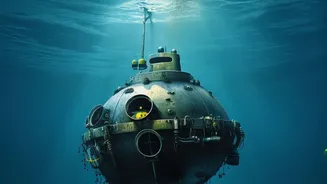
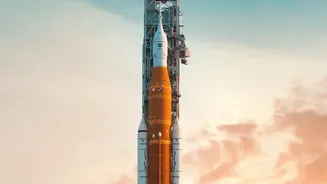
The single greatest challenge in deep-sea exploration is the colossal, crushing pressure. While a spacecraft has to withstand a pressure difference of just one atmosphere—the difference between the air inside and the vacuum of space outside—a submersible
faces forces orders of magnitude greater. For every 10 meters you descend, the pressure increases by one atmosphere. At the bottom of the Mariana Trench, the deepest known point on Earth, the pressure is over 1,000 times that at sea level. This is like having the weight of fifty jumbo jets pressing down on you. To survive this, submersibles require incredibly robust hulls, often made of thick titanium spheres, whereas spacecraft can be built from much lighter materials to simply contain their internal pressure.
Communicating in the Dark
In space, communication is relatively straightforward. Radio waves travel freely through the vacuum, allowing us to communicate with probes millions of miles away, albeit with a time lag. Water, however, is about 800 times denser than air and is excellent at absorbing electromagnetic waves. This makes radio communication, GPS, and Wi-Fi completely useless beneath the waves. Instead, deep-sea explorers must rely on acoustics, using sonar for navigation and data transmission. These sound-based systems are much slower, less precise, and have a far lower bandwidth than the radio or laser communication systems used for space missions.
Navigating Blind
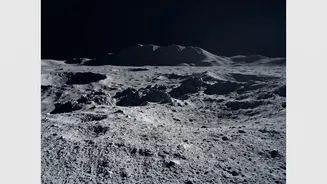
Space is transparent. With powerful telescopes, we can create incredibly detailed maps of the Moon and Mars from orbit or even from Earth. The ocean is the opposite. Sunlight penetrates only about 200 meters, beyond which lies a perpetual 'midnight zone'. Visibility is often near zero, forcing explorers to rely entirely on artificial lighting and sonar to 'see'. This makes mapping the ocean floor a slow, painstaking process. While satellites can map entire planets in high resolution, mapping the seabed requires ships or autonomous drones to travel back and forth in tight patterns, scanning small sections at a time. As a result, despite centuries of effort, only about 26% of the world's seafloor has been mapped to modern standards.
The Corrosive, Cold Environment
Spacecraft must be designed to handle extreme temperature swings and radiation, but the environment itself is sterile. In contrast, the deep ocean is a brutally corrosive environment. Saltwater aggressively attacks metals, requiring specialized, expensive alloys to prevent structural failure. Furthermore, the near-freezing temperatures at the bottom of the ocean pose a constant threat to electronics and battery life, draining power and affecting the performance of vital systems. While space requires shielding from radiation and managing heat, the deep sea demands a constant battle against physical decay and the biting cold.