



What Does a Black Hole Sound Like?
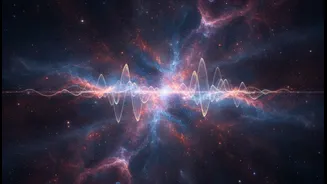
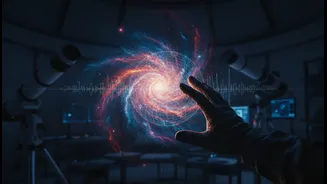
You can’t technically hear anything in the vacuum of space, but you can listen to the data. This is the core idea behind sonification, a process that translates information into sound. Instead of mapping digital data from telescopes to pixels to create
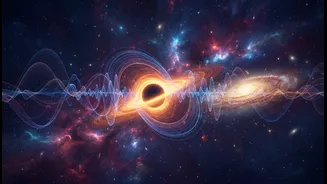
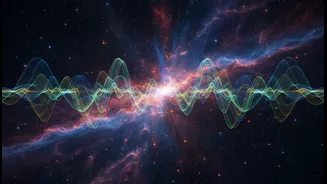
an image, scientists map it to audio notes, pitch, and volume. One of the most famous examples is the sound of a black hole at the center of the Perseus galaxy cluster. Astronomers detected pressure waves rippling through the gas surrounding the black hole and translated them into an audible frequency. The result is a deep, haunting hum, which NASA released after raising the original pitch by 57 octaves to make it audible to human ears. It’s not a recording of sound traveling through space, but a representation of real cosmic events.
Turning Data Into a Symphony
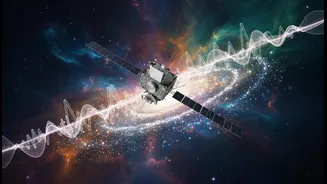
The process is both an art and a science. For an image of the Galactic Center, for instance, data is scanned from left to right. The brightness of a star or nebula might control the volume, while its vertical position on the image could determine the pitch. Different telescopes capturing different types of light—like X-rays from Chandra or infrared from Spitzer—can be assigned different instruments, like a xylophone or a string section. The result is an ensemble performance where you can hear the interplay between different cosmic structures. Stars become individual notes, while vast clouds of gas create an evolving drone. Projects from the SYSTEM Sounds team, which collaborates with NASA, have created sonifications for everything from the moons of Jupiter to the discovery of exoplanets, turning raw data into compelling audio narratives.
More Than Just a Novelty
While listening to the cosmos is a captivating experience, sonification is far more than a public relations gimmick. It’s a powerful tool for scientific discovery and accessibility. For scientists, it offers a new way to analyze complex datasets. The human ear is exceptionally good at picking out patterns and anomalies in a noisy background, an ability known as the "cocktail party effect". Researchers can sometimes detect subtle signals in sonified data that might be missed in a purely visual analysis. Astrophysicist Wanda Díaz-Merced, who is blind, has pioneered the use of sonification to make discoveries in stellar radio data, proving its value as a legitimate research method.
An Accessible Universe for All
Perhaps the most significant impact of this sound era is in making astronomy more inclusive. For people who are blind or have low vision, a field dominated by images has historically been difficult to access. Sonification, along with 3D printed tactile models, provides a multi-sensory way to experience and study the universe. NASA and other institutions now regularly work with members of the blind and low-vision community to develop and test these tools, ensuring they are effective and meaningful. This approach doesn't just benefit one community; studies have shown that engaging multiple senses can enhance learning and understanding for everyone. It’s a key part of a broader push for universal design in science education.
Why We're Hearing Space Now
The idea of turning data into sound isn't new, but the trend has exploded in recent years. This is thanks to a convergence of factors. We now have massive amounts of digital data from powerful telescopes like the Hubble and James Webb Space Telescopes. Processing power has made it easier and faster to translate this complex information into audio. Furthermore, there’s been a cultural shift. With the rise of podcasts and multimedia-rich online content, audiences are more accustomed to auditory storytelling. Science communication has adapted, moving beyond static images to create immersive experiences that capture the public's imagination in a new way. Planetarium shows and online exhibits are now incorporating sound, drawing in huge crowds and making astronomy more engaging than ever before.