

A Star's Fiery End
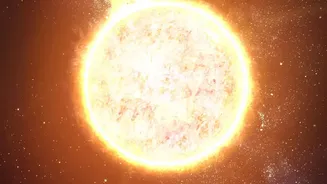
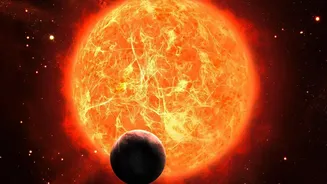
For stars like our Sun, the end doesn't come with a bang, but with a dramatic and destructive expansion. After exhausting the hydrogen fuel in its core over billions of years, a star swells into a red giant, a phase where it can grow hundreds of times
its original size. This expansion is catastrophic for any inner planets. In our own solar system, for instance, scientists predict the Sun will engulf Mercury, Venus, and possibly even Earth when it enters its red giant phase in about five billion years. After shedding its outer layers, all that remains is a white dwarf: an incredibly dense, Earth-sized core of the former star. A single teaspoon of white dwarf material would weigh as much as an elephant on Earth. It’s a stellar corpse, slowly cooling over eternity.
The Survivors and the Reborn
Given this violent transformation, it was long thought that a star's death would wipe its planetary slate clean. But astronomers are discovering that's not always the case. Planets can survive in two main ways. If a planet's orbit is wide enough, it can escape being swallowed during the red giant phase. As the star sheds mass, its gravitational pull weakens, which can push surviving planets into even safer, wider orbits. More recently, astronomers have found evidence of something even more astonishing: 'second-generation' planets. These are new worlds that form from the disk of gas and dust that the star expelled during its death. In October 2026, researchers announced the potential discovery of one such planet orbiting the white dwarf HS 0209+0832, a world seemingly born from the ashes of its parent star.
A Planetary Autopsy
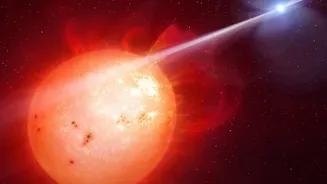
The most profound lessons come from a practice some call 'necroplanetology'—the study of dead planetary systems. White dwarfs have incredibly strong gravity. Any nearby asteroids or planetary fragments get pulled in and shredded, a process called tidal disruption. The material from these destroyed bodies then 'pollutes' the white dwarf's otherwise pristine atmosphere. By using spectroscopy to analyse the light from the white dwarf, scientists can read the chemical signatures of the elements raining down onto its surface. This provides a direct sample of the building blocks of the planets that once orbited it. It’s the cosmic equivalent of performing an autopsy on a planet, revealing the composition of its crust, mantle, and core. This technique gives us a precise breakdown of what these alien worlds were made of—be it iron, silicon, magnesium, or other rock-forming elements.
Clues to Planetary Guts
This chemical analysis offers a unique window into how planets are built. For most exoplanets, scientists can only infer their composition based on their mass and radius. But by studying polluted white dwarfs, they can measure the elemental ratios directly. This helps test theories about planetary formation. For instance, recent discoveries around the white dwarf HS 0209+0832 found unusual heavy elements like niobium. These elements are forged inside dying stars, suggesting the material now falling onto the white dwarf—and potentially forming new planets—was created during the star's death throes. Studying these elements tells us not just about the planet's original makeup, but about the lifecycle of matter in the universe. It’s a way of confirming what we thought we knew about the different compositions of rocky versus gas-giant planets.
A Glimpse of Our Solar System's Future
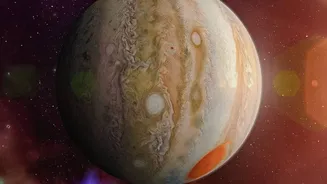
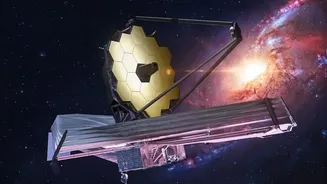
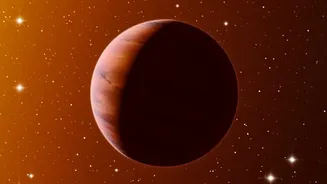
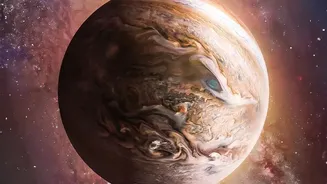
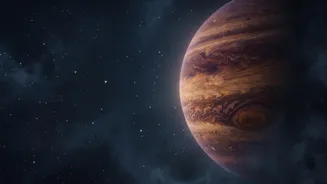
Studying these distant, dead systems isn't just an academic exercise; it's a preview of our own solar system's distant future. The fate of Earth remains uncertain—it's on the borderline of being engulfed by the Sun or pushed into a wider orbit. But by observing planets like WD 1856 b, a Jupiter-sized survivor orbiting a white dwarf, scientists can model what might happen to our own gas giants. Observations from the James Webb Space Telescope show that WD 1856 b is much hotter than expected, likely because it migrated closer to its star long after the star had died, heating up from the intense gravitational forces. This tells us that planetary systems don't just die; they continue to evolve dynamically for billions of years. These 'zombie' systems are not static relics but are active and changing, offering a time machine to peer into our own cosmic destiny.