






What is a PUC Certificate?
A Pollution Under Control (PUC) certificate is a mandatory document proving that your vehicle's emissions are within the legal limits set by the government. It's a key part of India's effort to control air pollution. Every vehicle powered by an internal
combustion engine, from two-wheelers to cars and trucks, must have a valid PUC certificate at all times. These certificates are issued by authorised testing centres after a quick test measures the pollutants, like carbon monoxide and hydrocarbons, from your vehicle's exhaust. The results are uploaded to a central government database, linking the certificate directly to your vehicle's registration details, making it easy for authorities to verify.
Budgeting for Your PUC Test
The cost of a PUC test is a relatively small but necessary expense for vehicle owners. The fees are not uniform across the country and can vary by state and vehicle type. Generally, you can expect to pay between ₹60 and ₹80 for a two-wheeler. For petrol cars, the cost typically ranges from ₹80 to ₹150, while diesel vehicles are slightly more expensive, with tests costing between ₹100 and ₹200. These prices are set by state transport departments and are periodically revised to account for operational costs of the testing centres. Authorised centres, often found at petrol pumps, are required to display the official fee structure, so you know exactly what you're paying for.
New Rules on Test Frequency
Recent changes to the Central Motor Vehicles Rules have altered how often you need to get a PUC test, creating a system based on your vehicle's age and emission standard (Bharat Stage or BS). For newer private BS-VI vehicles, the rules are more relaxed. If your vehicle is up to six years old, a PUC certificate is now valid for three years. For private BS-VI vehicles aged between six and ten years, the validity is one year. Once a BS-VI vehicle is over ten years old, it requires a test every six months. The rules are stricter for older emission standards. BS-IV vehicles now require a test every six months nationwide. For the oldest vehicles (BS-I, BS-II, and BS-III), the certificate is only valid for three months. All new vehicles are exempt for the first year from their registration date.
The High Cost of Non-Compliance
Failing to renew your PUC certificate on time can lead to significant financial penalties. Under the Motor Vehicles Act, driving without a valid PUC can attract a fine of up to ₹10,000. In addition to the hefty fine, non-compliance can also lead to imprisonment for up to three months, and authorities may even suspend your vehicle's Registration Certificate (RC). In some regions, like the Delhi-NCR, stricter enforcement measures such as the 'No PUC, No Fuel' rule are in effect, which prevents fuel stations from serving vehicles without a valid certificate. With automated systems and cameras being used to track compliance, the chances of being caught have increased, making it more important than ever to stay on top of your renewal dates.
The Digital PUC Process
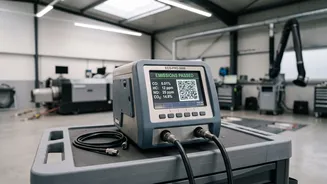
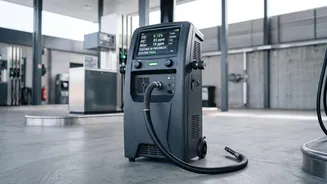
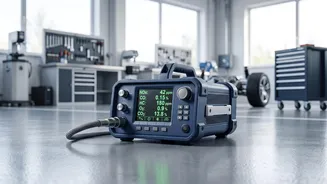
Getting your vehicle tested is a straightforward process. You can visit any authorised testing centre, which are commonly located at petrol stations or as standalone facilities. The operator will use a probe to analyse your exhaust emissions, and the whole process usually takes just a few minutes. If your vehicle passes, a computer-generated certificate is issued, often with a QR code for easy verification. The data is instantly uploaded to the national Parivahan database, ensuring the certificate is digitally linked to your vehicle's records. You cannot get a new certificate entirely online as the vehicle must be physically present for the emission test, but you can download a copy of your valid, renewed certificate from the Parivahan portal.