




The Fear and the Reality
The idea of a pilot becoming suddenly unable to fly the plane is a dramatic and terrifying thought. In commercial aviation, the immediate answer has always been the second pilot. Aircraft are flown by two highly trained pilots, providing redundancy. If
one pilot becomes incapacitated, the other is fully qualified to take control and land the aircraft safely. This long-standing protocol has been the bedrock of aviation safety. However, the workload on the remaining pilot increases significantly, as they must handle all communication, navigation, and system monitoring alone during a high-stress emergency. This is where the next layer of safety comes into play: automation.
Today’s Autopilot: A Capable Co-pilot
Many people misunderstand what autopilot does, picturing a system that flies the plane from gate to gate by itself. The reality is that modern autopilot is a sophisticated tool that assists pilots, rather than replacing them. It excels at precisely managing an aircraft's heading, altitude, and speed during the less demanding phases of flight, like the long cruise portion. This reduces pilot workload, allowing them to focus on broader strategic tasks like monitoring weather, communicating with air traffic control, and managing onboard systems. While some systems can perform an 'autoland' in low-visibility conditions using ground-based equipment, takeoffs and taxiing remain firmly in the pilots' hands. Autopilot is a phenomenal assistant, but it executes commands; it doesn't make decisions in a crisis.
Enter Emergency Autoland Systems
The true game-changer in pilot incapacitation scenarios is the development of emergency autoland technology. Garmin's Autoland system, a winner of the prestigious Collier Trophy, is at the forefront. Designed for such an emergency, this system can be activated by a passenger with a single button press or can even activate itself if it detects a lack of pilot activity, such as in a depressurization event. Once engaged, Autoland transforms the aircraft into an autonomous vehicle. It analyzes weather, terrain, and fuel levels to select the best nearby airport, communicates its intentions to air traffic control and passengers, and then navigates the plane to a safe landing, even bringing it to a complete stop on the runway. This technology has been hailed as a revolutionary safety feature. Tragedies like the 1999 crash involving golfer Payne Stewart, where everyone on board was incapacitated due to a loss of cabin pressure, were a key inspiration for its development.
Scaling Up: Automation for Large Airliners
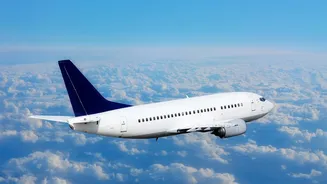
Currently, Garmin's Autoland is certified and available primarily on smaller business and private aircraft, such as models from Piper, Cirrus, and Embraer. The question is, when will this capability reach the large passenger jets we fly on? Major manufacturers are already on the case. Airbus, for example, is developing its 'Project Dragonfly.' This system is designed to bring similar autonomous capabilities to commercial airliners. Inspired by the 360-degree vision of a dragonfly, the technology uses advanced sensors and computer vision to 'see' its environment. In an emergency, it could autonomously select a safe diversion airport, create a new flight path, and land the aircraft without human intervention. The project is also testing features for automated taxiing, further reducing pilot workload in complex airport environments.
The Road to Certification and Trust
Implementing such advanced automation in commercial aviation is a slow and deliberate process, and for good reason. Regulatory bodies like the Federal Aviation Administration (FAA) in the U.S. and the European Union Aviation Safety Agency (EASA) have incredibly stringent safety standards. Getting a new technology like this certified involves a 'crawl, walk, run' approach, with exhaustive testing to prove reliability and safety. Companies must demonstrate that the system can handle countless variables and potential failure points before it can be approved for passenger use. Beyond regulatory hurdles, there's also the matter of public and pilot trust. The goal of these systems isn't to create pilotless airliners tomorrow, but to add an unprecedented layer of safety, ensuring that even in the most critical and unlikely of emergencies, the aircraft can protect everyone on board.