



A Landmark Agreement for a New Space Era
India’s signing of the Artemis Accords in June 2023 was more than a diplomatic handshake; it was a strategic entry into the world's most ambitious lunar exploration program. The Accords are a US-led set of principles for cooperation in the civil exploration and use
of the Moon, Mars, and beyond, emphasizing transparency, interoperability, and the peaceful use of space. By becoming the 27th signatory, India aligned itself with a global framework guiding humanity's return to the Moon, ensuring it would not be technologically or diplomatically isolated. This move signals a significant shift from India's traditional stance of strategic independence in space to one of collaborative engagement, positioning itself as a key player in shaping the future of space governance.
What India Brings to the Lunar Table
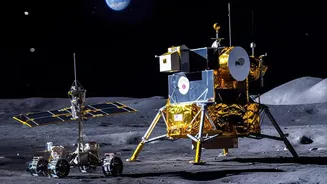
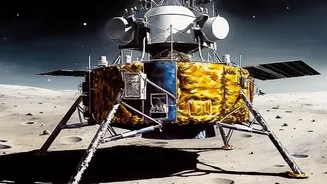
India is not coming to the partnership empty-handed. The Indian Space Research Organisation (ISRO) has a proven track record of cost-efficient and successful interplanetary missions, most notably its Chandrayaan series of lunar explorers. This reputation for 'frugal innovation' is a massive asset for the capital-intensive Artemis program. Furthermore, India’s rapidly growing private space sector, now numbering over 400 startups, presents a vibrant ecosystem of innovation and manufacturing capabilities. This, combined with a deep pool of skilled engineers and scientists, makes India an invaluable partner. The collaboration is not just about future missions; it's already bearing fruit with projects like the NASA-ISRO Synthetic Aperture Radar (NISAR) satellite, a joint mission to map the Earth's surface with unprecedented detail. ISRO is providing the spacecraft bus, a radar instrument, and the launch vehicle, showcasing a true partnership of equals.
Mutual Benefits: A Strategic and Economic Win-Win
For NASA and the United States, India's participation offers numerous advantages. It provides access to India's cost-effective launch capabilities and its innovative approach to space technology. Strategically, it solidifies a key alliance in the Indo-Pacific, creating a counterbalance to the space ambitions of nations like China and Russia, who are not signatories to the Accords. Economically, it opens up a new frontier for American aerospace companies to collaborate with India's burgeoning private sector. For India, the benefits are transformative. Participation in Artemis provides access to advanced technologies, shared scientific data, and tested protocols for human spaceflight, which will directly support its own ambitious Gaganyaan human spaceflight program. The partnership includes training for Indian astronauts at NASA's Johnson Space Center for a joint mission to the International Space Station, a major milestone for the country.
Fueling India's Private Space Industry
Perhaps the most significant long-term impact of this collaboration will be on India’s domestic space industry. The Artemis Accords and the broader partnership with NASA are expected to act as a massive catalyst for private companies. By aligning its systems with global standards, India’s space industry becomes an integral part of the international aerospace supply chain. This integration creates vast opportunities for Indian startups and established firms in areas like component manufacturing, satellite services, and ground support. The Indian government's 2023 Space Policy, which encourages private participation, perfectly complements this international collaboration. As NASA increasingly tenders out work to private entities, Indian companies are now positioned to compete for and contribute to contracts for everything from lunar landers to deep-space communication systems, potentially accelerating India’s space economy toward its projected growth to $44 billion by 2033.