





Three Towers on Wheels
The annual Rath Yatra festival hinges on three gigantic chariots, each a towering temple on wheels, built anew every single year. Lord Jagannath’s chariot, Nandighosha, stands the tallest at approximately 44 feet, with 16 massive wheels. Lord Balabhadra’s
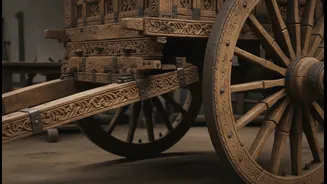
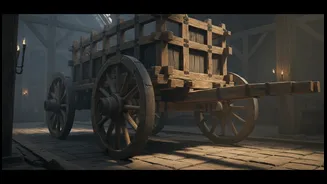
chariot, Taladhwaja, is a close second at 43 feet with 14 wheels, and Devi Subhadra’s, Darpadalana, reaches 42 feet with 12 wheels. The challenge is immense: construct three multi-storey wooden structures, each weighing several tonnes, that are strong enough to hold the deities and priests, and robust enough to be pulled by thousands of people along the 3-kilometre Grand Road to the Gundicha Temple. This feat of engineering is achieved without modern machinery, blueprints, or even a single iron nail in their core structure.
A Blueprint Carried in Memory
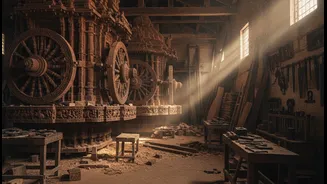
The construction process is a remarkable example of living heritage. The knowledge isn’t stored in architectural drawings but in the minds of hereditary artisan families, known as Viswakarma Sevayats or Maharanas. This sacred duty passes from father to son, who learn the craft through apprenticeship from a young age. Measurements are not taken in feet or inches but with traditional units like 'haat' (hand size) and 'anguli' (finger width), ensuring consistency year after year. The construction begins on the auspicious day of Akshaya Tritiya and takes a team of around 200 carpenters, blacksmiths, painters, and tailors approximately 58 days to complete. These families, like the Maharana carpenters, the Kamara blacksmiths, and the Chitrakar painters, all have specific, inherited roles in this complex project.
The Secret of a Nail-Free Structure
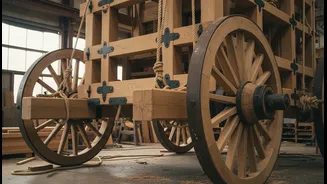
The most astounding structural solution is the complete absence of metal nails or screws in the chariots' assembly. Instead, the builders rely on ancient joinery techniques. The massive wooden components, crafted from over 800 logs of specific trees like Phassi, Dhausa, and Asan, are interlocked using a system of mortise and tenon joints, pegs, and brackets. Each of the hundreds of wooden pieces per chariot—832 for Nandighosha alone—is precisely cut to fit together like a complex puzzle. This method provides incredible strength and a degree of flexibility, allowing the massive structure to absorb the stresses of being pulled by thousands of devotees without shattering. The Kamara (blacksmith) sevayats do forge thousands of iron clamps and fittings, but these are primarily for ancillary parts and rims, not the core frame.
Engineering the Wheels and Axles
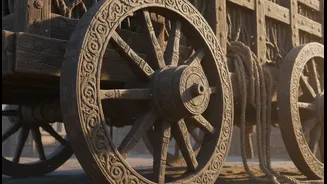
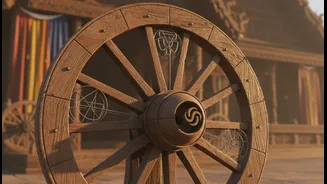
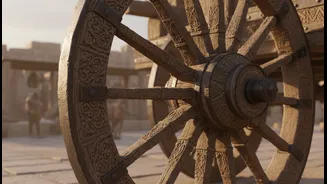
The wheels present a significant structural problem. Each wheel is massive, some reaching seven feet in diameter, and must bear an incredible load. They are constructed from sections of strong Phasi wood, which takes 50-60 years to mature and must be perfectly straight. These sections are joined and fitted with an iron rim for durability, a task for the Kamara blacksmiths. The axles are designed to be both robust and flexible, allowing them to support the chariot's weight while navigating the crowded street. While the core construction remains traditional, some modern assistance has been integrated for safety and efficiency. For instance, a more effective braking system using timber logs reinforced with rubber and spikes has been developed by engineers in recent years to help control the colossal structures.