


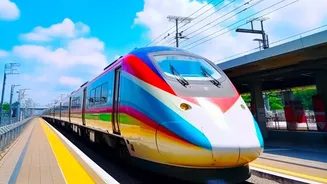
The First Milestone: Surat to Vapi
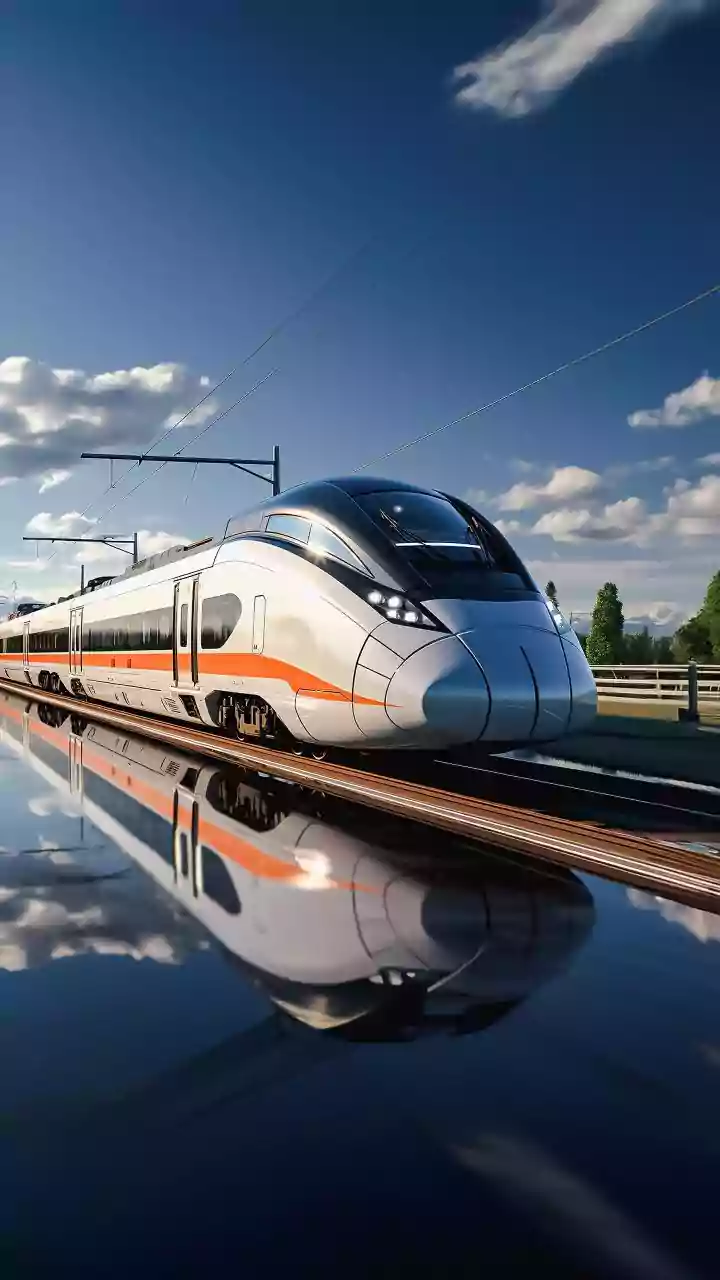
The first commercial bullet train service in India is expected to launch in the final quarter of 2027, connecting the key industrial hubs of Surat and Vapi in Gujarat. This initial operational segment is a critical part of the larger 508-kilometre Mumbai-Ahmedabad
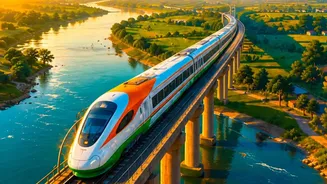
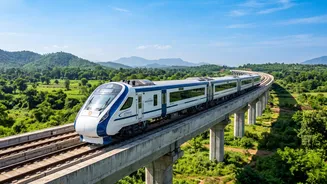
High-Speed Rail (MAHSR) project. While the full corridor will eventually slash travel time between India's financial capital and Ahmedabad to about two hours, the Surat-Vapi section will serve as the nation's proof of concept. Recent progress has been significant, with the successful energisation of the overhead electrical systems on the 50-km Surat-Bilimora stretch, a key step towards beginning trial runs.
A Leap in Technology and Speed
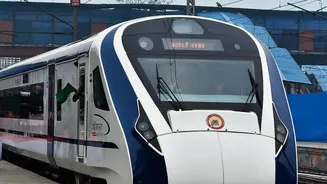
The project represents a monumental leap for Indian infrastructure, employing Japan's renowned Shinkansen technology. Trains are designed to operate at speeds up to 320 km/h. However, the initial services will utilize indigenously manufactured trainsets. The first 'Made in India' bullet train, known as the B28, is being built by BEML and the Integral Coach Factory (ICF). This train, designed for speeds of 280 km/h, is expected to be ready for track trials by mid-2027. This domestic manufacturing capability is a significant achievement, creating a foundation for future high-speed rail projects across the country.
Connecting Economic Powerhouses
The choice of the Surat-Vapi section for the inaugural run is strategic. This corridor connects Surat, a global hub for diamond and textile trade, with Vapi's sprawling industrial belt. By dramatically reducing travel time, the high-speed link is expected to provide a major boost to commercial activity and connectivity for businesses and commuters. The project is also a massive job creator, with estimates suggesting it will create around 4,000 direct and up to 40,000 indirect jobs during its operational phase alone. Experts believe the corridor will strengthen economic integration, allowing businesses to view Mumbai, Surat, and Ahmedabad not as separate markets, but as connected hubs within one massive economic zone.
Navigating Complex Challenges
The journey to this point has been filled with obstacles. The project officially began in 2017 but faced significant delays due to land acquisition issues, particularly in Maharashtra, and the global pandemic. Full-scale construction only gained momentum in 2021. One of the most formidable engineering feats is the construction of a 21-km tunnel in Maharashtra, which includes India's first undersea rail tunnel running 7 km beneath Thane Creek. As of late 2026, work is progressing steadily, with massive tunnel boring machines deployed to excavate this complex section. The overall project has seen its cost rise to an estimated ₹2.02 lakh crore.
The Road Ahead for High-Speed Rail
The launch of the Surat-Vapi section is just the beginning. The plan is to open the MAHSR corridor in phases as construction is completed. Beyond this inaugural project, India has laid out an ambitious vision for a national high-speed rail network. Seven new corridors, covering nearly 4,000 kilometres and connecting major cities like Delhi, Varanasi, Chennai, and Bengaluru, were announced in the 2026-27 Union Budget. The lessons learned and the domestic expertise gained from the Mumbai-Ahmedabad project are expected to provide a template for this future expansion, potentially transforming inter-city travel across India in the decades to come.