



The Challenge: Disposable Rockets
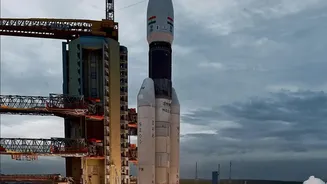
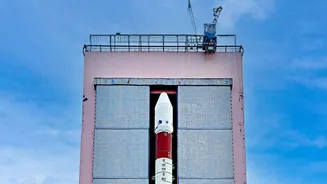
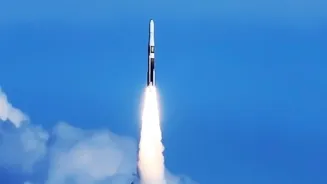
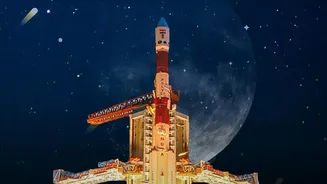
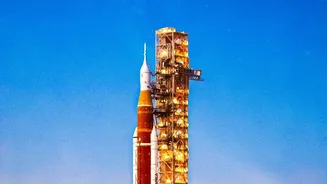
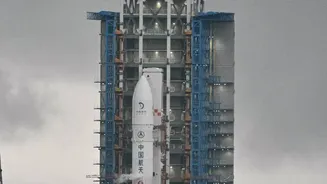
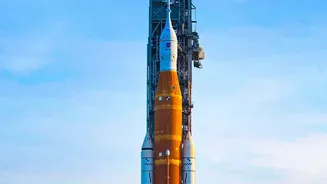
For decades, space travel has operated on a simple but costly principle: almost every part of a rocket is used only once. These massive, multi-stage vehicles are engineering marvels designed to deliver a payload, like a satellite, into orbit before their
expensive components are discarded, burning up in the atmosphere or falling into the ocean. This expendable model is the primary reason launching satellites is so expensive. According to some estimates, up to 80% of a launch's cost is tied to the structure of the vehicle itself, not the fuel. For the global satellite industry, these high costs create a significant barrier to entry and slow the pace of innovation.
ISRO’s Answer: The Pushpak Vehicle
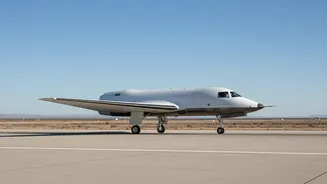
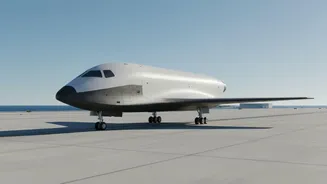
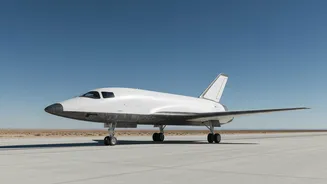
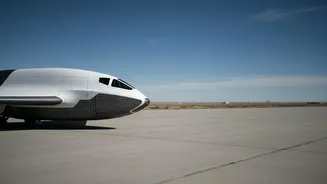
Enter the Indian Space Research Organisation's (ISRO) game-changing solution: the Reusable Launch Vehicle-Technology Demonstrator (RLV-TD), nicknamed 'Pushpak'. Instead of being a conventional disposable rocket, Pushpak is designed like a spaceplane. Its objective is to fly into space, deploy its payload, and then fly back to Earth, landing horizontally on a runway just like an aircraft. By reusing the most expensive parts of the launch system, ISRO aims to dramatically reduce the cost of access to space. The goal is ambitious: to potentially bring down the cost of delivering payloads to Low Earth Orbit by a factor of ten.
How the Autonomous Landing Works
The magic behind Pushpak's reusability lies in its sophisticated autonomous landing system. This is the 'brain' that allows the unmanned vehicle to navigate from high altitude back to a precise, high-speed landing. After being released, the vehicle uses an Integrated Navigation, Guidance & Control system to orient itself and glide towards the landing strip. This system fuses data from a suite of advanced indigenous sensors, including a Ka-band Radar Altimeter for precise height measurement, the NavIC receiver for exact positioning, and a pseudolite system to create a local GPS-like bubble over the runway. It processes all this information in real-time to make minute adjustments to its flight path using control surfaces on its wings and tail, ensuring it lines up perfectly with the runway.
From Mid-Air Drop to Perfect Touchdown
To prove the system works, ISRO has conducted a series of successful Landing Experiments (LEX). In these tests, conducted at the Aeronautical Test Range in Chitradurga, Karnataka, an Indian Air Force Chinook helicopter lifted the Pushpak vehicle to an altitude of 4.5 kilometres. On command, the helicopter released the vehicle mid-air. From there, Pushpak was on its own. Simulating the high-speed, unmanned conditions of a return from space, it autonomously corrected its course, even in challenging wind conditions, and executed a flawless landing on the runway at speeds exceeding 320 kmph. After touchdown, a brake parachute, landing gear brakes, and a nose wheel steering system are used to bring the vehicle to a controlled stop.
The Economic Impact for Clients
This technological prowess translates directly into economic benefits. By mastering reusability, ISRO can offer significantly more competitive pricing to its commercial clients. Every time Pushpak or a future operational RLV flies, the cost is spread across multiple missions. This drastically lowers the price for satellite companies, research institutions, and even other nations looking to launch their hardware into space. Lower costs make space more accessible, opening the door for more frequent launches, the deployment of large satellite constellations, and new commercial ventures that were previously financially unviable. It positions ISRO and its commercial arm, NewSpace India Ltd. (NSIL), as a highly attractive option in the multi-billion dollar global launch market.