





The Old Patchwork of Rules
Until recently, vehicle owners faced a confusing array of regulations for PUC certificates. Each state could have its own interpretation of validity periods, leading to situations where a certificate considered valid in one state might not be accepted
in another. This created significant hassles during inter-state travel, with drivers facing potential fines and delays despite believing they were compliant. The system relied heavily on physical paper certificates, which were prone to damage, loss, and fraudulent duplication. Enforcement was manual and inconsistent, making cross-border checks a time-consuming and often frustrating experience for both drivers and authorities.
A Unified System for a United India
The Ministry of Road Transport and Highways (MoRTH) has addressed this issue by implementing uniform PUC norms linked to a central online database. The key change is the creation of a standardised, IT-enabled system where every PUC certificate issued in the country is uniform in format and linked to the national Vahan database. This means a PUC certificate issued in any state is now instantly verifiable by authorities anywhere in India. This move eliminates the ambiguity caused by differing state-level rules and creates a single, reliable standard for emission compliance nationwide, a critical step under the Central Motor Vehicles Rules, 1989.
How Digital Integration Smooths the Way
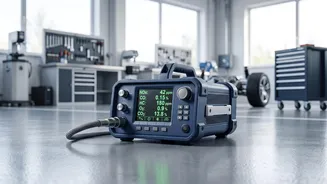
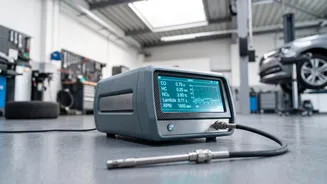
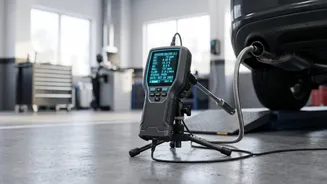
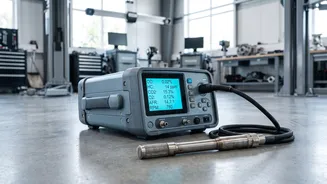
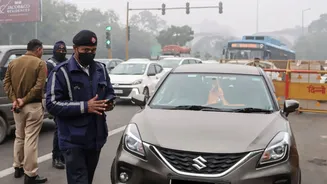
The new system works through technology. When a vehicle undergoes an emission test at an authorised centre, the results are uploaded in real-time to the central Vahan database. A uniform certificate is generated, featuring a QR code. This QR code contains all the essential details of the vehicle, owner, and emission status. During a roadside check, an enforcement officer can simply scan the QR code or enter the vehicle's registration number into a handheld device to instantly verify the PUC's validity against the official national record. This digital verification makes the process of checking documents quicker, more transparent, and less prone to disputes or corruption. Vehicle owners can also download their certificates from the official Parivahan Sewa portal.
What the New Validity Periods Mean for You
Recent amendments in November 2026 have further standardised validity periods based on a vehicle's age and emission standard (Bharat Stage or BS). For instance, the validity for BS-IV vehicles is now a uniform six months across the country. For BS-I, BS-II, and BS-III vehicles, the validity is standardised at three months nationwide, ending state-wise variations. This structured approach ensures that older vehicles are tested more frequently, while providing clear, predictable timelines for all vehicle owners regardless of where they are in the country.
Staying Compliant is Crucial
While the system is simpler, compliance remains mandatory. Driving without a valid PUC certificate is a violation of Section 190(2) of the Motor Vehicles Act and can attract a significant fine of up to ₹10,000, imprisonment for up to three months, or both. Thanks to the central database, enforcement is becoming more stringent and automated. For the first time, the system also includes a 'rejection slip' of a common format, which is issued if a vehicle fails the emission test, guiding the owner to get the vehicle serviced. Failure to comply can also lead to suspension of the vehicle's registration certificate and permit.