





The Challenge of Urban Heat
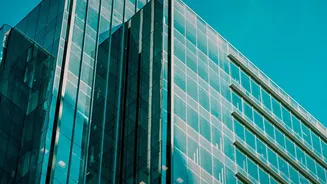
Living in a modern Indian city means dealing with the 'urban heat island' effect. Concrete, asphalt, and glass absorb and radiate the sun’s energy, making the ambient temperature several degrees hotter than in surrounding rural areas. For those in high-rise
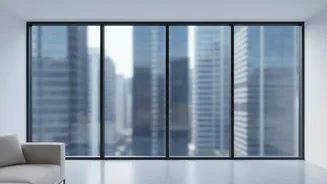
flats, large windows that offer great views can also act like magnifying glasses, letting in immense amounts of solar heat. This leaves residents with two choices: swelter in the heat or run the air conditioner non-stop, which is both expensive and energy-intensive. This daily battle against the heat has spurred a search for smarter, more passive cooling solutions that don't rely on constant power consumption.
Meet Thermo-Responsive Coatings
Enter thermo-responsive (or thermochromic) glass coatings. Think of them as an intelligent, automatic tinting system for your windows that requires no electricity, switches, or remote controls. These are ultra-thin layers of advanced materials applied to a glass surface, either during manufacturing or as a retrofit film. The most promising material for this technology is vanadium dioxide (VO₂), a compound with a unique 'split personality'. Below a certain temperature, it remains perfectly clear, allowing sunlight and its warmth to pass through. But when it heats up, its entire molecular structure changes, giving it powerful new properties.
The Science of Staying Cool
So, how does this 'magic' work? The sun’s energy travels to us as a spectrum of light, including the visible light we see and the infrared light we feel as heat. On a cool day, a thermo-responsive coating is in its 'transparent' state, allowing both visible light and heat-carrying infrared rays to pass through. However, as the sun beats down and the temperature of the glass climbs past a set point—the 'switching temperature'—the vanadium dioxide transforms. It shifts from an insulator to a metallic state, which is highly reflective to infrared light. In this state, it acts like a mirror for heat, bouncing the invisible, heat-generating rays away from the window while still allowing most of the visible light to come through. The result is a room that stays naturally lit but is protected from the worst of the sun’s oppressive heat.
Smarter Than a Simple Tint
Unlike permanently tinted windows, which block heat just as effectively on a cool winter day as they do in the peak of summer, thermo-responsive coatings are dynamic. They adapt to the environment. On a hot afternoon, they activate to block heat. When the evening cools down or during colder months, they deactivate and become fully transparent again, allowing passive solar warmth to enter when it's most welcome. This intelligent, passive regulation is the technology’s key advantage. Early versions of this technology had a high switching temperature (around 68°C), but recent breakthroughs have enabled scientists to fine-tune this temperature down to a more practical 20-25°C, making it ideal for residential buildings.
The Big Picture: Energy Savings and Comfort
The most significant benefit is a dramatic reduction in the need for air conditioning. By blocking a large portion of solar heat gain before it even enters a room, these coatings can substantially lower indoor temperatures. Studies and simulations have shown that buildings using this technology could see their annual energy consumption for cooling reduced by anywhere from 20% to 35%. This translates directly into lower electricity bills and a smaller carbon footprint. Beyond cooling, these coatings also reduce glare and block harmful UV radiation, which is responsible for fading furniture, curtains, and artwork over time. They offer a triple win: increased comfort, lower costs, and enhanced protection for your interiors.