


A Landmark Discovery Far From Home
In the grand cosmic theatre, few discoveries generate as much excitement as finding water beyond Earth. Recently, astronomers using observatories like the James Webb Space Telescope (JWST) have made groundbreaking detections of water vapour in the atmospheres
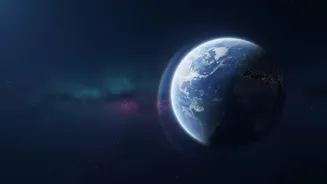
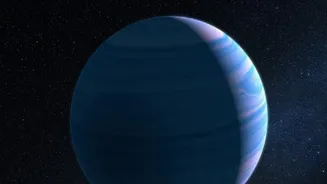
of rocky exoplanets. One such example is GJ 9827d, a planet about twice the diameter of Earth, which became the smallest exoplanet where water vapour was identified. These findings, made by analysing the faint light of a star after it has been filtered through a planet's atmosphere, are monumental. They push us closer than ever to characterising worlds that might be truly Earth-like. For the first time, we have direct evidence that planets with water-rich atmospheres can and do exist around other stars.
Why Vapour Is a Vital Clue
On Earth, life as we know it is inextricably linked to water. This simple molecule is a universal solvent, facilitating the chemical reactions necessary for biology. Finding water vapour in the atmosphere of a rocky exoplanet is a critical first step in assessing its potential for habitability. It suggests the presence of one of life's most essential ingredients. It is important, however, to distinguish between atmospheric water vapour and liquid water on the surface. While the former does not guarantee the latter, it is a hugely promising sign. For a planet to retain liquid water, it must orbit its star within the 'habitable zone'—a region where temperatures are just right, neither too hot nor too cold.
The Art of Reading an Alien Sky
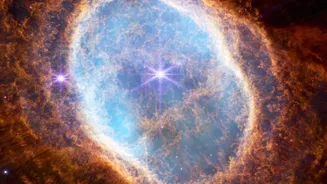
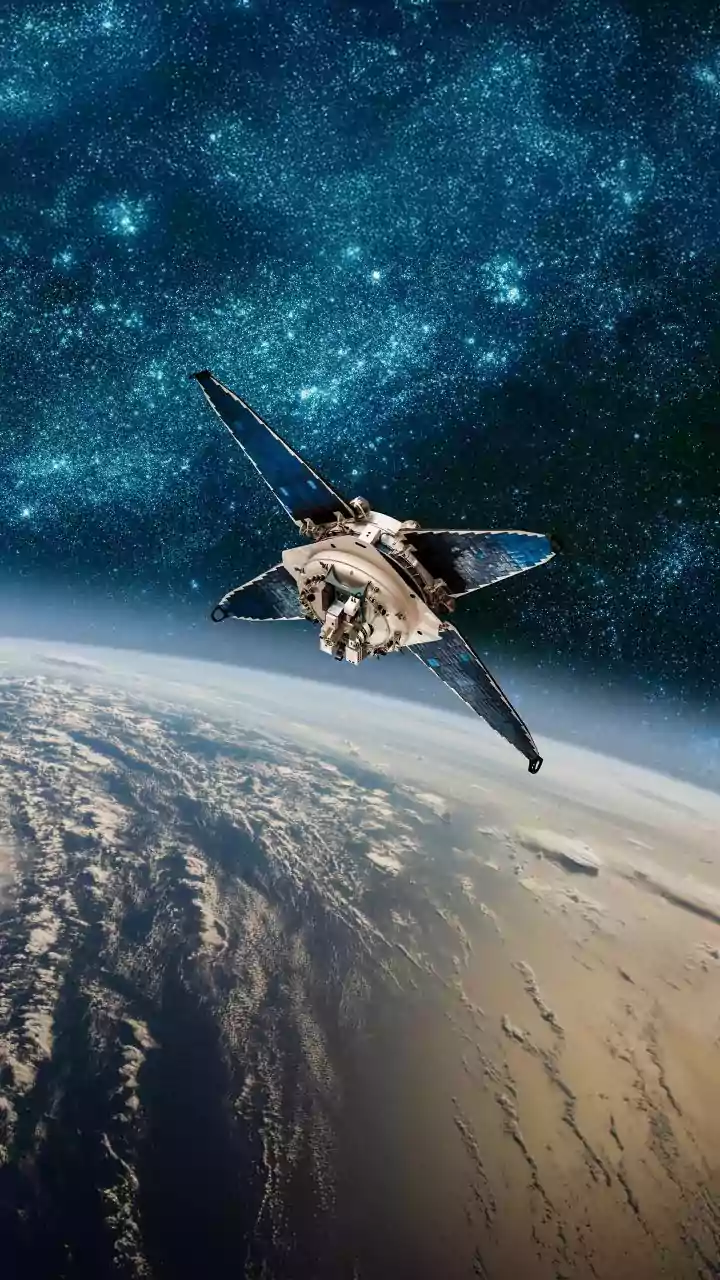
Detecting these molecules from light-years away is a remarkable feat of engineering and science. Astronomers use a technique called transmission spectroscopy. When an exoplanet passes in front of its host star from our point of view (an event called a 'transit'), a tiny fraction of the starlight passes through the planet’s atmosphere. Different gases in the atmosphere absorb specific wavelengths, or colours, of this light. By capturing the starlight with powerful instruments like the JWST's Near-Infrared Spectrograph (NIRSpec) and analysing this absorption pattern, scientists can identify the chemical composition of the alien atmosphere, revealing the molecular signatures of gases like water vapour, methane, and carbon dioxide.
A Note of Scientific Caution
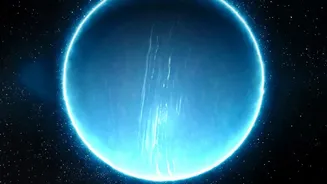
While incredibly exciting, the discovery of water vapour is not a confirmation of life or even a guarantee of a habitable world. For instance, the planet GJ 9827d, despite having water in its atmosphere, is as hot as Venus, with surface temperatures around 430 degrees Celsius, making it inhospitable. Scientists are often left with multiple possibilities. The water detected on GJ 9827d could mean it is a steamy world with a water-dominated atmosphere, or it could be a 'mini-Neptune' with a hydrogen-rich atmosphere that contains some water. Furthermore, astronomers must be careful to rule out other sources for the water signal, such as cool spots on the host star itself, which can sometimes mimic the signature of a planetary atmosphere.
The Intriguing Case of K2-18b
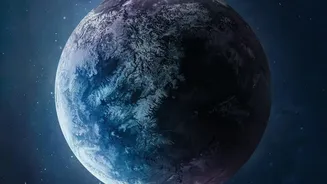
One of the most discussed exoplanets is K2-18b, a 'super-Earth' about eight times the mass of our planet that orbits within its star's habitable zone. Initial observations with the Hubble Space Telescope first hinted at water vapour. Follow-up studies with the more powerful JWST not only confirmed water but also detected methane and carbon dioxide. This has led to the development of the 'Hycean world' hypothesis—a type of planet with a hydrogen-rich atmosphere and a surface covered by a vast water ocean. K2-18b has become a prime target in the search for biosignatures, with some controversial research even suggesting the potential presence of dimethyl sulfide (DMS), a gas on Earth produced almost exclusively by life. However, these claims are still under intense scientific debate and require more data for confirmation.