

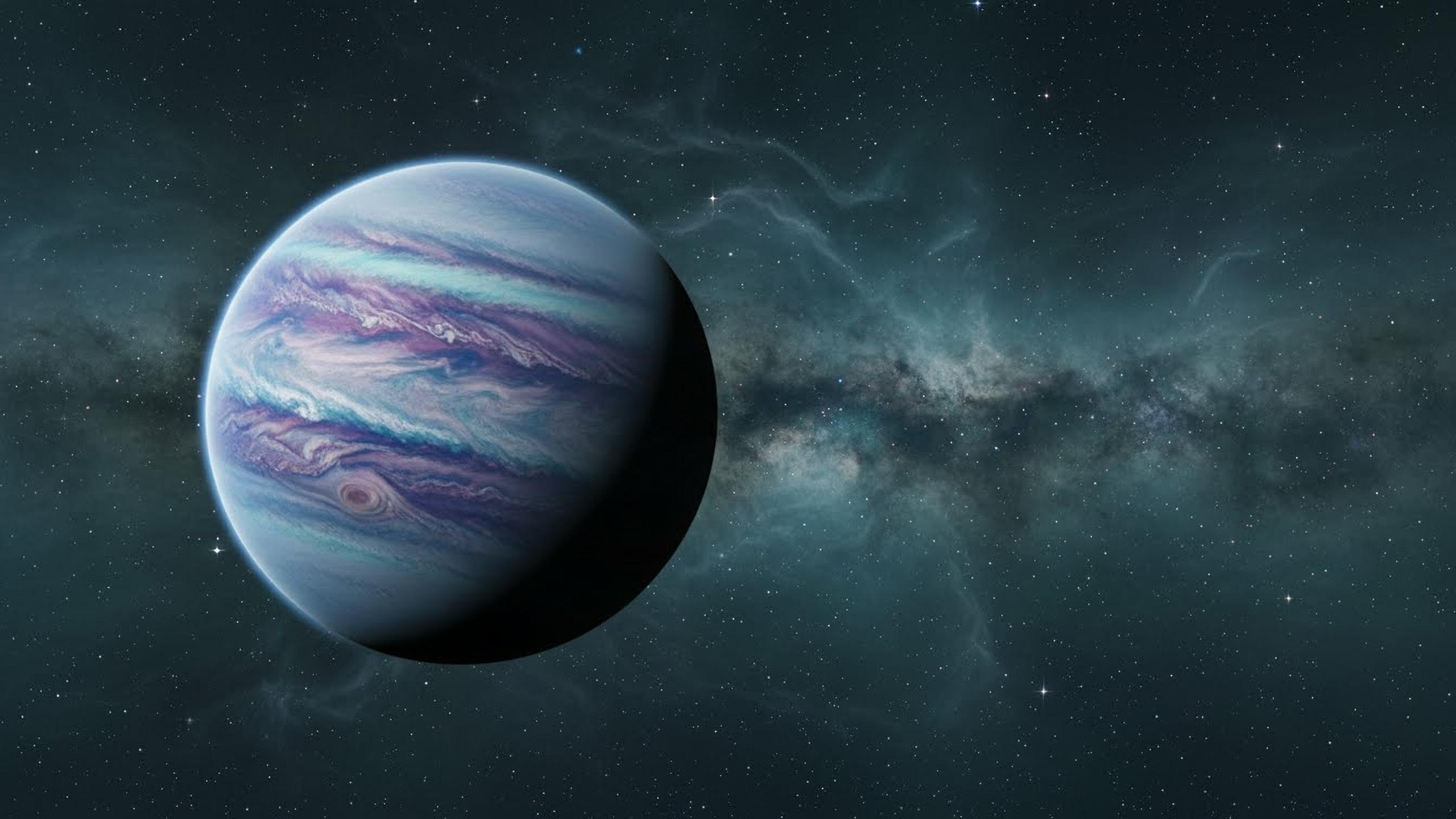

A Landmark Discovery
Scientists have announced the detection of water vapour on GJ 486 b, a rocky exoplanet located just 26 light-years away from Earth. This discovery, made using the powerful JWST, marks a significant moment in exoplanet science. While water has been found
on giant gas planets before, detecting any kind of atmosphere around a rocky world has proven incredibly difficult until now. The finding suggests that even planets in harsh environments might be able to form and hold onto an atmosphere, a key ingredient for potential habitability. However, the science team is proceeding with caution. The signal is definite, but there is a chance it might not be coming from the planet at all.
Meet the Scorching Super-Earth
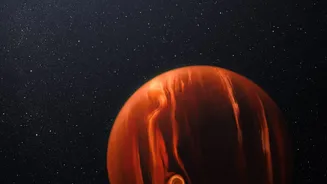
GJ 486 b is not exactly a paradise. It’s a ‘super-Earth,’ about 30% larger and three times more massive than our own planet, giving it a stronger gravitational pull. It orbits extremely close to its star, a cool red dwarf, completing a full year in less than 1.5 Earth days. This proximity means the planet is tidally locked, with one side permanently facing its star in perpetual daylight and the other in endless night. The surface temperature on the day-side is estimated to be a blistering 430 degrees Celsius (800 F), far too hot for liquid water to exist on its surface. Its nearness to its star also means it is blasted with radiation that could easily strip an atmosphere away.
How Webb Sees the Unseen
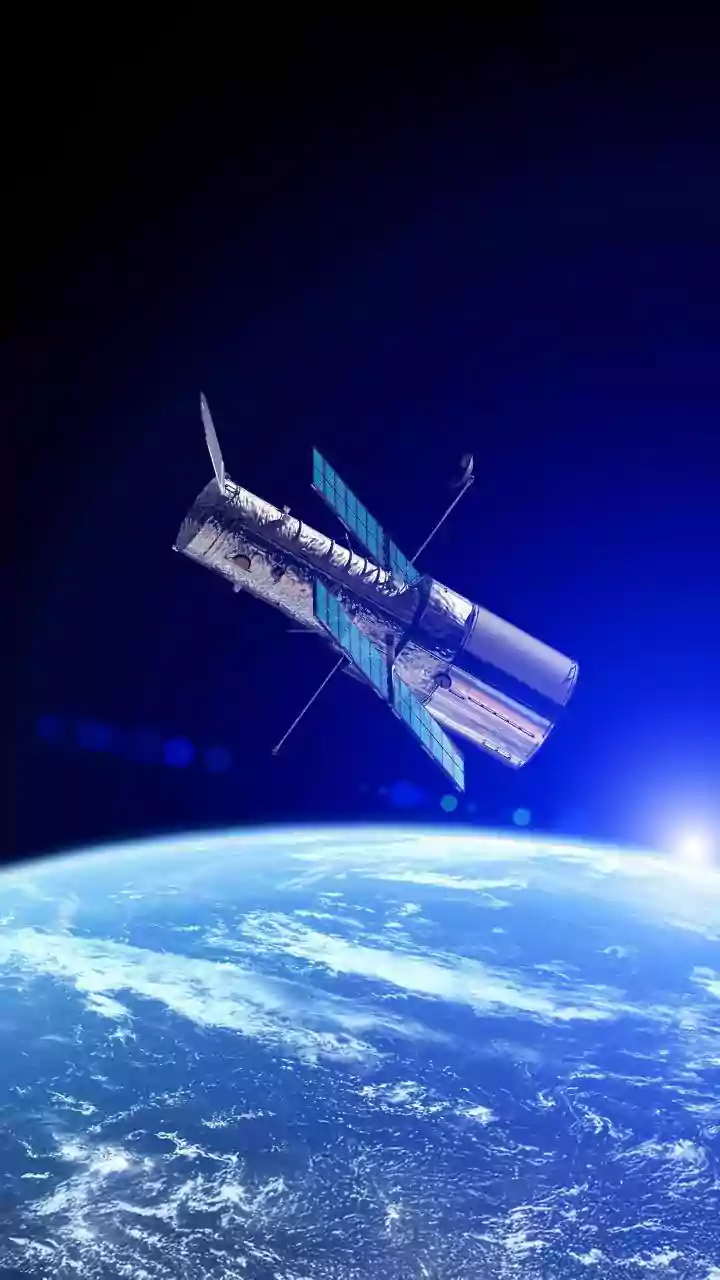
So how can a telescope 26 light-years away detect something as specific as water vapour? The technique is called transmission spectroscopy. Astronomers wait for the planet to ‘transit,’ or pass in front of its star from our point of view. As the starlight shines through the planet's atmosphere, gases in that atmosphere absorb specific frequencies of light. This leaves a unique chemical fingerprint in the light that ultimately reaches the Webb telescope's sensitive instruments, like its Near-Infrared Spectrograph (NIRSpec). By analysing this filtered light, scientists can determine the composition of the exoplanet’s atmosphere. The peak they observed in the data was a strong indicator of water.
A Planet's Atmosphere or a Star's Deception?
While the detection of water vapour is exciting, there's a catch. The signal could be an astronomical case of mistaken identity. The host star, a red dwarf, is much cooler than our Sun. Cool stars can have ‘starspots’—similar to sunspots—that are cool enough for water vapour to concentrate within them. If the planet happened to transit over one of these water-rich starspots, it could create a signal that perfectly mimics a planetary atmosphere. The research team acknowledges this possibility and notes that they didn't see evidence of the planet crossing a starspot during their observations, but that doesn't rule out the presence of spots elsewhere on the star. This ambiguity means more observations are needed to confirm the water is truly part of the planet's atmosphere.
The Next Frontier in Planet Hunting
Regardless of the final verdict on GJ 486 b, this discovery showcases the revolutionary power of the JWST. The ability to even detect such a faint signal is a breakthrough. To solve the mystery, astronomers plan to use another of Webb's instruments, the Mid-Infrared Instrument (MIRI), to look at the planet's permanent day-side. If the planet has a real atmosphere, it would circulate heat, making the hottest point slightly shifted away from the area directly under the star. If there's no atmosphere, the hottest point would be right under the star. This follow-up study should help determine whether we are seeing a true atmosphere or simply a stellar feature. Either way, the finding pushes us closer to understanding how rocky worlds form and evolve, a crucial step in the ongoing search for another Earth.