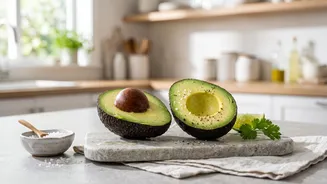







Avocados are a powerhouse of nutrition, celebrated for their creamy texture and health benefits. But while they are rightly praised for their healthy fats, the claim that they are a miracle memory food deserves a closer look.
The Reality: A Profile of Healthy Fats
There's no debate that avocados
are a fantastic source of healthy fats. The majority of fat in an avocado is monounsaturated fat, specifically oleic acid. This is the same type of heart-healthy fat found in olive oil. Diets rich in monounsaturated fats are known to help lower levels of LDL ('bad') cholesterol while maintaining HDL ('good') cholesterol, which is a major win for cardiovascular health. Since vascular health is closely linked to brain health—good blood flow is essential for a well-functioning brain—this is an important indirect benefit. Avocados also provide nearly 20 vitamins and minerals, including potassium, which helps regulate blood pressure, and fiber, which aids in digestion and helps you feel full longer.
A Brain-Friendly Nutrient Cocktail
Beyond healthy fats, avocados contain a range of other nutrients that are beneficial for overall brain health. They are a source of folate (a B vitamin), which is crucial for proper brain function. They also contain antioxidants like vitamins C and E. Perhaps most interestingly for brain health research is their lutein content. Lutein is a carotenoid that accumulates in the brain and eyes and is believed to have anti-inflammatory and antioxidant properties. Research has explored the connection between lutein and cognitive benefits, making avocados a food of significant interest. This cocktail of nutrients—healthy fats, fiber, vitamins, and unique compounds like lutein—makes the avocado a genuinely nutrient-dense food that supports the systems that keep your brain healthy.
The Memory Claim: Correlation vs. Causation
This is where the story gets more complicated. While avocados contain nutrients associated with brain health, the direct link to memory enhancement is not definitively proven. Some studies have shown promising results. For example, one study found that daily avocado consumption for six months was linked to improved working memory and problem-solving skills in older adults, which researchers connected to a 25% increase in lutein levels. Another trial found that adults with overweight or obesity who ate an avocado daily for 12 weeks improved their performance on a test measuring focused attention. However, other significant research, including a six-month randomized controlled trial from 2026, found that eating an avocado a day did not significantly alter cognitive function, including memory, when compared to a control group. The science is still evolving, and many studies suggesting a link are observational, meaning they show a correlation but don't prove causation. In short, people who eat avocados may have better cognitive function, but it's hard to say if the avocados are the direct cause.
Beyond the 'Superfood' Hype
So, should you eat avocados for your brain? Absolutely, but it’s important to have realistic expectations. The nutrients in avocados are undoubtedly part of a brain-healthy diet, but no single food can act as a magic bullet for memory. Cognitive health is complex, influenced by your entire dietary pattern, exercise, sleep, and other lifestyle factors. Diets like the Mediterranean diet, which are rich in a variety of plant foods, healthy fats, and whole grains, are consistently associated with better cognitive outcomes. Avocados fit beautifully into this pattern. They are a wonderful addition to a balanced diet, offering benefits for your heart, digestion, and overall wellness. Rather than focusing on one 'superfood' to solve a specific problem, the evidence points toward the benefits of a consistently healthy and varied diet over the long term.