
Go Vertical: Use Your Walls
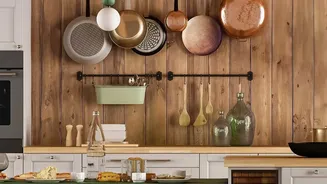
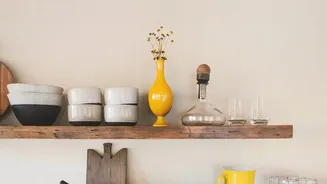
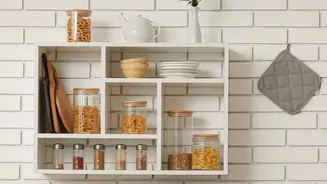
One of the most underutilised areas in any small kitchen is the vertical wall space. Instead of letting walls sit empty, transform them into functional storage hubs. Installing simple floating shelves can instantly create a home for your daily-use items
like spice jars, tea containers, and cooking oils. This not only keeps your countertops clear for prep work but also makes ingredients easy to see and grab. Another smart idea is to install hanging rods with S-hooks for ladles, spatulas, and tongs, or a magnetic strip for knives. This frees up precious drawer space and keeps your most-used tools within arm's reach while you cook.
Maximise Every Cabinet
Limited cabinets don't have to mean limited storage. The key is to use the space inside them more efficiently. Simple additions like stackable shelf risers can instantly double the capacity of a single shelf, allowing you to store plates below and bowls on top. The inside of cabinet doors is another hidden gem. Mount small racks to hold spice packets, foil rolls, or flat container lids. For deep, awkward corner cabinets, a rotating 'Lazy Susan' tray is a game-changer, allowing you to access items at the back without having to empty the entire shelf.
Introduce a Rolling Cart
If you lack a pantry, a multi-tiered rolling utility cart is the next best thing. This 'pantry on wheels' can be tucked into a corner or next to the refrigerator and rolled out when you need it. It’s perfect for storing bulkier items like onions, potatoes, and extra bottles of oil, or even small appliances that you don’t use every day. A cart adds significant shelving without any permanent installation, making it an ideal solution for renters. It can also double as extra counter space during meal prep.
Decant and Label Everything
Groceries in their original packaging—bags of dal, boxes of poha, and packets of spices—are irregularly shaped and create visual clutter. The simple act of decanting these items into uniform, airtight containers can transform your storage. Opt for square or rectangular containers, as they fit together more snugly than round ones, eliminating wasted space. Using clear containers or adding labels helps you quickly identify ingredients and see when you're running low. This system not only looks organised but also keeps your staples fresh and free from pests.
Store Lids and Flat Items Vertically
Pot and pan lids are notoriously awkward to store. Instead of stacking them messily, store them upright. A simple file organiser or a dedicated lid rack can be placed inside a deep drawer or cabinet, holding lids vertically like files in a cabinet. This makes it easy to grab the exact lid you need. This vertical-first approach also works wonders for other flat items. Use tension rods inside a cabinet to store chopping boards, tawas, and serving trays on their sides, saving a significant amount of horizontal shelf space.
Organise By Cooking Zones
A truly efficient kitchen is organised by activity, not just by item type. Create designated zones for common tasks. For example, a 'tea and coffee station' could have your mugs, sugar, and tea leaves all in one spot. A 'tadka zone' near the stove can hold your most-used spices, oil, and ghee. Similarly, group all your roti-making essentials like the atta container, chakla, and belan together. This approach minimises the need to move around the kitchen searching for different components, making your cooking process smoother and faster, even in a compact space.