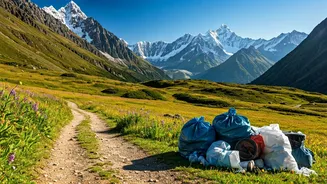









The New High-Altitude Hustle
Forget chasing likes with the perfect sunrise shot. The new badge of honour for a growing number of young Indian trekkers is a bag full of trash. A powerful trend is taking root in the Himalayas and other mountain ranges, where youth are combining their
love for the outdoors with a fierce commitment to preserving it. They aren't just picking up a stray wrapper; they are organising dedicated cleaning drives during their treks, documenting their efforts, and creating 'cleaning streaks' on social media. This isn't about one-off acts of kindness. It's a sustained, documented effort shared on platforms like Instagram, where videos show groups collecting mounds of plastic bottles, food packets, and other non-biodegradable waste left behind by tourists. The goal is twofold: to physically clean the pristine landscapes and to digitally shame the culture of littering that has plagued India's most beautiful destinations.
From Plogging to a Passion Project
The movement has roots in 'plogging'—a Swedish concept of picking up litter while jogging—which has found fertile ground in India. But what's happening at high altitudes is an evolution of that idea, supercharged by a sense of urgency. The motivation goes far beyond a simple social media challenge. For many participants, it’s a deeply personal response to witnessing the degradation of places they love. They speak of the heartbreak of finding heaps of plastic waste marring a view that should be untouched. This isn't performative activism; it’s a hands-on, physically demanding mission. Groups like the Healing Himalayas Foundation have been pioneers, mobilising volunteers for years. Now, this ethos is spreading organically among informal groups of friends and solo trekkers who believe that access to these beautiful places comes with a responsibility to protect them. They see themselves not as tourists, but as temporary custodians.
The Gruelling Logistics of Garbage
Cleaning at sea level is one thing; hauling garbage from an altitude of 12,000 feet is another entirely. The logistics are formidable. Trekkers who undertake these cleaning streaks often carry extra, empty sacks on their way up. On the way down, these sacks are filled with kilograms of waste, adding significant weight to their already heavy packs. The work involves separating waste—plastics, glass, metal—as much as possible. The real challenge often begins after the descent. In many remote mountain villages and towns, proper waste management infrastructure is non-existent. The collected trash can’t simply be left in a local bin. Responsible groups coordinate with local authorities or NGOs to transport the waste to recycling facilities in larger cities, often hundreds of kilometres away. This last-mile effort is what separates a token gesture from a truly impactful clean-up.
The Ripple Effect of a Viral Post
While some may dismiss the social media aspect as 'slacktivism,' its impact is undeniable. Every post showing a 'trash haul' from a popular trail like Triund or Kedarkantha acts as a powerful piece of awareness. It educates thousands of potential tourists about the waste problem, often more effectively than a government-sponsored campaign. The visual proof of their peers doing the hard work inspires others to join in. Tour operators are also taking notice, with many now incorporating 'clean as you go' principles into their trek itineraries. Local communities, initially sometimes skeptical, are increasingly supportive, seeing the long-term benefit of preserving the natural beauty that draws tourists in the first place. The trend is shifting the narrative from passive tourism to active, responsible travel.
Can a Trend Create Lasting Change?
The critical question is whether this wave of enthusiasm can translate into permanent change. A viral trend is, by nature, fleeting. While these youth-led initiatives are making a visible difference, they are treating the symptoms of a much larger problem. The real solution lies in systemic changes: stricter enforcement of anti-littering laws, building robust waste management infrastructure in mountain regions, and fostering a fundamental shift in the mindset of all tourists. The cleaning streaks are an incredible start, a grassroots movement holding a mirror up to society. They prove that a generation often stereotyped as screen-addicted is willing to get its hands dirty for a cause it believes in. However, their efforts must be supported by policy and infrastructure to prevent them from becoming an endless, Sisyphean task.