

Paolo Maldini: The Ageless Defender
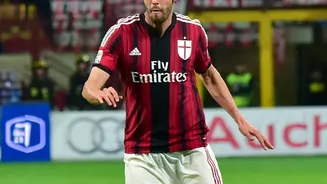
Paolo Maldini’s career is a masterclass in loyalty and adaptation. Making his AC Milan debut as a 16-year-old in 1985 and retiring in 2009 at the age of 40, he didn't just play for 25 seasons; he was an elite defender in all of them. Maldini began as an athletic,
marauding left-back in the late 1980s, a cornerstone of Arrigo Sacchi’s revolutionary Milan side that twice conquered Europe. That era was defined by aggressive pressing and a high defensive line. As the years passed and his pace naturally declined, Maldini seamlessly transitioned into an intelligent, positionally perfect centre-back. In this new role, his reading of the game and composure became his greatest assets, allowing him to nullify strikers who were often half his age. He captained Milan to Champions League glory in 2003 and 2007, 18 years after he first lifted the trophy, facing entirely new generations of attackers and tactical systems.
Cristiano Ronaldo: The Ultimate Evolution
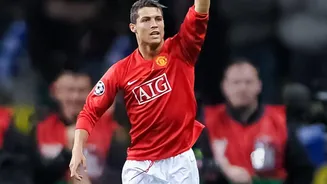
Cristiano Ronaldo’s career showcases perhaps the most dramatic positional evolution in modern football. He arrived at Manchester United in 2003 as a wiry, flashy winger, full of step-overs and prioritizing entertainment. In that first generation of his career, he was a creator and a showman. By the late 2000s, he had morphed into a ruthless goal-scoring forward who started wide but lived for cutting inside to shoot. His move to Real Madrid in 2009 marked the start of his second dominant era, where he became an unstoppable inside-forward, breaking every goalscoring record imaginable. As he entered his 30s, a third evolution began. Acknowledging a decline in his explosive pace, Ronaldo reinvented himself as the ultimate penalty-box predator, a master of movement and one-touch finishing. This intelligence allowed him to lead Real Madrid to three consecutive Champions League titles and continue his prolific scoring at Juventus and beyond, proving his dominance across three distinct footballing identities.
Lionel Messi: The Constant Genius
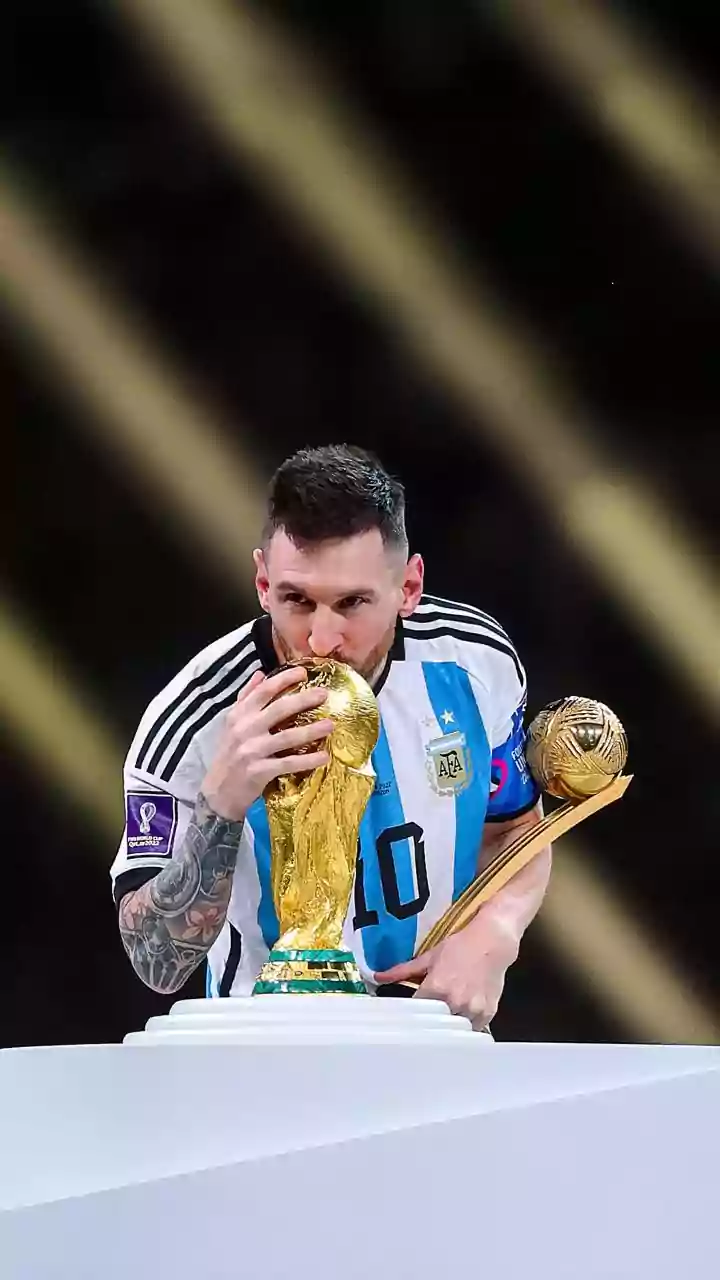
While Ronaldo’s story is one of evolution, Lionel Messi’s is one of sustained, otherworldly genius applied in different ways. He debuted for Barcelona in 2004 as a teenage prodigy on the right wing. By the time Pep Guardiola took over in 2008, Messi was redefined as a 'false nine', a move that changed modern tactics and saw him score an unprecedented 91 goals in a single calendar year in 2012. This was the first generation he dominated. As he matured, his role deepened. While still scoring at an incredible rate, he became his team's chief playmaker, dropping into midfield to dictate the entire flow of the game. He led Argentina to World Cup glory in 2022, a crowning achievement that cemented his legacy across a new generation of football. From explosive dribbler to false nine to all-knowing creator, Messi has remained the central point of every team he plays for, his dominance simply changing its form but never its substance.
Zlatan Ibrahimović: The Nomadic Conqueror
Zlatan Ibrahimović’s longevity is unique, defined by his ability to impose his singular talent across a wide array of clubs and leagues for over two decades. Starting his professional career at Malmö in 1999, he went on to win league titles in four different countries with clubs like Ajax, Inter Milan, Barcelona, PSG, and AC Milan. The first generation of his dominance was in the mid-2000s with Juventus and Inter, where his blend of size, acrobatics, and technical skill was unlike anything seen in Serie A. He then led PSG to its first league title in 19 years, establishing an era of dominance in France. Even after a serious knee injury at Manchester United in 2017, an injury that would end many careers, he returned to the top level. He rejoined AC Milan in his late 30s and, in his second act in Italy, led them to a Serie A title in 2022, a full 11 years after winning it with them the first time.
Gianluigi Buffon: The Eternal Guardian
Few players have a career that spans the sheer breadth of modern football history like Gianluigi Buffon. He made his Serie A debut for Parma in 1995, an era of legendary Italian strikers like Gabriel Batistuta and Roberto Baggio. He won the UEFA Cup with Parma in 1999 before a record-breaking transfer to Juventus in 2001. The first generation of his dominance saw him win the 2006 World Cup with Italy, conceding only two goals all tournament. He remained with Juventus after their relegation following the Calciopoli scandal, a symbol of loyalty. He then became the bedrock of a new Juventus dynasty, winning nine Serie A titles in total. Buffon played at an elite level for so long that he faced both Lilian Thuram and his son, Marcus Thuram, in professional matches. Retiring in 2023 at the age of 45, his career spanned an incredible 28 years, making him the ultimate link between different footballing worlds.