






What Is the Dragonfly Mission?
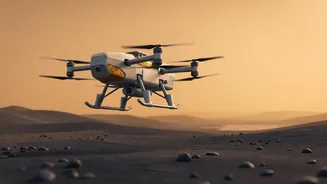
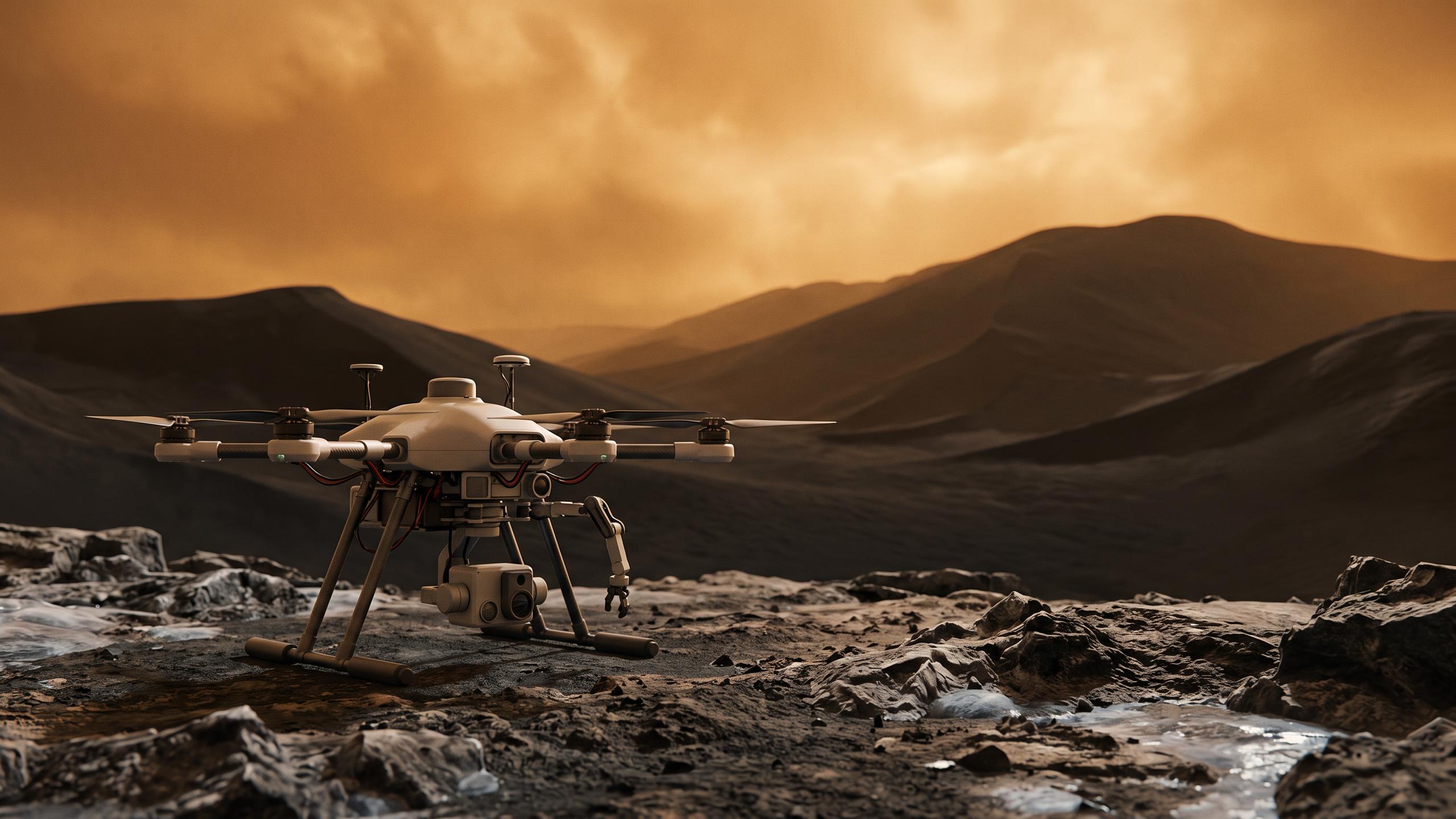
Dragonfly is one of NASA's most ambitious missions, a car-sized rotorcraft designed to fly through the skies of Saturn's largest moon, Titan. Unlike wheeled rovers, which are limited by terrain, this dual-quadcopter will act as a mobile laboratory, capable
of flying to dozens of promising locations. Scheduled for launch in July 2028, it will embark on a long journey, arriving at Titan in 2034. Once there, it will perform a series of short flights, landing to analyze the surface before taking to the air again. This allows it to cover far more ground than any rover could, studying diverse geological settings from sand dunes to impact craters. The mission is not just about exploration; it's a deep dive into astrobiology, aiming to understand the building blocks of life.
Why Titan? A World of Prebiotic Chemistry
Titan is a tantalizing target because it's considered a prebiotic-like laboratory on a planetary scale. Its nitrogen-rich atmosphere is even denser than Earth's, and it's brimming with complex organic molecules. These carbon-based compounds rain down from the sky, blanketing a surface that has mountains of water ice and rivers of liquid methane and ethane. This unique environment, with its mix of organic materials and the potential for liquid water (perhaps from impact melts or a subsurface ocean), creates a primordial soup of ingredients necessary for life as we know it. By studying Titan, scientists can essentially look back in time to see the kinds of chemical processes that might have occurred on early Earth before life began.
A Flying, Hopping Laboratory
Flying on Titan is surprisingly feasible. The moon's thick atmosphere (about four times denser than Earth's) and low gravity (about one-seventh of Earth's) make it an ideal environment for a rotorcraft. These conditions mean the car-sized Dragonfly can take off and fly with relative ease. The plan is for Dragonfly to perform one flight per Titan day, which lasts about 16 Earth days. During its time on the surface, it will use a nuclear power source, a Multi-Mission Radioisotope Thermoelectric Generator (MMRTG), to recharge its batteries. This is necessary because Titan is too far from the sun for solar panels to be effective. Each flight will be meticulously planned but executed autonomously, as the signal delay from Earth is over an hour. This allows Dragonfly to hop across dozens of miles, visiting areas that a rover could never reach.
The Science on Board
Dragonfly is packed with a suite of instruments to investigate Titan's environment. Its primary tool is the Dragonfly Mass Spectrometer (DraMS), which will analyze the composition of surface samples to identify complex organic molecules—the potential building blocks of life. To collect these samples, the rotorcraft is equipped with drills on its landing skids, named DrACO (Drill for Acquisition of Complex Organics), that can bore into the icy ground. Other instruments include a gamma-ray and neutron spectrometer (DraGNS) to determine the composition of the ground underneath the lander, and a suite of meteorology and geophysics sensors (DraGMet) to monitor weather and seismic activity, listening for 'Titanquakes'. A camera suite, DragonCam, will provide stunning aerial images and help mission controllers scout for the next landing site.
The Journey and What Comes Next
The Dragonfly mission will launch aboard a SpaceX Falcon Heavy rocket with a launch window set for July 2028. The spacecraft will then undertake a six-and-a-half-year cruise through the solar system, scheduled to arrive at Titan in late 2034. The entry and landing will be a complex, automated sequence. Once safely on the surface, the science mission begins, with a planned duration of over three years. Dragonfly will initially land in an equatorial dune field called Shangri-La, which is surprisingly similar to the dunes of Namibia on Earth. From there, it will begin its journey of exploration, with a key target being the Selk impact crater, a site where scientists believe liquid water may have mixed with organic materials in the past. The data gathered by Dragonfly could fundamentally change our understanding of how life originates and where it might exist elsewhere in the cosmos.