








Why Humidity Is a Health Hazard
The primary reason for increased food safety risks during the monsoon is the combination of warmth and high humidity. These conditions are ideal for the rapid growth of microorganisms like bacteria and fungi, including moulds. Food that might stay fresh
for longer in drier weather can spoil quickly when the air is damp. This accelerated spoilage isn't always visible or detectable by smell, but it can lead to foodborne illnesses such as stomach infections, diarrhoea, and food poisoning. The increased moisture in the air can compromise food quality, alter textures, and speed up the biochemical processes that cause decay.
Handling Milk with Extra Care
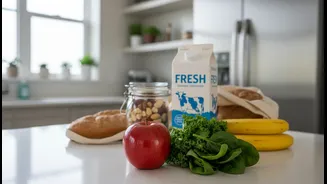
Milk and dairy products are highly perishable and particularly vulnerable in humid weather. To prevent spoilage, always buy milk from trusted sources and check the expiry date. It's crucial to refrigerate milk as soon as possible after purchase, storing it on a shelf in the main part of the fridge—not in the door, where temperatures fluctuate. Boiling milk for 5-10 minutes is a traditional and effective practice to kill harmful bacteria that thrive in the monsoon. Once opened, consume milk within a few days and always store it in a clean, covered container to prevent it from absorbing odours and to protect it from cross-contamination. If you notice any sour taste, unusual smell, or curdled texture, it's safest to discard it immediately.
The Rules for Safe Leftovers
Leftover food can become a high-risk item during the rainy season. Bacteria multiply rapidly in the 'danger zone' between 4°C and 60°C. It's essential to refrigerate any cooked food within two hours of preparation. To cool food rapidly and safely, store it in shallow, airtight containers. This practice prevents moisture and airborne pathogens from contaminating the food. When it's time to eat, make sure to reheat leftovers thoroughly until they are steaming hot, reaching an internal temperature of at least 74°C (165°F), to kill any bacteria that may have developed. As a general rule, consume refrigerated leftovers within three to four days. If you have any doubt about their freshness, especially if they have been left out at room temperature, it's always better to throw them away.
The Hidden Dangers of Cut Fruit
While fruits are a healthy part of any diet, they require special handling during the monsoon. Fruits that are pre-cut and left exposed, whether on a street vendor's cart or a kitchen counter, are highly susceptible to contamination. The sugary, moist surfaces of cut fruit are an ideal breeding ground for airborne bacteria. It is much safer to buy whole fruits, wash them thoroughly under running water just before eating, and then cut them yourself. Avoid purchasing fruits with bruises or cuts on the skin. If you have leftover cut fruit, store it immediately in a sealed, airtight container in the refrigerator to keep it safe for later consumption.
General Monsoon Kitchen Hygiene
Beyond these specific foods, maintaining overall kitchen hygiene is paramount. Always wash your hands thoroughly with soap and water before handling any food. Keep your kitchen surfaces, chopping boards, and utensils clean and sanitised, using separate boards for raw meat and vegetables to prevent cross-contamination. Wash all vegetables, especially leafy greens, thoroughly before cooking; soaking them in salt water can help remove germs. It's also wise to avoid street food, particularly items that are raw or served with untreated water, as the risk of contamination is significantly higher during this season.