





A New Era of Overnight Travel
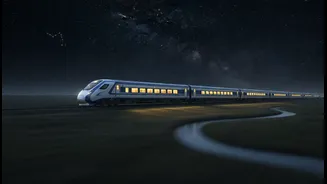
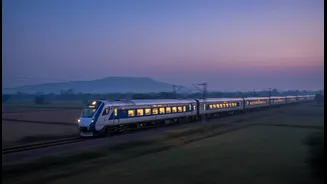
Indian Railways is rapidly expanding its Vande Bharat network, and the introduction of sleeper versions marks a significant leap forward for long-distance overnight travel. The first service was launched in January 2026 on the Howrah-Guwahati route, and now
the second sleeper, named the Sant Ravidas Express, is set to connect Varanasi with Chheharta (Amritsar) starting July 17, 2026. These trains are designed to be a premium alternative to existing services, boasting modern amenities, superior comfort, and, most notably, higher speeds. With features like ergonomically designed berths, better soundproofing, advanced safety systems like Kavach, and a sleeker overall experience, the Vande Bharat sleeper aims to redefine what passengers can expect from an overnight journey. The goal is clear: to offer a faster, more comfortable alternative to the Rajdhanis and other superfast trains that have been the backbone of long-distance travel for decades.
The Crucial Question of Cost
While the promise of a better journey is alluring, the primary consideration for most travellers boils down to two things: time and money. This is where the Vande Bharat sleeper introduces a new set of calculations. Official announcements and fare structures indicate that these new trains will be marginally more expensive than their Rajdhani counterparts. The pricing is determined on a per-kilometre basis, with a minimum chargeable distance of 400 km. This means even for shorter legs of a long journey, passengers will pay a base fare. Another significant change is the ticketing policy: Vande Bharat sleepers will only offer confirmed berths, doing away with the long-standing Reservation Against Cancellation (RAC) system. This ensures no passenger is left sharing a berth, but it also alters the booking dynamics for millions who rely on the RAC provision. For the average family or business traveller, the question isn't just whether the Vande Bharat is better, but whether it is better value for their specific needs.
Case Study: Varanasi to Amritsar
Let's take the new Sant Ravidas Express as a practical example. It connects two major religious and commercial hubs, Varanasi and Amritsar, passing through key cities like Lucknow and Jalandhar. The Vande Bharat aims to cover this distance faster than existing trains, leveraging its top operational speed of 130-160 km/h and faster acceleration. However, for a passenger planning this trip, a simple fare chart is not enough. They need a direct, route-level comparison. How much time does it actually save compared to, say, the Akal Takht Express or other superfast trains on the same corridor? Is the time saved—perhaps a few hours—worth the premium in fare? For instance, reports pegged the fare for a 1,000 km journey on the first sleeper Vande Bharat at roughly Rs 2,400 for 3AC, Rs 3,100 for 2AC, and Rs 3,800 for 1AC, slightly higher than Rajdhani fares over similar distances. Without a clear, side-by-side schedule and fare table from Indian Railways, passengers are left to do the complex math themselves.
Beyond Price and Time
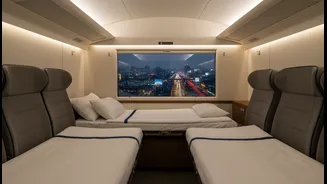
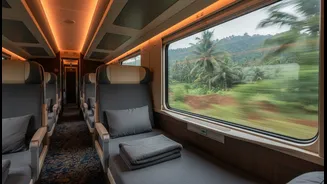
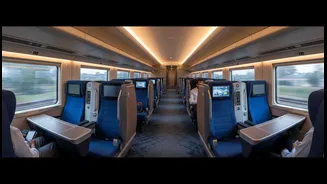
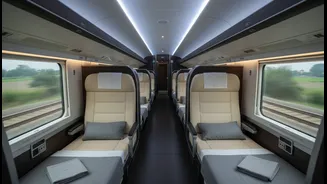
Of course, the travel experience is more than just fares and schedules. The Vande Bharat sleeper offers tangible upgrades. The coaches are designed with a focus on passenger comfort, featuring improved suspension for a smoother ride, better berth cushioning, individual reading lights, and modern, clean toilets. The privacy is enhanced with enclosed cabins and sliding doors, moving closer to a hotel-on-wheels concept. For some, these improvements in comfort and hygiene, along with the enhanced safety features, will be more than enough to justify the higher cost. A quiet, restful night's sleep in a cleaner environment might be worth the price difference, especially for business travellers or families with young children. This subjective value of comfort is a major part of the equation, but it can only be judged when weighed against the concrete metrics of price and travel time.
The Need for Transparent Benchmarking
The launch of a new premium train is undoubtedly a positive development for Indian Railways and its passengers. However, the excitement around new technology and modern design can sometimes obscure the practical details that drive consumer decisions. The biggest caveat with the new sleeper Vande Bharats is the lack of readily available, official route-level comparisons. To truly empower travellers, Indian Railways should provide clear benchmarks for each new route. This would involve a simple, accessible table showing the Vande Bharat's schedule and fare alongside the existing primary trains on that same corridor. This transparency would allow passengers to see the exact time saved, the additional cost incurred, and make a choice based on their own priorities—whether it's speed, cost, or comfort. Without this, the Vande Bharat risks being seen as a premium product for a select few, rather than a well-understood upgrade for all.