







1. Inspect Your Tyres
Your tyres are the only connection between your vehicle and the wet road, making them the most critical safety feature in the rain. Before driving, check the tyre pressure and ensure it matches the manufacturer's recommendation, which is usually found
on a sticker inside the driver's side door. Properly inflated tyres provide better grip and handling. More importantly, inspect the tread depth. The grooves on your tyres are designed to channel water away and prevent skidding. A simple way to check this in India is the one-rupee coin test: insert a coin into the tread, and if the head of the Ashoka lion emblem is visible, your tyres are too worn and need replacement. A minimum tread depth of 3mm is recommended for monsoon conditions to avoid hydroplaning, where your vehicle loses traction and slides on a layer of water.
2. Test Your Brakes
Wet roads significantly increase your vehicle's stopping distance. Brakes that work perfectly in dry weather can feel less responsive when moisture gets between the brake pads and rotors, reducing friction. Before you start your trip, test the brakes at a low speed. They should feel firm and responsive, not soft or spongy. Listen for any unusual noises like squealing or grinding, which can indicate worn brake pads or rust buildup. If you've driven through deep water, gently apply the brakes a few times while moving slowly to help dry them out and restore their effectiveness. Never ignore a brake warning light on your dashboard; get it checked immediately.
3. Check All Your Lights
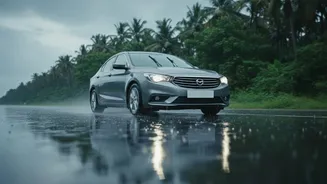
In heavy rain and foggy conditions, visibility drops dramatically. Functional lights are essential not just for you to see the road, but for others to see you. A simple walk-around check is all it takes. Ensure your headlights, taillights, brake lights, and turn signals are all working correctly. It’s a good rule of thumb that if your windshield wipers are on, your headlights should be on too—even during the day. This makes your vehicle far more visible to other drivers, especially if you have a grey or muted-colour vehicle that can blend into the background during a downpour. Also, check that your headlamp lenses are clean and not cloudy, as dirty covers can dim the light.
4. Examine Your Wiper Blades
A clear view of the road is non-negotiable, and that's the primary job of your wiper blades. Over time, the rubber on wipers can harden and crack, especially after long exposure to summer heat. Worn blades will leave streaks or fail to clear water effectively, dangerously impairing your vision during a sudden downpour. Before it rains, test your wipers. If they judder, squeak, or leave smears, it’s time to replace them. Also, make sure your windshield washer fluid reservoir is full. A quick spray can help clear away road grime and mud that gets splashed onto your screen, which is a common problem on Indian roads during the monsoon.
5. Verify Your Defogger and AC
Visibility issues in the rain aren't just external. High humidity can cause your vehicle's windows and windshield to fog up from the inside, creating a blurry and dangerous view. Your car's air conditioning (AC) system is the fastest way to clear this up. The AC removes moisture from the air inside the cabin, quickly defogging the glass. Before you drive, turn on your AC and direct the vents towards the windshield to ensure the defogger is working efficiently. For motorcyclists, a clean, scratch-free helmet visor treated with an anti-fog coating or fitted with a Pinlock insert is crucial for maintaining clear vision.