








Beyond the Static Test Paper
For generations, examinations have been a static affair. Everyone gets the same questions in the same order, regardless of their individual knowledge. A student who finds the first few questions easy is forced to wade through them, while a student who struggles
early might get discouraged and perform poorly on subsequent questions they might have otherwise known. This traditional model measures performance at a single point in time but is inefficient at gauging true mastery or potential. Enter adaptive testing. The concept isn't brand new; standardised tests like the GMAT and GRE have used a simpler form for years. The basic idea is that the test adjusts its difficulty based on your answers. Get a question right, and the next one gets slightly harder. Get it wrong, and the next one becomes a bit easier. This process allows the test to quickly zero in on a student's precise ability level, providing a more accurate assessment in less time.
How AI Changes the Game
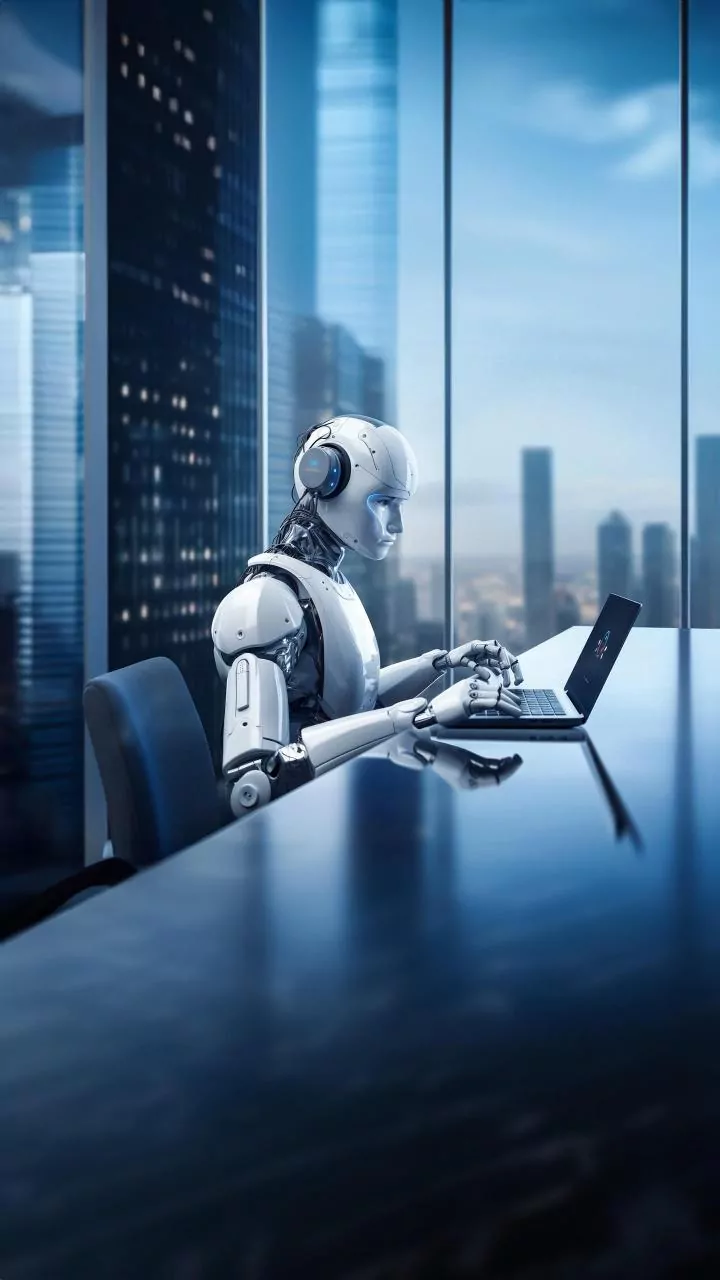
What’s new is the integration of sophisticated artificial intelligence, turning these systems into what the headline calls “smart AI reading assistants.” Here, the 'assistant' isn't helping you answer questions, but rather 'reading' your performance with incredible nuance. Modern AI, particularly large language models (LLMs), elevates adaptive testing in several key ways.
First, it allows for dynamic question generation. Instead of drawing from a fixed bank of questions, AI can create an almost infinite variety of problems on the fly, tailored to the specific concept a student is struggling with. Second, AI can analyse more than just right-or-wrong answers. It can assess the time taken, the steps followed in a complex problem, and even the confidence level in a response. For subjects like writing or coding, AI can evaluate open-ended answers, providing feedback that was once the sole domain of human teachers. This deep 'reading' of a student's interaction is what makes the process so powerful.
The Personalised Learning Revolution
The biggest winner in this shift is the learner. Adaptive AI testing transforms assessment from a dreaded final event into a continuous, integrated part of the learning journey. By identifying knowledge gaps with surgical precision, the system can immediately recommend a specific video, reading material, or practice problem to address that weakness. This creates a highly personalised learning path for every single student.
Imagine preparing for a competitive exam like the JEE or NEET. Instead of blindly solving past papers, an adaptive platform could identify that you’re strong in mechanics but weak in thermodynamics. It would then serve you targeted content on thermodynamics until you achieve mastery, saving you countless hours of redundant study. For corporate training, this means employees can quickly upskill by focusing only on what they don't know, making professional development far more efficient and cost-effective.
Challenges on the Horizon
Despite the immense promise, the road to widespread adoption has its bumps. The primary concern is equity. Developing and implementing these sophisticated AI systems is expensive, which could widen the gap between well-resourced institutions and those with limited funding. There are also valid concerns about algorithmic bias. If the AI is trained on biased data, it could perpetuate or even amplify existing inequalities in assessment.
Furthermore, there's the challenge of data privacy and security. These platforms collect a vast amount of data on student performance, and ensuring this information is used ethically and protected from misuse is paramount. Finally, educators need to be trained to interpret the rich data these systems provide and integrate it effectively into their teaching methods. The technology is only a tool; its true value is realised through human expertise.
The Indian Ed-Tech Context
India's bustling ed-tech landscape is a prime breeding ground for this technology. With millions of students vying for limited seats in higher education and competitive jobs, the demand for efficient and effective preparation tools is insatiable. Several Indian startups and established players are already incorporating adaptive learning elements into their platforms. The ability to offer personalised coaching at scale is a massive commercial and educational opportunity.
As internet penetration and digital literacy continue to grow, AI-driven adaptive testing could become a cornerstone of education, from K-12 schooling to lifelong professional development. It has the potential to make high-quality, personalised instruction more accessible, moving beyond the constraints of the traditional classroom.