


Before 'upcycling' became a buzzword, it was a way of life in India. Age-old textile traditions have always known the secret to transforming worn-out clothes into something beautiful, weaving sustainability and stories into every thread.
Kantha: The Art of the Running Stitch
Originating from
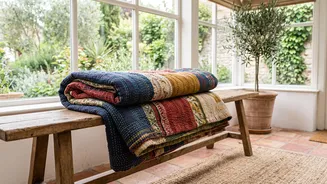
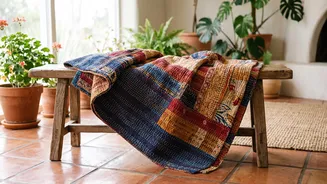
Bengal, Kantha is a testament to the beauty of simplicity. The craft involves layering old, soft dhotis and sarees and stitching them together with a simple running stitch. Traditionally, women in rural households would use threads pulled from the borders of old sarees to embroider motifs of flowers, animals, and scenes from daily life. This not only reinforced the worn fabric but also created stunning, lightweight quilts known as Nakshi Kantha, each piece telling a unique story. In a modern home, Kantha finds its place as vibrant bedspreads, unique throws for a sofa, or even framed as a piece of textile art. The slightly wrinkled texture and intricate hand-stitching add a touch of warmth and heritage to any space.
Gudri: The Layered Heirlooms of the West
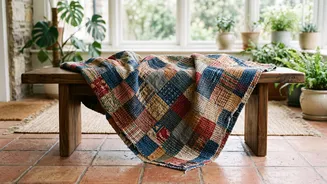
Travel west to Rajasthan and parts of Gujarat and Maharashtra, and you'll find Gudri, a quilting tradition that gives new life to fabric scraps. Gudri quilts are made by stacking several layers of used or leftover fabric and sewing them together with thick, colourful threads. The result is a thick, durable, and often reversible quilt. What makes Gudri so special is its improvisational nature. There are no strict patterns; artisans arrange the fabric pieces based on colour and texture, creating a spontaneous and vibrant collage. These quilts are perfect as cozy blankets, durable rugs (dhani), or colourful floor cushions that bring a bohemian flair to your living room.
Patchwork and Appliqué: A Mosaic of Memories
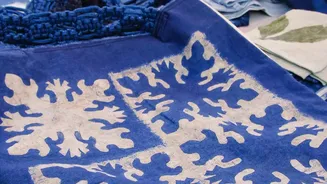
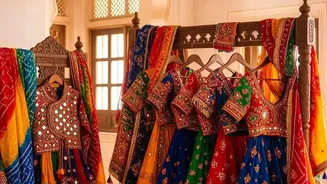
Patchwork is a craft of assembly, where small pieces of different fabrics are sewn together to form a larger, cohesive design. In India, particularly in Gujarat and Rajasthan, this technique is used to create everything from festive tapestries to cushion covers and bags. Old garments with beautiful embroidery or prints are carefully cut and stitched onto a base fabric, a technique known as appliqué. This creates a rich, textured surface that preserves the most beautiful parts of a worn-out textile. Imagine a wall hanging made from patches of old wedding sarees or a set of cushion covers created from your children’s outgrown clothes. It’s not just a decoration; it's a mosaic of personal history and artisanal skill.
Chindi: Weaving Waste into Wonder
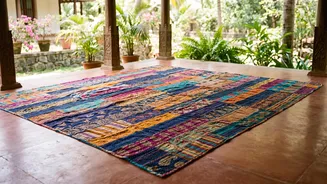
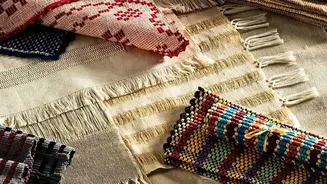
The ultimate example of resourcefulness, 'Chindi' literally translates to 'scrap'. This craft, popular in many parts of India, involves braiding or weaving strips of leftover fabric from tailors or textile mills into colourful rugs, mats, and baskets. Nothing goes to waste. These fabric strips, which would otherwise end up in a landfill, are transformed into functional and cheerful home items. A Chindi rug can add a burst of colour to a neutral room, and because they are made from a mix of fabrics, no two are ever exactly alike. This craft is a powerful reminder that even the smallest scraps can be woven together to create something strong, useful, and beautiful.