

NISAR: The Indo-US Eye in the Sky
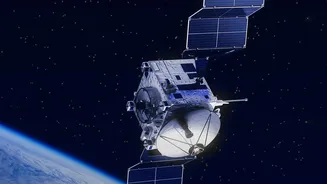
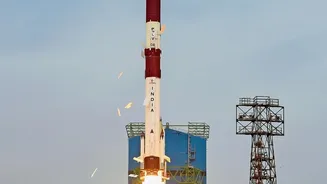
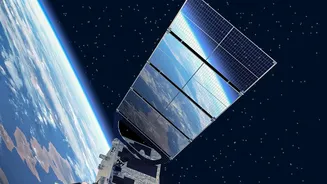
The most significant mission for Indian readers is undoubtedly the NASA-ISRO Synthetic Aperture Radar (NISAR). This groundbreaking collaboration between the American and Indian space agencies is a powerful Earth-observation satellite. Hypothetically launched
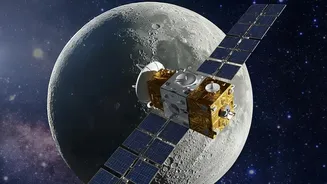
in 2025, by mid-2026, it is delivering a wealth of data. Provisional L-band data became publicly available starting in July 2026, with ISRO releasing S-band data through its own portals. The satellite uses two different radar frequencies (L-band and S-band) to create incredibly detailed maps of Earth's surface, measuring changes as small as a centimeter. For India, the applications are immense. NISAR's data will be crucial for managing agriculture, monitoring floods and landslides, tracking glacier melt in the Himalayas, and studying the impact of climate change on our ecosystems. It is a testament to the deepening strategic partnership in space between the two nations and provides critical, actionable intelligence for Indian policymakers and scientists.
Artemis Accords: India's Ticket to the Moon
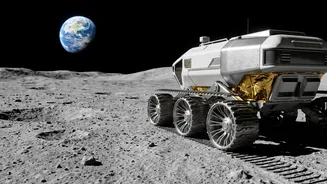
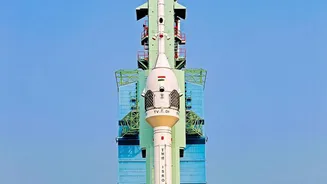
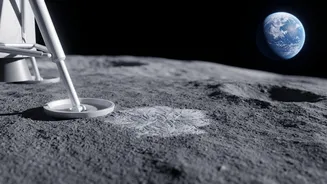
NASA's Artemis program is its ambitious plan to return humans to the Moon and establish a sustainable presence. For India, the most crucial development is its participation in the Artemis Accords. By signing the accords in 2023, India joined a global coalition shaping the future of lunar exploration. This move ensures India is not left behind in the new era of space governance and technology standards. In August 2026, NASA formally invited ISRO to participate in its Moon Base program, a significant step that could give India a role in building a permanent lunar outpost. This collaboration provides invaluable insights for India's own ambitious goals, including the Gaganyaan human spaceflight mission and the plan to land an Indian astronaut on the Moon by 2040. It’s a strategic alignment that boosts India's space economy and solidifies its place among the world's leading space powers.
Europa Clipper: The Search for Alien Oceans
While Artemis looks to our nearest neighbour, the Europa Clipper mission is venturing much farther afield in the search for extraterrestrial life. Launched in October 2024, the spacecraft is on a long journey to Jupiter's icy moon, Europa. Scientists believe a vast, salty ocean lies hidden beneath Europa’s frozen crust, potentially holding the ingredients for life. In December 2026, Europa Clipper is scheduled to perform a crucial Earth gravity assist, a slingshot maneuver to pick up speed for its arrival in the Jupiter system in 2030. The probe will conduct dozens of close flybys, some just 25 kilometers above the surface, using a suite of instruments to analyze the ice shell and hunt for plumes of water erupting into space. For India, this mission represents the universal human quest for knowledge and the profound question: are we alone?
Mars Sample Return: A Mission in Flux
Bringing a piece of Mars back to Earth is one of NASA's most audacious goals. The Mars Sample Return (MSR) campaign aims to retrieve the rock and soil samples painstakingly collected by the Perseverance rover. However, the original mission plan faced significant budget and timeline challenges, leading Congress to halt funding for that specific architecture in early 2026. NASA is now reassessing its strategy, evaluating new, more cost-effective approaches with a final decision on the new mission design expected later in 2026. While the American effort is being retooled, the scientific prize remains. The samples collected by Perseverance are of immense value, and their eventual return in the 2030s would allow scientists globally, including those in India, to study pristine Martian material in labs on Earth for the first time.
Dragonfly: A Drone on a Distant Moon
Looking further into the future, NASA's Dragonfly mission is one of the most exciting projects on the horizon. Scheduled for launch in July 2028, this nuclear-powered, car-sized rotorcraft will fly through the thick atmosphere of Saturn's largest moon, Titan. Arriving in 2034, Dragonfly will hop between dozens of locations, studying prebiotic chemistry on a world rich in organic molecules. Titan is often compared to an early, frozen Earth, and studying its environment could provide clues about how life began on our own planet. The mission has passed its preliminary design review and is now confirmed for development. For Indian readers, Dragonfly represents the cutting edge of robotic exploration—a bold, futuristic mission that pushes the boundaries of what is possible and inspires the next generation of scientists and engineers.