




India’s Next Interplanetary Frontier
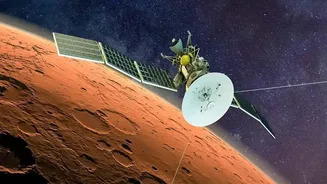
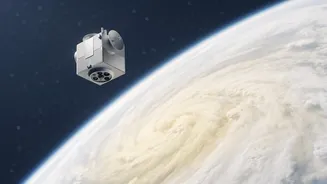
Following the monumental successes of its lunar and Martian missions, the Indian Space Research Organisation (ISRO) is setting its sights on the second planet from the Sun. Officially named the Venus Orbiter Mission (VOM), Shukrayaan represents India's
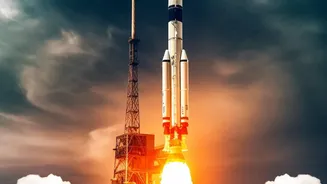
first dedicated mission to our closest planetary neighbour. After receiving formal approval from the Union Cabinet in September 2024, the mission is now a key part of India's ambitious space exploration roadmap. Tentatively scheduled for a March 29, 2028 launch, Shukrayaan will journey for 112 days before entering orbit around Venus. This endeavour not only builds on ISRO's proven capabilities in deep-space missions but also aims to place India among the select few nations that have successfully explored the enigmatic world of Venus.
The Enigma of Earth’s ‘Evil Twin’
Venus presents a profound scientific puzzle. While it shares a similar size, mass, and density with Earth, it evolved into the most hostile planet in our solar system. Its surface is hot enough to melt lead, with temperatures reaching around 465°C, and the atmospheric pressure is over 90 times that of Earth's at sea level. The planet is perpetually shrouded in thick clouds of sulfuric acid, which have long obscured its surface from view. Scientists believe Venus may have once been a more habitable world, perhaps even with liquid water, before a runaway greenhouse effect took hold. Understanding why and how this dramatic divergence occurred is a primary motivation for the mission, as it could offer critical insights into planetary evolution and climate change on Earth.
A Toolkit to Decode the Atmosphere
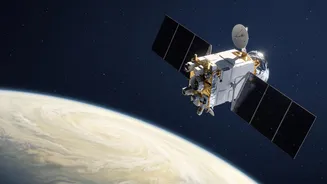
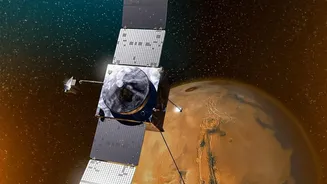
The core objective of Shukrayaan is to perform a detailed investigation of Venus's surface, sub-surface, and atmosphere. To do this, the orbiter will carry a scientific payload of approximately 100 kg, comprising 19 advanced instruments developed by both Indian and international partners. A key instrument is a high-resolution Synthetic Aperture Radar (SAR), designed to penetrate the dense cloud cover and map the planet's geological features, such as volcanic hotspots and lava flows, with unprecedented detail. Other sensors will function like atmospheric 'sniffers', analysing the chemical composition of the air, studying the super-rotating winds, and investigating the interaction between the atmosphere and the solar wind. This suite of tools will provide a comprehensive picture of the processes that drive Venus's extreme climate.
Overcoming Extreme Challenges
A mission to Venus is fraught with technical difficulties. The intense heat, crushing pressure, and corrosive atmosphere pose significant threats to any spacecraft. The Shukrayaan orbiter is being designed to withstand this harsh environment for its planned four-year mission duration. One of the clever techniques ISRO plans to use is aerobraking. Instead of carrying vast amounts of fuel to slow down, the spacecraft will repeatedly dip into the upper reaches of the Venusian atmosphere, using drag to gradually lower its initial high-elliptical orbit (500 km by 60,000 km) to a much closer science orbit of around 200 km by 600 km. This fuel-saving manoeuvre is crucial for maximising the scientific payload and extending the operational life of the mission.