





Ghee: The Golden Elixir
For years, ghee was unfairly sidelined, viewed as an unhealthy indulgence. But the golden elixir that once formed the bedrock of Indian cooking is back, and it’s reclaiming its throne. This isn't just about nostalgia for the aroma of a grandmother's cooking;
it's a revival backed by a modern understanding of nutrition. Chefs in high-end restaurants are proudly using it for its high smoke point and nutty flavour, while nutritionists are celebrating its good fats, like butyric acid, which aids digestion and reduces inflammation. From being a simple cooking medium, ghee is now a wellness product. You'll find it infused with herbs, smeared on toast as a healthier butter alternative, and even blended into 'bulletproof' coffee. This resurgence is a perfect example of tradition meeting trend. We’re finally acknowledging what our ancestors knew all along: pure, well-made ghee is not the enemy, but a source of strength and flavour.
Millets: The Humble Superfood
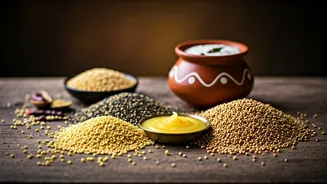
Not long ago, millets like jowar, bajra, and ragi were considered 'coarse grains'—food of the past or for rural areas. Today, they are the darlings of the health-conscious urbanite. Thanks to a global push for sustainable, gluten-free alternatives to wheat and rice, these ancient grains are experiencing a massive renaissance. The UN's declaration of 2023 as the International Year of Millets only amplified a trend that was already bubbling up.
What’s driving this comeback? Millets are incredibly resilient crops that require less water than rice and wheat, making them an environmentally smart choice. Nutritionally, they are powerhouses, packed with fibre, protein, and essential minerals. They are no longer confined to rotis or porridge. Creative chefs and home cooks are turning them into everything from millet 'risotto' and salads to fluffy cakes and crunchy granola. This isn't about replacing our favourite grains, but about diversifying our plates for better health and a better planet.
Fermented Foods: The Gut-Friendly Heroes
The tang of kaanji, the sharp taste of a homemade pickle, the comforting sourness of dosa batter—fermented foods have always been part of India’s culinary landscape. But now, with the global obsession over gut health, these traditional preparations are being seen in a new light. What was once a simple preservation technique is now understood as a sophisticated process for creating probiotic-rich foods that nurture our gut microbiome.
The trend goes beyond just appreciating our own traditions. We are now seeing a cross-pollination of ideas, with home cooks experimenting with kombucha and sourdough alongside their seasonal pickles. This revival is less about a single ingredient and more about embracing a process. It’s a move away from ultra-processed, shelf-stable foods towards living, dynamic foods that are teeming with flavour and health benefits. It's a delicious way to boost immunity and improve digestion, one pickle at a time.
Jaggery (Gud): The Unrefined Sweetener
Refined white sugar is losing its lustre, and its place is being taken by a humble, unrefined hero: jaggery, or 'gud'. Once seen as a rustic sweetener, jaggery is now celebrated for its complex, caramel-like flavour and nutritional profile. Unlike white sugar, which is stripped of all nutrients, jaggery retains minerals like iron, magnesium, and potassium from the sugarcane or palm sap it's made from.
This comeback is visible everywhere. Artisanal brands are offering date palm jaggery and coconut jaggery, each with its own unique flavour profile. Cafes are sweetening their coffees with jaggery syrup, and dessert menus feature sophisticated creations that highlight its earthy sweetness. People are swapping sugar for jaggery not just in their chai, but in their baking and cooking, rediscovering its ability to add depth and richness. It’s a conscious choice for a healthier, more flavourful, and more traditional way to satisfy a sweet tooth.