







What Are These Lunar Delivery Awards?
NASA's Commercial Lunar Payload Services (CLPS) initiative is essentially the space agency's way of outsourcing. Instead of building and flying all its own lunar landers, NASA buys payload delivery services from private companies. On June 30, 2026, the agency announced
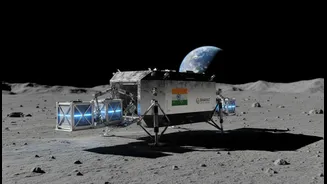
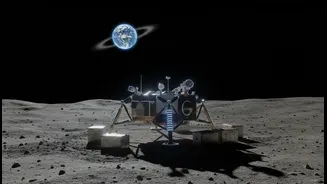
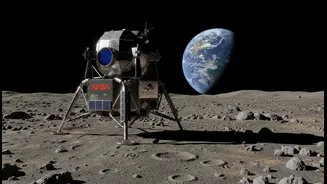
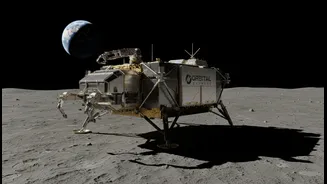
its latest round of contracts, awarding a total of nearly $590 million to three US-based companies: Astrobotic, Intuitive Machines, and Firefly Aerospace. These firms are tasked with delivering science instruments and technology demonstrations to the moon's surface by late 2028. The missions are critical for scouting locations and testing hardware for NASA's ambitious Artemis program, which aims to establish a permanent human presence on the Moon. Astrobotic secured the largest share, with $297.9 million for two landings, while Intuitive Machines and Firefly received $148.3 million and $144.2 million respectively for one mission each.
A Look Back: The Indian Connection That Almost Was
While no Indian company was named in this latest round, it wasn't always this way. In 2019, the Indian space ecosystem was buzzing with news that a Bengaluru-based firm, TeamIndus, was set to be a core partner in one of the first-ever CLPS missions. The US company OrbitBeyond, which had won a $97 million NASA contract, had hired TeamIndus to provide the lander's engineering and design. It was a landmark moment, positioning an Indian private company at the heart of America's return to the Moon. However, the dream was short-lived. Just a few months later, OrbitBeyond pulled out of the contract, citing "internal corporate challenges." The episode, which also saw some political discussion in the US about the optics of building an American lander in India, served as a bittersweet 'what if' moment for India's private space sector.
The Strategic Alliance: NASA and ISRO's Deepening Ties
The absence of a direct commercial partner in this specific round of funding doesn't signal a weak relationship. On the contrary, the strategic collaboration between NASA and the Indian Space Research Organisation (ISRO) is stronger than ever. The flagship project is the NASA-ISRO Synthetic Aperture Radar (NISAR) mission, a sophisticated Earth-observation satellite jointly developed to monitor climate change, deforestation, and natural disasters with unprecedented detail. Beyond NISAR, the two agencies have signed agreements to collaborate on future Mars exploration, and discussions are underway to potentially send an Indian astronaut to the International Space Station. This high-level government partnership forms a crucial backdrop, demonstrating a deep trust and shared vision for space exploration that transcends individual commercial contracts.
India's Global Talent in the Space Economy
Another powerful, often overlooked, Indian angle is the contribution of its people. The global space industry, particularly in the United States, is filled with brilliant engineers, scientists, and entrepreneurs of Indian origin. Their expertise is a driving force behind innovation at both established aerospace giants and nimble startups. A recent example is Digantara, a space situational awareness startup founded by Indian entrepreneurs. Its US-based entity, Zenith Space Technologies, recently secured a contract to provide missile-tracking technology for the U.S. Missile Defense Agency. This illustrates how Indian innovation is being integrated directly into the American space and defense ecosystem. While not a lunar delivery, it highlights the undeniable presence and impact of India's talent pool in shaping the future of space technology globally.
A Blueprint for India's Private Space Future
Ultimately, the CLPS program offers a valuable blueprint for India. With India's own space policy recently updated to encourage private sector participation, the American model of public-private partnerships provides critical lessons. The successes of companies like Intuitive Machines and Firefly, and the struggles of others, are real-world case studies for the dozens of new Indian space-tech startups. Observing how these companies navigate funding, technology development, and mission execution can inform the strategy for India's burgeoning commercial space industry. NASA’s program is creating a competitive marketplace for lunar services, and as Indian companies develop their own capabilities, they are watching closely, preparing to compete for future opportunities on the global stage.