







A Galaxy of Opportunity
Not long ago, India’s space story was written almost exclusively by the Indian Space Research Organisation (ISRO). Today, the script has flipped. The country’s commercial space sector is witnessing explosive growth, with the number of space-tech startups
soaring from just a handful six years ago to over 450 in 2026. This entrepreneurial boom is not a coincidence but the result of a deliberate and strategic opening of the final frontier. These new companies are venturing into every part of the value chain, from building launch vehicles and manufacturing satellites to analysing complex orbital data. The economic projections are equally stellar: India's space economy, currently valued around $8.4 billion, is forecast to expand to nearly $45 billion by 2030. This rapid expansion signals a fundamental shift in India's space ambitions, moving from sovereign achievements to building a globally competitive commercial ecosystem.
The Policy That Launched a Thousand Ideas
The primary catalyst for this startup surge was the Indian Space Policy of 2023. This landmark policy framework formally opened the doors for non-governmental entities to participate in end-to-end space activities. It clearly demarcated the roles of different organisations, creating predictability for private players who were previously hesitant to enter a sector with high regulatory uncertainty. To oversee this new landscape, the government established the Indian National Space Promotion and Authorisation Centre (IN-SPACe) as a single-window nodal agency. Acting as an interface between ISRO and the private sector, IN-SPACe is responsible for authorising, promoting, and supervising the activities of private companies. As of mid-2026, it had already received over 800 applications and granted more than 130 authorisations, demonstrating the sector's vibrant activity.
ISRO's Pivotal New Role
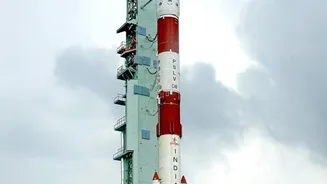
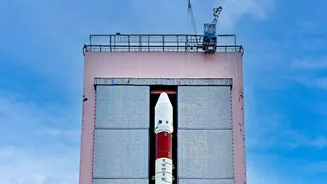
Rather than making itself obsolete, ISRO has gracefully transitioned from being the sole protagonist to a crucial enabler. Under the new policy, ISRO is sharpening its focus on advanced research and development, scientific missions, and exploring new technologies, leaving many of its operational activities to the private sector. More importantly, it now acts as a mentor and partner, opening up its world-class facilities, testing infrastructure, and deep knowledge base to startups. IN-SPACe facilitates this collaboration, arranging for technology transfers from ISRO to commercial entities, which accelerates their development timelines. This symbiotic relationship allows startups to stand on the shoulders of a giant, leveraging decades of ISRO's expertise to build their own innovative solutions.
Meet the New Space Pioneers
This new environment has given rise to a constellation of trailblazing startups. Hyderabad-based Skyroot Aerospace made history in July 2026 with the successful orbital launch of Vikram-1, India’s first privately developed rocket. The achievement made Skyroot the country's first space unicorn. Chennai's Agnikul Cosmos is another key player, pioneering 3D-printed rocket engines and establishing India's first private launchpad. In the satellite domain, companies like Pixxel are deploying constellations of advanced hyperspectral Earth-observation satellites, which provide data for agriculture and environmental monitoring. Meanwhile, Dhruva Space offers full-stack solutions for small satellites, and GalaxEye has developed the world's first commercial satellite that combines both radar and optical sensors to see through clouds and at night.
Following the Investment Fuel
Ambitious visions require significant capital, and investors are taking notice. Indian space startups have attracted approximately $390 million in funding over the last three years. The momentum is accelerating, with $150-160 million raised in the first half of 2026 alone. This private investment is being bolstered by government support. IN-SPACe is overseeing a ₹1,000 crore (around $120 million) Venture Capital fund to provide critical early-stage capital to promising startups. Additionally, a Technology Adoption Fund helps companies commercialise their innovations. This blend of private enthusiasm and public backing is creating a robust financial foundation for the sector's continued growth.