

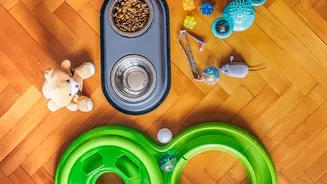
Make Mealtime a Mind Game
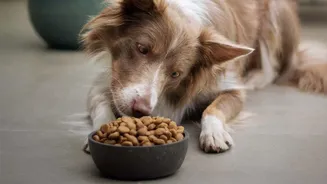
For our pets' ancestors, eating was the result of a long hunt or forage. Today, most pets get their food in a bowl, which is consumed in seconds. This misses a huge opportunity for mental stimulation. Enrichment feeding taps into your pet's natural desire
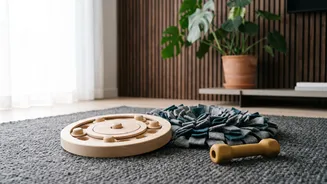
to work for their food. Instead of the bowl, try using a puzzle feeder or a 'snuffle mat', a fabric mat where you can hide kibble. These tools require your pet to sniff, paw, and problem-solve to get their meal, which is both mentally tiring and deeply satisfying for them. You don't need to spend a lot of money; DIY options work just as well. Try scattering kibble in a muffin tin with tennis balls on top or hiding treats inside an empty cardboard box filled with crumpled paper. This small change turns a five-second meal into a 15-minute brain game, reducing boredom and promoting a healthier eating pace.
Training That's Actually Fun
Training isn't just about 'sit' and 'stay'. It's a powerful enrichment tool that builds confidence and improves communication between you and your pet. Short, positive training sessions are excellent for mental stimulation. Once your pet has the basics down, introduce fun tricks like 'shake,' 'wave,' or even 'hide and seek'. The game 'Find It' is another fantastic option: have your pet stay while you hide a favourite toy or a smelly treat, then give the cue to go search for it. This engages their powerful sense of smell and problem-solving skills. These games don't just teach commands; they teach your pet how to think and learn, which can curb destructive behaviours that stem from a lack of mental engagement. Keeping sessions short, fun, and rewarding ensures your pet looks forward to them every day.
Reinventing Playtime
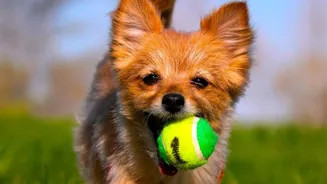
Play is a natural stress-reliever and a vital source of exercise and bonding. To make playtime truly enriching, focus on variety and interaction. Instead of leaving all the toys out at once, try rotating them every few days to keep them feeling new and exciting. Interactive games like fetch or tug-of-war are more stimulating than solo play, as they engage your pet socially. You can also get creative with DIY toys. An old t-shirt can be braided into a fun tug toy. An empty plastic bottle with the cap and ring removed can be placed inside a sock to create a satisfyingly crunchy toy. For cats, a simple cardboard box can become a castle or a tunnel system for hours of fun. These simple activities provide an outlet for your pet's energy and instincts, leading to a more relaxed and contented companion at home.
Exploring New Worlds, Safely
Exploration is all about stimulating your pet's senses. The daily walk can become an adventure by simply changing your route. Allowing your dog to sniff to their heart's content on a 'sniffari' is incredibly enriching; their nose is how they read the world, and letting them use it reduces stress. For pets living in apartments, indoor exploration is just as important. Create an indoor obstacle course with cushions to climb over or blankets to crawl under. A simple cardboard box fort can be a new landscape to explore. For cats, securely screened windows or supervised time on a 'catio' provides immense sensory stimulation. These activities, which introduce new sights, sounds, and smells, prevent a pet's world from becoming too small and predictable, boosting their confidence and overall well-being.