





An X-ray Telescope in Deep Space
Launched aboard the Space Shuttle Columbia in 1999, the Chandra X-ray Observatory is one of NASA's 'Great Observatories'. Unlike telescopes that see visible light, Chandra is designed to detect X-ray emissions from the hottest and most energetic regions
of the universe, such as exploding stars, black holes, and galaxy clusters. Because Earth’s atmosphere absorbs X-rays, Chandra orbits far above it, traveling nearly a third of the way to the Moon to capture its stunningly detailed data. For a quarter of a century, it has been sending back a stream of information that has reshaped our understanding of the cosmos.
Turning Invisible Data Into Art
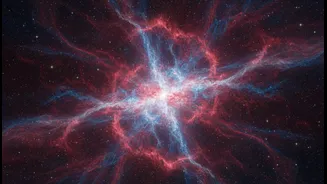
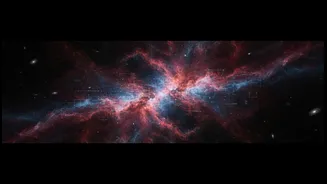
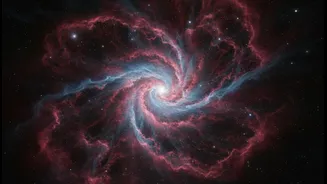
The incredible images you see don't come straight from the telescope. Chandra detects X-rays, which are invisible to the human eye, as digital data. A team of visualization experts and scientists then translates this data into the images we can see. This process is both a science and an art. Colors are assigned to different energy levels of X-rays—for example, lower-energy X-rays might be colored red, and higher-energy ones blue—to create a visual representation of the underlying scientific information. Often, Chandra’s X-ray data is combined with observations from other telescopes like the Hubble or James Webb to create a more complete, multi-wavelength view of a celestial object, blending different types of light into a single, breathtaking composite image.
Hearing the Music of the Stars
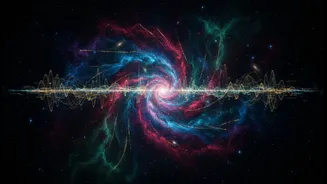
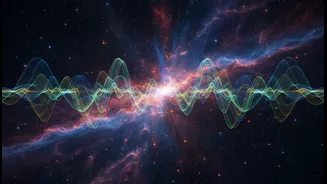
The cultural influence of Chandra's data goes beyond the visual. In a pioneering project that began in 2020, scientists began a process called 'sonification'—translating astronomical data into sound. Working with the SYSTEM Sounds project, the Chandra team maps data points from the images to musical notes and sounds. For example, the brightness of a light source in an image can determine the volume, and its position can determine the pitch. This allows us to 'hear' a supernova remnant or the center of our galaxy. The project, originally conceived to make astronomy more accessible for blind and low-vision communities, has found a global audience, culminating in a documentary and even full musical compositions that can be played by an orchestra.
From the Cosmos to the Catwalk
The aesthetic power of space imagery has long captivated fashion designers, from the 'Space Age' looks of the 1960s to modern collections. The swirling nebulas and vibrant colors seen in Chandra's images have found a clear parallel in the 'galaxy trend' that has swept through high-street fashion, with cosmic prints appearing on everything from dresses to sneakers. Designers have explicitly cited NASA's iconography and imagery as inspiration for entire collections. Brands like Coach and Vans have released NASA-themed lines, while others have used high-resolution images from space agencies on textiles, creating wearable art that connects the runway directly to the cosmos.
Our New Digital Mythology
Why do these images resonate so deeply? In an increasingly digital world, Chandra’s visuals serve as a kind of modern mythology. They are tangible connections to the vast, mysterious universe that we can share, like, and reinterpret. They tap into a fundamental human curiosity about our place in the cosmos. Recently, NASA released a special collection of red, white, and blue images from Chandra to mark the 250th anniversary of the United States, linking celestial wonders directly with a terrestrial celebration. By turning complex scientific data into accessible, emotionally resonant art, Chandra’s images have done more than just illustrate discoveries; they have provided a new visual language for contemplating the infinite, right from the palm of our hands.