



A Monsoon Wellness Ritual
The Malayalam month of Karkidakam, typically spanning from mid-July to mid-August, is a time of heavy rains and introspection. In Ayurveda, this season is believed to weaken digestive strength (Agni) and make the body more susceptible to illness. To counteract
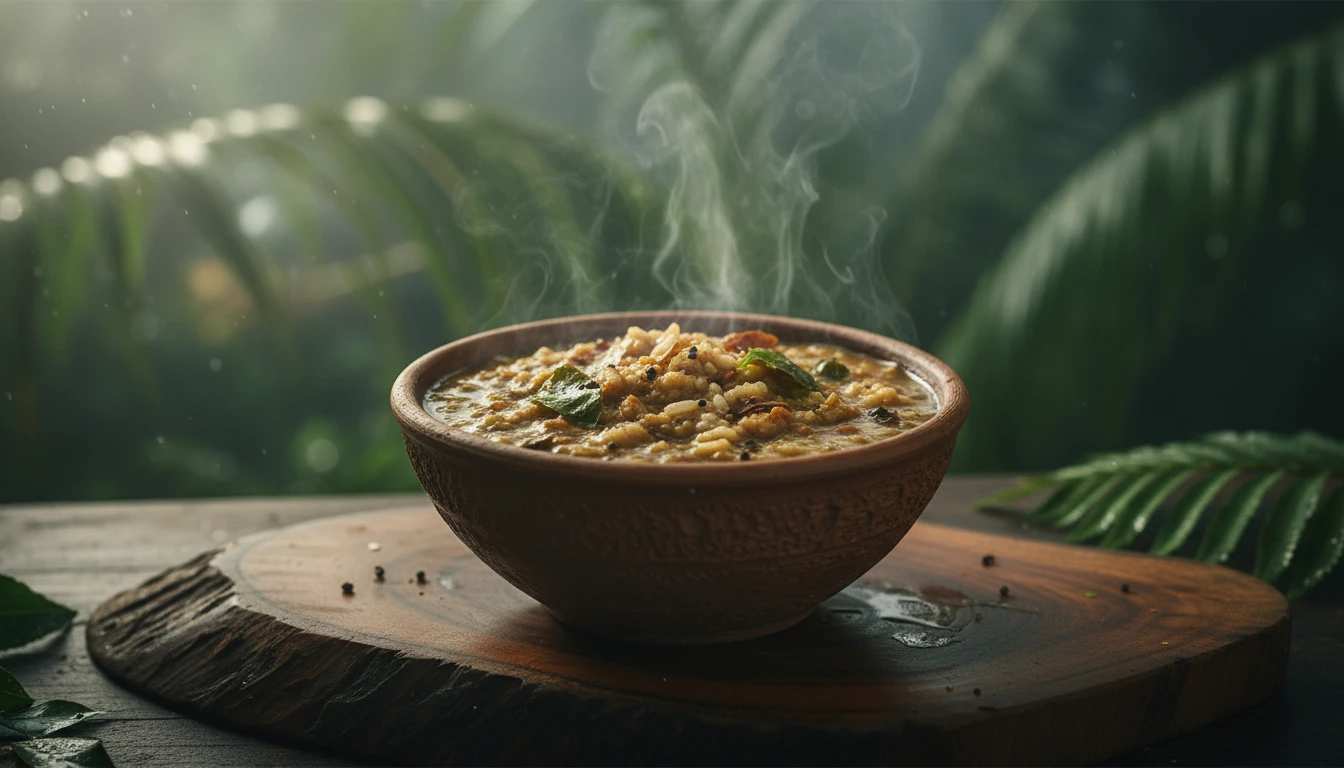
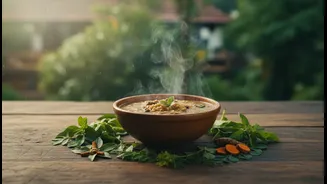
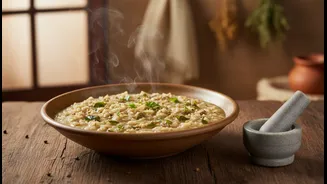
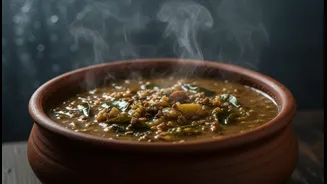
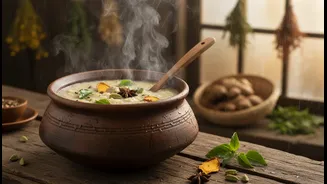
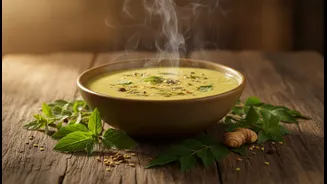
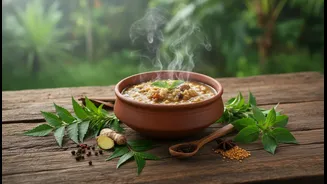
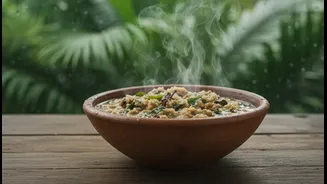
this, Karkidaka Chikitsa, a series of seasonal wellness practices, is observed. At the heart of this practice is Karkidaka Kanji, a nourishing porridge designed to boost immunity, aid digestion, and fortify the body against monsoon-related ailments. Also known as Oushadha Kanji (medicinal porridge), it embodies the Ayurvedic principle of food as medicine, offering a gentle, healing response to the challenges of the season.
Deconstructing the Kanji
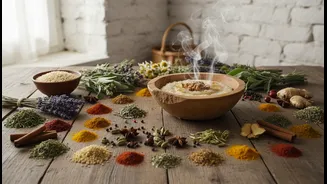
At its core, Karkidaka Kanji is a slow-cooked rice gruel, but its power lies in its specific ingredients. The traditional base is Njavara rice, a short-grain variety native to Kerala prized for its medicinal properties and easy digestibility. This is cooked with a collection of herbs and spices that work in synergy. Key spices often include dry ginger (chukku) to rekindle digestive fire, cumin (jeeraka) to settle the stomach, and fenugreek (uluva) for its anti-inflammatory benefits. The most vital component is the 'Oushadha Koottu', a mix of potent herbs. This can include Dashapushpam (a group of ten sacred flowers) and Dashamoola (a blend of ten medicinal roots), which are known to support immunity and reduce inflammation.
A Classic Recipe for Home Cooks
While recipes vary, a basic version is accessible to anyone. To start, wash half a cup of Njavara or red rice. In a pot, combine the rice with four to five cups of water, a teaspoon each of fenugreek seeds, cumin seeds, and crushed dry ginger. Let this mixture simmer until the rice is soft and fully cooked, forming a thick gruel. Towards the end of the cooking process, add a cup of coconut milk for creaminess and nourishment. Many also add a touch of jaggery for sweetness and a pinch of salt to balance the flavours. Traditionally, this porridge is consumed once a day, usually in the evening, for a period of 7, 14, or 21 days to reap its full benefits.
Adapting the Tradition for Modern Meals
The beauty of Karkidaka Kanji lies in its adaptability. If sourcing individual herbs is difficult, many Ayurvedic brands and local stores in Kerala offer pre-packaged 'Karkidaka Kanji kits' containing the essential rice and dried herbal mix. These kits make the process incredibly straightforward for busy home cooks. Don't have Njavara rice? Unpolished red rice or even brown rice can serve as a substitute, though the texture and some benefits might differ. To make it a more complete meal, you can add moong dal (green gram) while cooking the rice for an extra protein boost. Using a pressure cooker can significantly cut down the cooking time; simply add all ingredients (except coconut milk) and cook for 15-20 minutes. You can also add finely chopped shallots and garlic, sautéed in ghee, as a final tempering to enhance the flavour.
More Than Just Porridge
Embracing Karkidaka Kanji is about more than just eating a healthy meal; it’s a practice in mindful, seasonal living. It connects you to a tradition that has nourished generations through the challenging monsoon months. Preparing the kanji can be a calming ritual, and consuming the warm, aromatic porridge offers a sense of comfort and restoration. By understanding its principles, you can easily tweak the recipe to suit your palate and pantry. Whether you follow a strict traditional recipe or a simplified modern version, you are partaking in a powerful act of self-care, aligning your body with the rhythm of nature and boosting your well-being from the inside out.