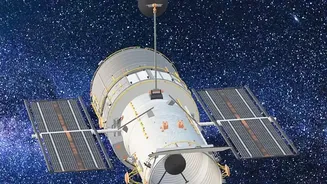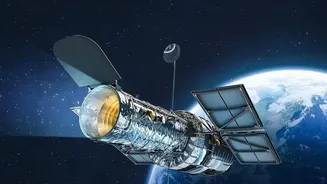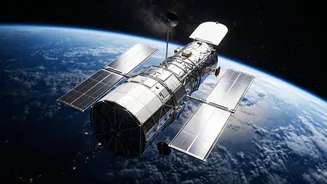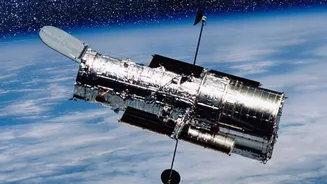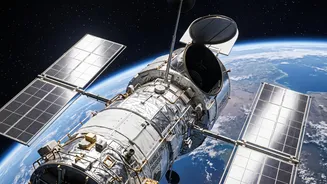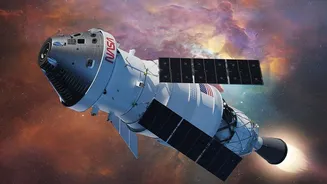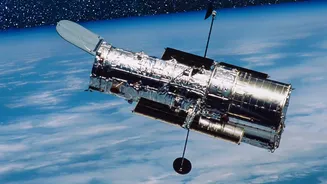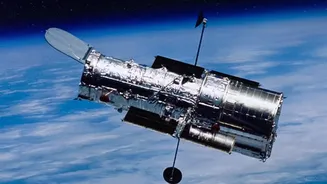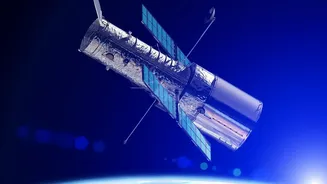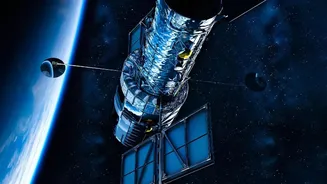






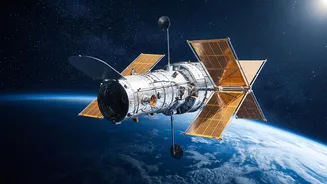
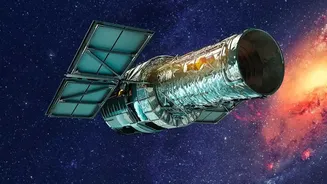

For over three decades, the Hubble Space Telescope has been humanity’s eye on the cosmos. Now, as its orbit slowly decays, NASA is turning to the private sector in an unprecedented move to explore how to save this invaluable scientific asset.
A Legacy Facing a Deadline
Since its
launch in 1990, the Hubble Space Telescope has made more than 1.7 million observations, fundamentally changing our understanding of the universe. From determining the age of the cosmos to imaging distant galaxies, its contributions are legendary. But this icon is facing a slow, inevitable descent. Orbiting in the upper reaches of Earth's atmosphere, it experiences a tiny amount of drag that causes its altitude to gradually decrease. Having no propulsion system of its own, Hubble has dropped from its original altitude and is predicted to make an uncontrolled reentry into the atmosphere sometime in the mid-2030s if nothing is done. With the Space Shuttle program retired, the astronaut-led servicing missions that repaired and upgraded Hubble five times are no longer an option, forcing NASA to look for a new solution.
NASA's Call to Industry
In late October 2026, NASA issued a formal Request for Information (RFI), a way of testing the waters of the commercial space industry. The agency has asked private companies to submit ideas by the end of November 2026 for how they might help. The request outlines three potential mission types: boost Hubble to a higher, more stable orbit to extend its life; service it with new components or upgrades; or guide it to a safe, controlled deorbit at the end of its mission. This RFI is not a contract, but a critical market research step. It allows NASA to gauge what is technically feasible, how much it might cost, and what innovative approaches the private sector can offer before committing to a plan. Any potential mission would likely need to occur by 2032 to be effective.
Who Could Answer the Call?
Several companies are positioned to potentially respond to NASA's call. SpaceX, in partnership with the Polaris Program led by billionaire Jared Isaacman, previously conducted a joint study with NASA in 2022 to assess the feasibility of using a Dragon spacecraft to reboost Hubble. That study concluded a mission was technically possible. Other major players in the emerging field of on-orbit servicing include Northrop Grumman's subsidiary, SpaceLogistics, which has already performed life-extension missions for commercial satellites with its Mission Extension Vehicle (MEV). Companies like Astroscale, which specializes in orbital sustainability and debris removal, and Maxar Technologies, which has advanced robotics capabilities, are also key figures in the satellite servicing market.
A New Business Model for Space
A commercial mission to Hubble would be more than just a repair call; it would signify a major shift in space operations. The original servicing missions were massive, government-run efforts costing hundreds of millions, and in some cases over a billion, dollars when accounting for shuttle operations. A private-sector solution could prove significantly more cost-effective, creating a new market for servicing and extending the lives of valuable government and commercial assets in orbit. This approach aligns with NASA's broader strategy of fostering public–private partnerships, allowing the agency to leverage commercial innovation while focusing its own resources on deep–space exploration. The success of such a mission would set a powerful precedent, demonstrating a viable business case for robotic or crewed servicing missions beyond low Earth orbit.