






What 'Cold-Pressed' Actually Means
The term 'cold-pressed' refers to how oil is extracted from seeds or nuts. Using a mechanical press, often a traditional wooden 'ghani' or 'chekku', the oil is squeezed out at low temperatures without the use of high heat or chemical solvents like hexane.
This gentle process is key to preserving the oil's natural nutrients, antioxidants, vibrant colour, and authentic flavour and aroma. In contrast, most commercially refined oils are extracted using high heat and chemicals, which strips them of their natural goodness, resulting in a bland, odourless liquid with a longer shelf life but compromised nutritional value. When you choose cold-pressed, you are choosing an oil that is less processed and closer to its natural state.
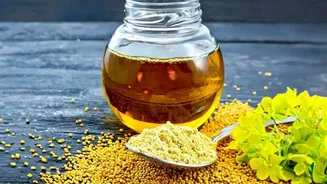
Mustard Oil: The Pungent Powerhouse
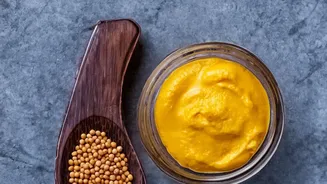
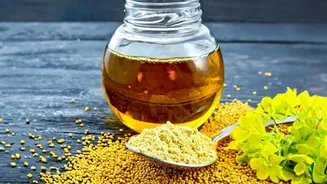
A staple in North and East Indian cooking, particularly in Bengali, Punjabi, and Rajasthani cuisines, cold-pressed mustard oil ('sarson ka tel') is prized for its sharp, pungent flavour and golden hue. It is rich in monounsaturated fats (MUFA) and contains a healthy ratio of omega-3 and omega-6 fatty acids, which are beneficial for heart health. Its antimicrobial properties, thanks to a compound called allyl isothiocyanate, make it a natural preservative, which is why it's the oil of choice for pickles ('achaar'). With a relatively high smoke point (around 150-180°C), it's versatile enough for deep-frying pakoras, making a flavourful 'tadka', or cooking robust curries. The distinct flavour of mustard oil is essential for authentic dishes like Bengali fish curry and Sarson da Saag.
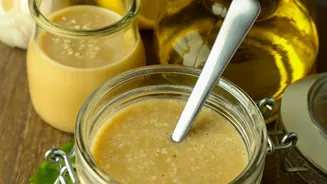
Sesame Oil: The Fragrant Finisher
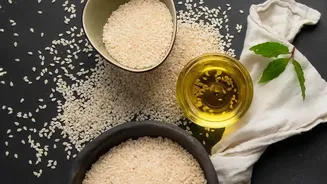
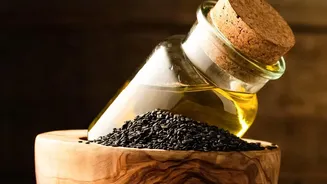
Known as 'gingelly' or 'til ka tel', sesame oil has been a cornerstone of South Indian and Ayurvedic traditions for thousands of years. It has a rich, nutty aroma and is packed with antioxidants like sesamol and sesamin, which help fight oxidative stress. Primarily composed of heart-healthy unsaturated fats, it supports good cholesterol levels. While its smoke point (around 160-177°C) makes it suitable for tempering and stir-frying, its distinct flavour truly shines when used as a finishing oil, drizzled over podi idli, or in salad dressings. It is also famously used in the Ayurvedic practice of 'oil pulling' for oral health. Its unique flavour is a key component in many South Indian chutneys and gravies.
Groundnut Oil: The Versatile Workhorse
Cold-pressed groundnut oil, or peanut oil, is a kitchen staple in Western and Southern India, especially in Gujarati, Maharashtrian, and Andhra cuisines. It offers a mild, nutty flavour that doesn't overpower dishes, making it an excellent all-purpose cooking medium. It is a great source of monounsaturated fats and Vitamin E, a powerful antioxidant that supports skin health and immunity. With a smoke point suitable for most Indian cooking methods, including sautéing and shallow frying (around 160-180°C), it is ideal for everything from making sabzis and dals to frying theplas and bhajiyas. Its balanced profile makes it one of the most versatile traditional oils for daily use.
How to Choose and Store Your Oil
When buying cold-pressed oil, look for clear labels that say 'cold-pressed', 'wood-pressed', 'kachi ghani', or 'chekku'. The oil should have the natural colour and aroma of the seed it came from—mustard oil should be golden and pungent, while groundnut oil should smell mildly of peanuts. Clear, odourless oils are likely refined. These oils are best stored in a cool, dark place away from direct sunlight to protect their delicate nutrients and prevent them from going rancid. Because they are less processed, they have a shorter shelf life than refined oils, so it's best to buy them in quantities you will use within a few months.