



Reading the Cosmic Mail
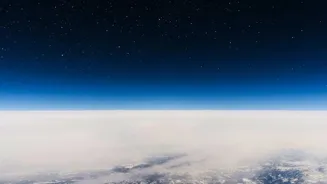
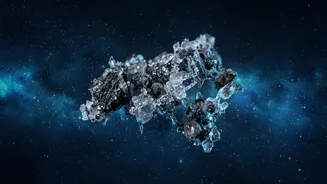
It sounds like science fiction: collecting dust in Earth's upper atmosphere to study a region more than four billion kilometres away. Yet, that's precisely what scientists have done. NASA aircraft flying high in the stratosphere collected thousands of
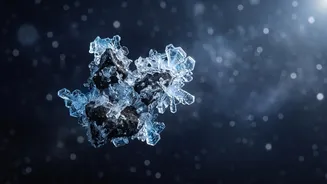
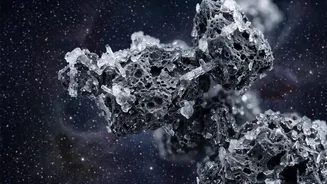
tiny interplanetary dust particles. Among them, a team of researchers identified 12 specific grains, each smaller than the width of a human hair, that carried unique clues pointing to an origin story far beyond Neptune. The key was analysing the radiation damage on these particles. Dust drifting through space is constantly bombarded by energetic particles from the Sun, which leave tiny tracks. Grains with more tracks have been travelling longer. These 12 particles had track densities far too high to have come from the nearby asteroid belt, suggesting a much longer journey from the frigid expanse of the Kuiper Belt.
The Fingerprint of Heavy Water
The real surprise came from the chemistry locked inside these tiny travellers. The grains contained minerals like clays, which only form when liquid water interacts with rock. This indicates that the parent bodies from which this dust originated—icy objects in the Kuiper Belt—must have once contained liquid water in their interiors. While the Kuiper Belt is frozen solid today, heat from radioactive elements or ancient collisions could have melted ice deep inside these bodies billions of years ago. Even more revealing was the type of water. By analysing the oxygen within the clay minerals, scientists found it was rich in heavier oxygen isotopes, specifically oxygen-17 and oxygen-18. This 'heavy water' has an isotopic signature distinctly different from the water found on Earth and in most meteorites, acting as a chemical fingerprint of a separate, pristine water reservoir that has been largely isolated since the solar system's birth.
A Different Kind of Solar System
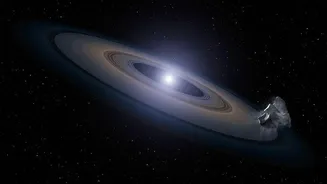
This discovery challenges the idea that the water and other materials in the early solar system were thoroughly mixed. Instead, it suggests that distinct chemical environments existed. The water in the outer solar system, where the Kuiper Belt formed, appears to have remained separate from the materials that formed the inner planets. This finding supports a long-standing theory that the water in the Sun's most distant neighbourhood would have a unique, heavy isotopic signature, but this is the first time scientists have had physical samples to analyse. This isolated reservoir of primordial material gives us a rare glimpse into the specific ingredients that were present at the edge of the solar system as planets were beginning to form.
Why This Finding Matters
Understanding the distribution and type of water in the early solar system is fundamental to understanding how life-sustaining planets like Earth came to be. Water is a key ingredient for life as we know it, and tracing its origins helps us piece together the story of our own planet's formation. The discovery of a distinct water reservoir in the Kuiper Belt provides a crucial new data point for models of solar system evolution. It shows that the building blocks of planets varied depending on where they formed. These tiny dust particles, having travelled for millennia to reach us, are essentially time capsules, carrying information from the dawn of the solar system and offering a tangible connection to the mysterious, icy worlds that orbit silently beyond Neptune.