

The Blueprint: Artemis Base Camp
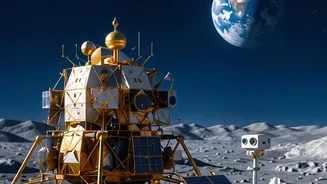
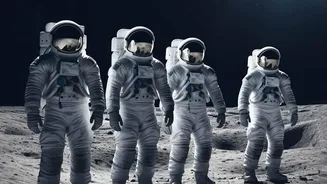
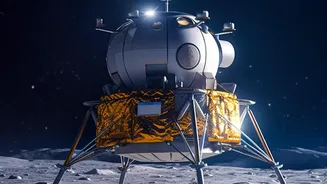
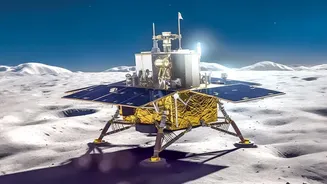
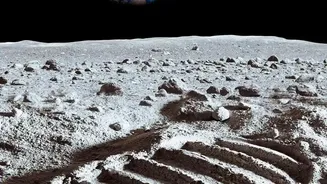
The grand vision for a sustained human presence on the Moon is called the Artemis Base Camp. Located near the lunar South Pole, a region chosen for its potential access to water ice in permanently shadowed craters and areas of near-constant sunlight for solar
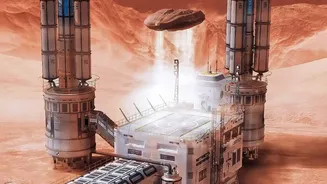
power, this outpost will be humanity's first home on another celestial body. The plan is to build it incrementally, starting with robotic missions and technology demonstrations to test systems and learn from the harsh environment. This phased approach will see the delivery of core elements like rovers, a surface habitat, and power systems, which will be assembled over a series of missions. The ultimate goal is to create a hub that can support crews for up to two months at a time, serving as a proving ground for the technologies and strategies needed for the even more ambitious goal of sending humans to Mars.
Flipping the Switch: Powering the Moon
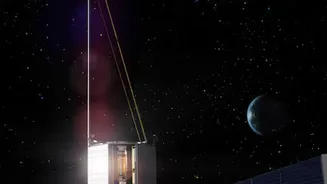
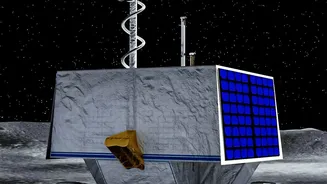
Nothing happens at a lunar base without a reliable power source. The Moon's South Pole presents a unique challenge: while some crater rims get near-constant sunlight, nearby craters are in permanent darkness and experience extreme cold, with lunar nights lasting 14 Earth days. To ensure a continuous supply of energy, NASA is pursuing a dual strategy of advanced solar power and nuclear fission. For daytime operations and in sunlit areas, advanced solar arrays will be deployed. For surviving the long, cold lunar nights and powering activities in shadowed regions, a Fission Surface Power system is in development. NASA, in partnership with the Department of Energy, is working with private industry to develop a small, 40-kilowatt nuclear reactor—enough to power several dozen homes—that can operate autonomously and reliably for years. This technology is seen as essential not only for the Moon but also as a critical test for future Mars missions.
A Home Away From Home: Habitats and Shelters
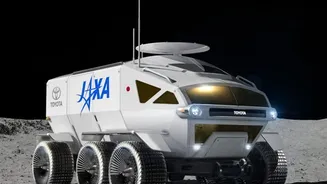
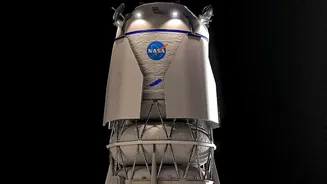
Astronauts will need a safe place to live, work, and conduct research. The initial plan involves a 'Foundation Surface Habitat,' a pressurized module that will serve as the core living quarters for up to four astronauts. This habitat will be a self-contained unit with its own life support, communications, and radiation shielding. Alongside this fixed habitat, NASA is planning for a 'habitable mobility platform'—essentially a pressurized rover or a 'lunar RV'—that will allow two astronauts to go on long-range excursions lasting several weeks, far from the main base camp. In the long term, the agency is also exploring innovative construction techniques, such as 3D printing with lunar regolith (soil), to build larger structures like landing pads, radiation shields, and even habitats. Scientists are also actively searching for natural shelters, like underground lava tubes, that could offer protection from radiation and micrometeorites.
Getting Around: A New Generation of Rovers
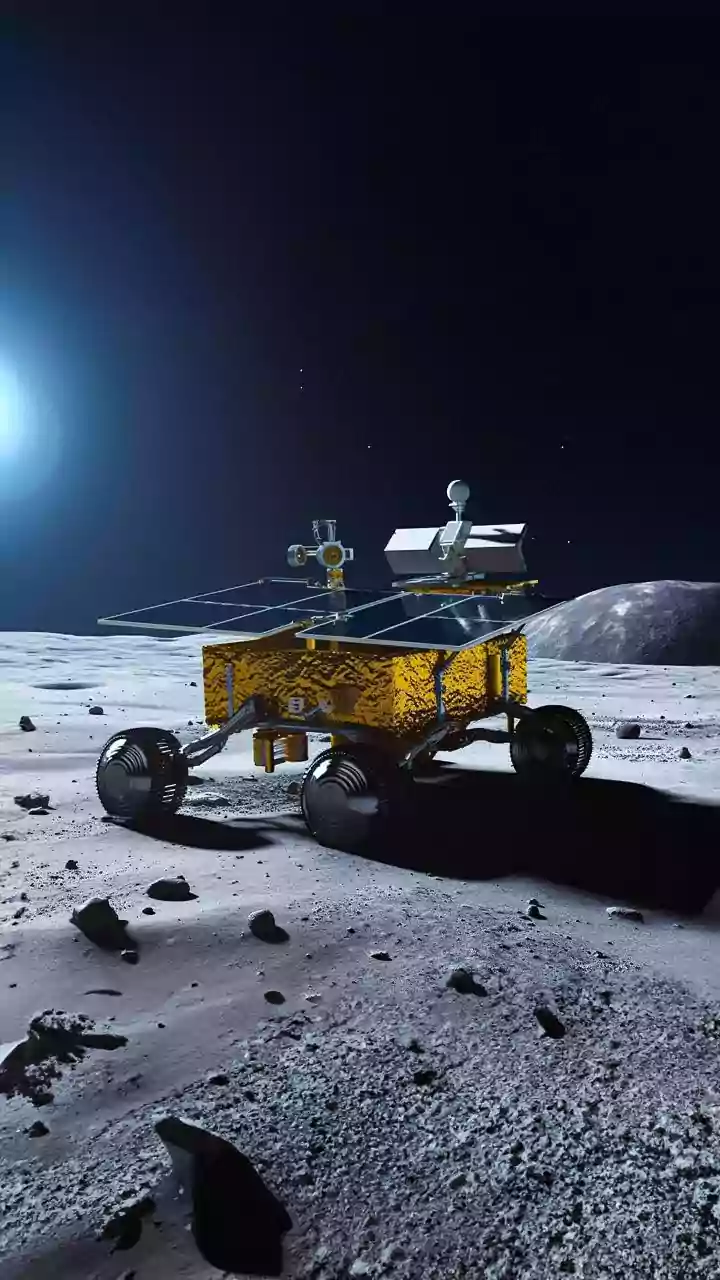
To explore more of the lunar surface than ever before, astronauts will need robust transportation. NASA is working with several commercial partners to develop the Lunar Terrain Vehicle (LTV). Unlike the Apollo-era rovers, the LTV is being designed for long-term, repeated use. It will be an unpressurized vehicle, meaning astronauts will wear their spacesuits while driving it to transport crew and equipment on missions up to 20 kilometers from the base. Companies like Astrolab and Lunar Outpost are developing competing designs, such as the CLV-1 and Pegasus rovers, which can also be operated remotely when astronauts are not present. These rovers are a key part of the early infrastructure buildup, enabling astronauts to travel to scientific sites, deploy equipment, and eventually assist with the construction of the base camp itself.
Living Off the Land: Using Lunar Resources
For a lunar base to be truly sustainable, it can't rely solely on supplies ferried from Earth. This is where In-Situ Resource Utilization, or ISRU, comes in. ISRU is the concept of 'living off the land' by harnessing local resources. A primary goal is to extract water ice from the permanently shadowed craters at the South Pole. This water can be purified for drinking, and its components—hydrogen and oxygen—can be separated to create breathable air and rocket propellant. This could dramatically reduce the cost and complexity of missions by allowing landers to refuel on the Moon for a return trip or for journeys elsewhere. Other ISRU technologies being explored include extracting metals from lunar soil and using regolith as a building material for construction, which will be critical for creating landing pads, protective berms, and roads.