



The Golden Immunity Shield: Turmeric
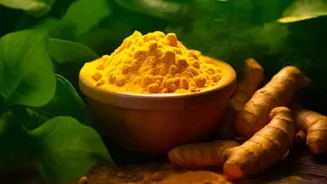
A staple in every Indian kitchen, turmeric (haldi) is more than just a spice; it's a potent medicinal herb. Its active compound, curcumin, is celebrated for its powerful anti-inflammatory, antibacterial, and antioxidant properties. During the monsoon,
when humidity can lead to a spike in microbial growth, incorporating turmeric daily can help fortify your immune system. It actively supports your body's defence cells in fighting off harmful pathogens. For maximum benefit, always pair it with a pinch of black pepper, which significantly increases curcumin absorption. A nightly glass of warm 'haldi doodh' or adding it generously to your dals and curries is a simple way to reap its benefits.
The Warming Root: Ginger
A warm cup of ginger (adrak) tea is a classic monsoon comfort, and for good reason. This warming spice is a powerhouse for your digestive system, which tends to become sluggish during the rainy season according to Ayurveda. Ginger contains gingerol, a compound known for its ability to soothe an upset stomach, alleviate nausea, and reduce internal inflammation. Its antiviral and antibacterial properties also make it an excellent first line of defence against common monsoon ailments like colds, coughs, and sore throats. Starting your day with ginger-infused water or adding freshly grated ginger to soups and meals can help keep your digestive fire strong and your immunity robust.
Nature's Antibiotic: Garlic
Garlic (lahsun) is highly valued as one of nature's most powerful antibacterial and antiviral agents. Its key compound, allicin, helps stimulate the production of white blood cells, which are crucial for fighting infections. This makes it an indispensable ally during the monsoon, a season rife with colds and flu. Including garlic in your daily cooking not only enhances flavour but also provides a protective shield against prevalent seasonal illnesses. For a more potent dose, some experts suggest consuming one or two crushed raw garlic cloves on an empty stomach in the morning.
The Gut Guardian: Probiotics
Gut health is intrinsically linked to overall immunity, and the monsoon can be a challenging time for our digestive system. Probiotic-rich foods like fresh yoghurt (curd) and buttermilk (chaas) help maintain a healthy balance of gut bacteria. These good bacteria are essential for proper digestion and for preventing infections. Including a bowl of fresh curd with your lunch can support muscle repair and recovery, while also fortifying your gut. However, it's advised to consume curd during the day and ensure it's fresh, as it can spoil quickly in humid weather and might aggravate coughs and colds if consumed at night.
Seasonal Gourds for Light Digestion
Ayurveda suggests eating light, warm, and easily digestible foods during the monsoon. Seasonal vegetables like bottle gourd (lauki), bitter gourd (karela), and snake gourd are ideal choices. These vegetables are not only rich in essential nutrients and fibre but are also easy on the stomach. Bitter gourd, in particular, is known to support liver function and digestion, which can be strained in humid weather. Steamed vegetables and light soups made from these gourds are excellent additions to your rainy season diet, providing nourishment without burdening your digestive system.
Vitamin C Powerhouses: Amla and Jamun
Boosting your Vitamin C intake is crucial for a strong immune system, and seasonal fruits are a delicious way to do it. Amla (Indian gooseberry) is an impressive source, containing significantly more Vitamin C than an orange. It helps the body fight infections naturally. Another monsoon favourite, Jamun (Java plum), is rich in vitamins, iron, and potassium. It aids in improving blood circulation and addressing common stomach problems that arise during this season. Other seasonal fruits like plums, pears, and pomegranates also provide a wealth of antioxidants and fibre to keep you healthy.