

The Final Act of the Perseids
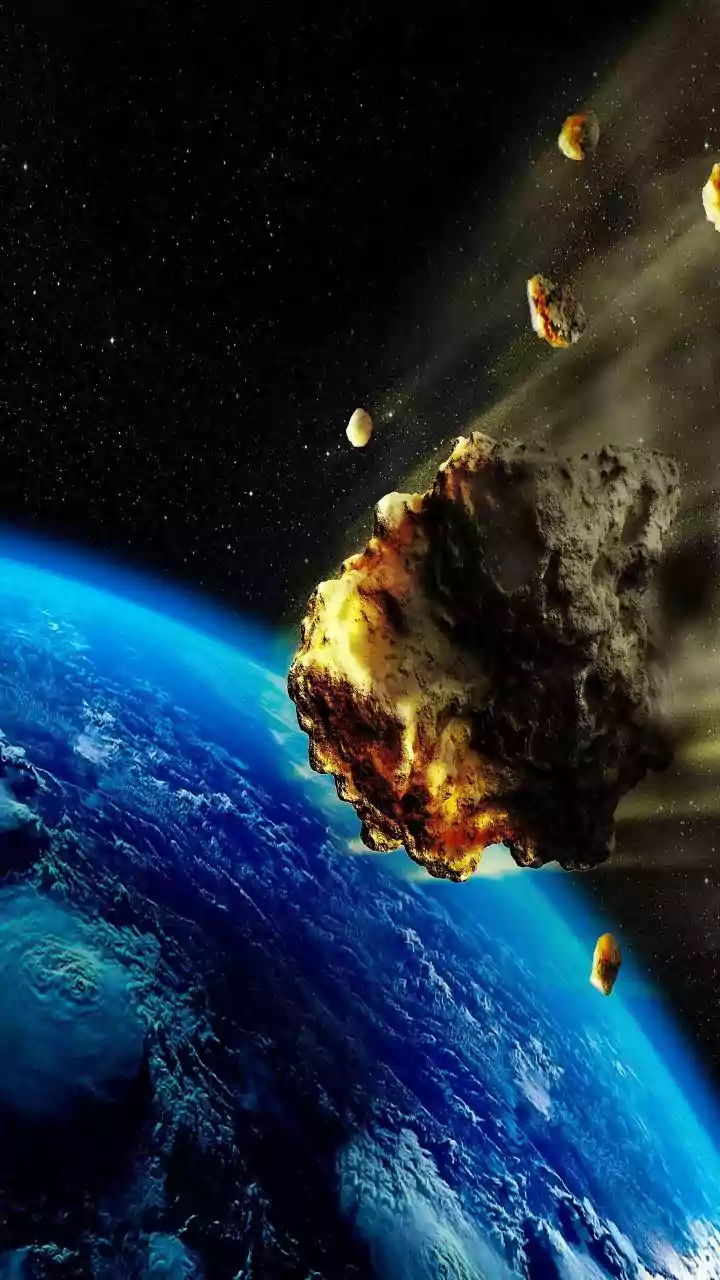
The famous Perseid meteor shower peaked around August 12-13 under ideal moonless conditions, offering one of the best shows in years. But the show isn't entirely over. The shower remains active until late August, and though the rate of meteors has decreased,
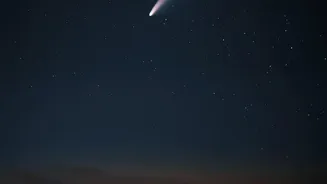
you can still catch some of these bright shooting stars in the latter half of the month. These meteors are pieces of debris left behind by Comet Swift-Tuttle, and they burn up in our atmosphere at incredible speeds, often leaving long, glowing trails. For your best chance, find a dark location away from city lights, let your eyes adjust for about 20 minutes, and look towards the northeastern sky after midnight. While the main event has passed, patient skywatchers may still be rewarded with a few stray fireballs.
Saturn Shines All Night
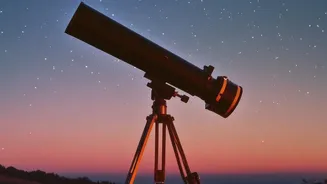
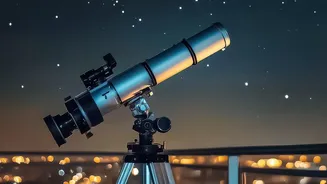
The ringed planet, Saturn, is a magnificent target this August as it heads towards its opposition in early October. Opposition is when Earth passes directly between the Sun and an outer planet, making that planet appear at its biggest and brightest for the year. Throughout August, Saturn will be visible for most of the night, rising in the east around sunset and tracing a path across the sky. It will appear as a steady, bright, yellowish point of light. While its famous rings aren't visible to the naked eye, even a small telescope or a good pair of binoculars mounted on a tripod can reveal them, offering a truly breathtaking sight. Look for it in the constellation Pisces.
The Dazzling Summer Triangle
High overhead on August evenings is a giant asterism known as the Summer Triangle. It's not a constellation itself, but rather three of the brightest stars from three separate constellations. The stars are Vega in the constellation Lyra (the Lyre), Deneb in Cygnus (the Swan), and Altair in Aquila (the Eagle). Vega is the brightest of the three and will be almost directly overhead in the mid-evening. This celestial landmark is so bright that its stars are easily visible even from light-polluted urban areas, making it a perfect starting point for beginner stargazers to orient themselves. Once you locate it, you can use it to find your way to other, fainter constellations.
Glimpsing the Milky Way's Core
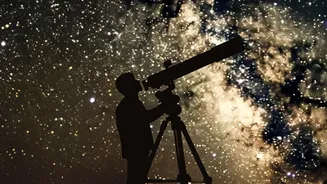
August provides a prime window for one of the most awe-inspiring sights: the core of our own Milky Way galaxy. This is the brightest and densest part of the galaxy, appearing as a hazy, luminous band stretching across the sky. To see it, you'll need to be in a location with very dark skies, far from the glare of city lights, and hope for a clear, monsoon-free night. Look towards the south, where the galactic centre lies in the direction of the constellations Sagittarius and Scorpius. To the naked eye, it looks like a faint, silvery cloud, but through binoculars, this cloud resolves into an astonishing number of stars, star clusters, and nebulae, including the famous Lagoon Nebula (Messier 8) and Trifid Nebula (Messier 20).
A Parade of Morning Planets
If you're an early riser, the pre-dawn sky has its own rewards. A planetary alignment that occurred around mid-August means several planets are still visible in the morning hours. Look to the east about an hour before sunrise to spot bright Jupiter and reddish Mars. While Jupiter will be low on the horizon and can be tricky to see, Mars will be higher up and more easily visible to the naked eye. This morning gathering offers a great opportunity to identify multiple worlds at once. To find them, it's best to have a clear view of the eastern horizon, free from buildings or trees.