

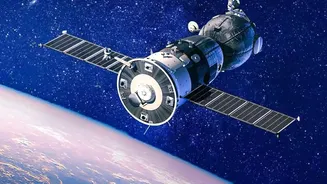
A New Era for Low-Earth Orbit
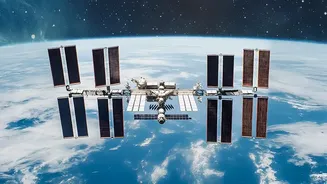
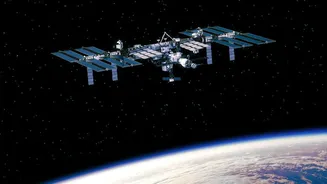
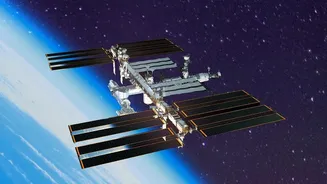
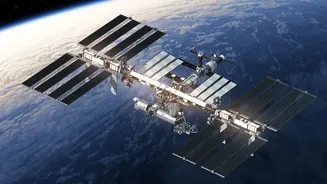
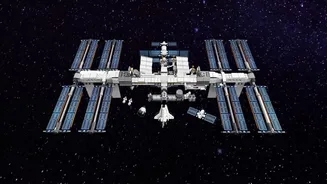
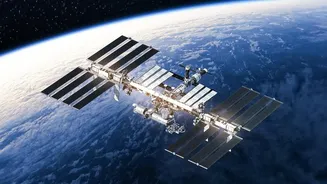
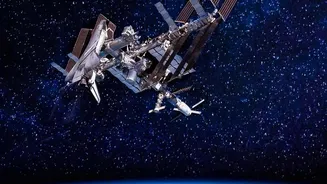
The end of the International Space Station's operational life marks a fundamental shift in how humanity approaches space. Instead of building a government-owned successor, NASA is turning to the private sector, aiming to become just one of many customers
in a bustling low-Earth orbit (LEO) economy. This public-private partnership, under programs like the Commercial LEO Destinations (CLD), provides funding and technical support to companies developing their own orbital platforms. The goal is to avoid a gap in American presence in orbit—especially with China's Tiangong station already operational and open to international partners—and to foster a new market for in-space activities. This market is expected to include everything from microgravity research and pharmaceutical development to advanced materials manufacturing and space tourism. By shifting from being a landlord in space to a tenant, NASA hopes to drive down costs, accelerate innovation, and create a self-sustaining orbital ecosystem.
The Race to Build Orbital Real Estate
Several key players are vying to launch the first commercially owned and operated space stations. Axiom Space is taking a unique approach by first attaching its modules to the ISS. The first module is planned for launch around 2026, with subsequent modules added over time, eventually detaching to become a free-flying station before the ISS is deorbited. Meanwhile, the startup Vast is developing Haven-1, a single-module station intended to be the first standalone commercial platform. After an initial 2026 target, the launch is now planned for early 2027 aboard a SpaceX Falcon 9, with the first crewed mission to follow. Another major contender is the Orbital Reef project, a self-described "mixed-use business park" in space led by Blue Origin and Sierra Space. It will utilize Sierra's Large Integrated Flexible Environment (LIFE) modules—inflatable habitats that launch in a compressed state and expand in orbit. Starlab, a joint venture from Voyager Space and Airbus, is also developing a single-module station targeting a launch around 2029.
Science and Manufacturing in the Sky
A primary driver for these new commercial outposts is the demand for orbital research. Microgravity offers a unique environment that is impossible to replicate on Earth, enabling breakthroughs in multiple fields. Pharmaceutical companies can study protein crystallization to design more effective drugs, while materials scientists can develop novel alloys and composites without the interference of gravity. These stations will be equipped with state-of-the-art labs to support a wide range of customers, from university researchers and biotech firms to national space agencies that don't have their own orbital infrastructure. Beyond pure science, in-space manufacturing is a major focus. The ability to produce items like flawless fiber optics or 3D-printed human organs in orbit could create entirely new industries. Axiom Space and others are already facilitating research on the ISS through private astronaut missions, proving the business model and building a customer base for their future stations.
The Business Model and Its Challenges
The success of these ventures hinges on a sustainable business model. The primary customers are expected to be NASA and other government space agencies purchasing astronaut time and lab space for scientific missions. However, the long-term vision relies on attracting a diverse set of private clients, including industrial researchers, manufacturers, and even wealthy tourists. The falling cost of access to space, driven by reusable rockets like SpaceX's Falcon 9, is a critical enabler. Still, the challenges are immense. Developing human-rated space habitats is incredibly expensive and complex, and timelines frequently slip. Vast's Haven-1, for example, saw its launch slip from 2026 to 2027 to allow for more systems integration and safety verification. Ensuring safety, navigating a complex regulatory environment, and proving a consistent market demand beyond government contracts are hurdles every company must overcome to turn their orbital dreams into profitable realities.