




The Forest That Glows in the Dark
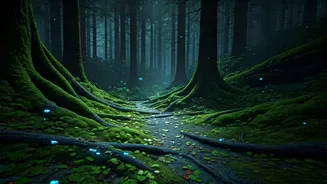
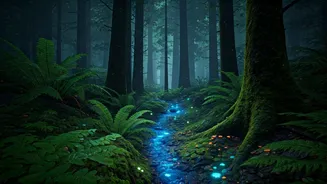
Imagine trekking through a dense forest after dusk, the air thick with the scent of rain and damp earth. As your eyes adjust to the darkness, you notice a faint, greenish-blue light emanating from the forest floor. It’s not a firefly or a dropped torch.
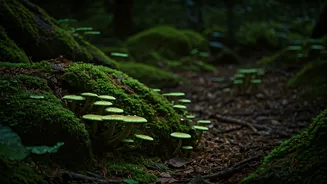
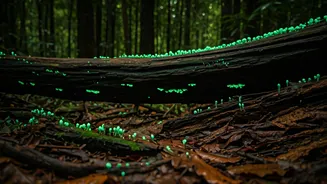
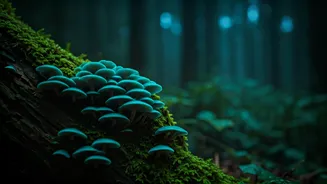
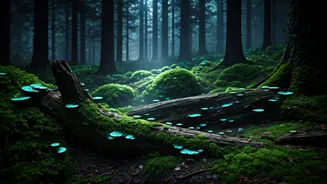
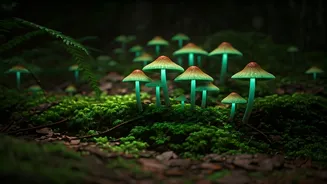
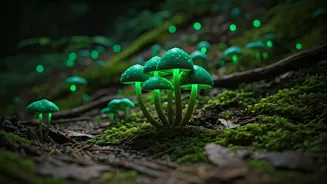
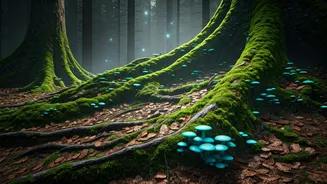
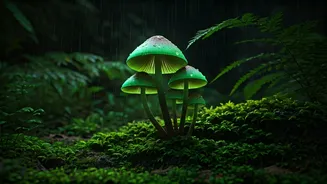
Entire branches, decaying leaves, and clusters of tiny mushrooms are pulsating with an eerie, beautiful glow. This phenomenon, known as bioluminescence, transforms parts of the Western Ghats into an enchanted wonderland during the monsoon season. It’s a scene straight out of a fantasy film, but it’s a very real and delicate ecological event. The glow is often subtle, requiring patience and darkness to be fully appreciated, but when you find it, the experience is unforgettable.
The Science Behind the Magic
The ethereal glow is not caused by fairies or magic, but by a fascinating little organism: a fungus. Specifically, species of the genus *Mycena* are the masterminds behind this light show. These fungi thrive on decaying wood, breaking it down and returning nutrients to the soil. As a byproduct of this process, they produce light through a chemical reaction. It’s the same principle used by fireflies. A molecule called luciferin reacts with oxygen, catalysed by an enzyme called luciferase, to release energy in the form of cold light. Scientists believe this glow serves a purpose. By illuminating the forest floor, the fungi may attract nocturnal insects. These insects, crawling over the mushrooms, inadvertently pick up spores and carry them to new locations, helping the fungus to propagate and spread. So, the magical light is essentially a very clever advertisement for spore dispersal.
When and Where to Find It
The headline's urgency of "tonight" speaks to the fleeting magic of this seasonal event. Bioluminescence in the Western Ghats is intrinsically linked to the monsoon. The peak season to witness this phenomenon is from June to early October, when the humidity is high and the forests are drenched. You need a combination of heavy rainfall, moisture, and darkness. Some of the best-known hotspots are located in Maharashtra, Goa, and Karnataka. In Maharashtra, the Bhimashankar Wildlife Sanctuary near Pune is a famous destination for 'glowing forest' treks. In Goa, the forests of the Mhadei Wildlife Sanctuary and Bhagwan Mahavir Sanctuary in Mollem are known to host these glowing fungi. Further south in Karnataka, the forests around Agumbe and other parts of the Malnad region also offer opportunities to witness this spectacle. The key is to venture into moist, dense forest areas with plenty of decaying organic matter on the ground.
Tips for a Responsible Visit
These glowing forests are part of a delicate ecosystem. If you plan to seek them out, it’s crucial to do so responsibly. First, always go with a local guide or a registered trekking group. They know the terrain, understand the right conditions, and can ensure your safety while protecting the environment. Second, your eyes need about 15-20 minutes to adapt to the darkness to see the faint glow properly. Avoid using bright white torches, as they will ruin your night vision and disturb nocturnal wildlife. Instead, use a torch with a red filter, or cover a regular torch with red cellophane paper. Red light has less impact on both your eyes and the creatures of the night. Lastly, and most importantly, do not touch or disturb the glowing fungi or the decaying wood they grow on. Observe from a distance, take photographs without a flash, and leave the forest exactly as you found it.