

The 'Use and Throw' Problem in Space
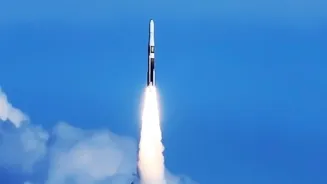
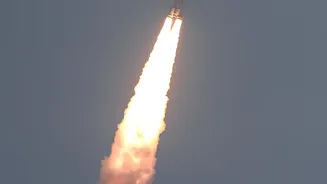
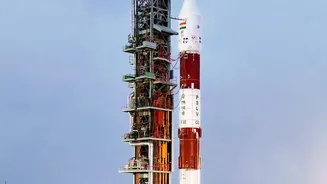
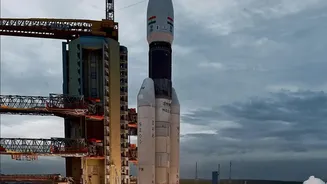
For most of space history, rockets have worked like a disposable cup. Each launch requires a brand-new, multi-stage vehicle that costs hundreds of crores. The most expensive parts, the powerful engines and fuel stages, are discarded after just a few minutes
of flight, falling into the ocean. This 'use and throw' model is the single biggest reason why launching satellites, conducting experiments, and sending humans to space is so costly. Estimates show that the first stage alone can account for 60-80% of a rocket's total cost. This immense expense limits how often missions can be launched and restricts space access to well-funded governments and large corporations.
Enter the Reusable Launch Vehicle
The solution to the cost problem is reusability. A Reusable Launch Vehicle, or RLV, is designed to have its key components return to Earth intact after a mission, ready to be refurbished and flown again. Instead of building a new rocket every time, you can reuse the most valuable parts, much like a commercial airline reuses its planes. This concept is at the heart of ISRO's Reusable Launch Vehicle-Technology Demonstrator (RLV-TD) programme. The goal is to master the technology needed for a two-stage-to-orbit (TSTO) vehicle where the first stage flies back and lands, making the entire operation significantly more economical.
Meet Pushpak: India's Space Shuttle
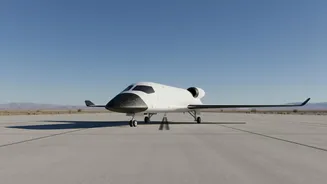
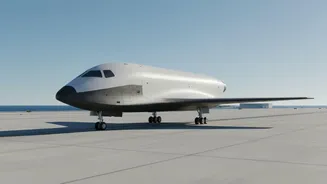
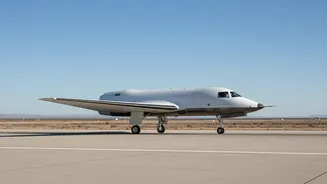
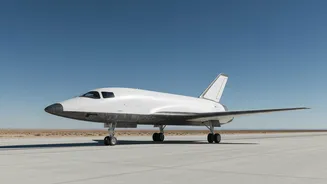
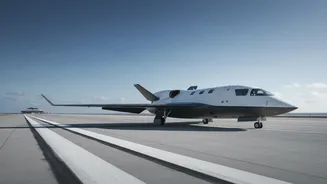
ISRO's winged RLV technology demonstrator is named 'Pushpak'. This uncrewed space plane is the testbed for the critical technologies needed to achieve reusability. Unlike the vertical landing rockets used by companies like SpaceX, Pushpak is designed to take off vertically like a rocket but land horizontally on a runway, just like an aircraft. To prove this capability, ISRO has been conducting a series of Landing Experiments (LEX). In these tests, a prototype of Pushpak is lifted to a high altitude by an Indian Air Force Chinook helicopter and then released to perform a completely autonomous landing.
The Precision of Autonomous Landing
The recent LEX tests have been a resounding success. In the final test in June 2024, Pushpak was released from an altitude of 4.5 km and had to navigate itself to the runway under challenging wind conditions. Using a suite of indigenous technologies—including ISRO's own NavIC navigation system, radar altimeters, and sophisticated guidance software—the vehicle autonomously corrected its course, approached the runway, and executed a precise, high-speed landing at over 320 kmph. It then used a brake parachute and its landing gear brakes to come to a safe stop. These tests successfully simulated the difficult conditions of a vehicle returning from space, proving the robustness of ISRO's autonomous landing systems.
The Billion-Dollar Payoff
So, how does this cut costs? By perfecting this autonomous landing technology, ISRO is paving the way to recover and reuse the most expensive stages of its future rockets. The RLV programme's stated goal is to slash the cost of launching a payload into Low Earth Orbit by a staggering 80%, potentially bringing it down from around $20,000 per kilogram to $4,000. When a launch vehicle can be reused multiple times, the manufacturing cost is spread across many missions. This drastic cost reduction will make India's launch services, managed by its commercial arm NewSpace India Ltd. (NSIL), even more competitive on the global stage.
What This Means for India's Future in Space
Mastering RLV technology is a transformative step for India. Cheaper launch costs will enable ISRO to undertake more frequent and ambitious scientific missions, from planetary exploration to deploying large satellite constellations for communication and Earth observation. It also opens the door for a booming private space industry in India, as lower barriers to entry will encourage startups and smaller companies to develop innovative new technologies and services. With the successful completion of the landing experiments, ISRO is now one step closer to the next phase: an Orbital Re-entry Experiment (ORE), where a vehicle will be launched into orbit before returning and landing on a runway. This will be the ultimate test of India's reusable space plane.