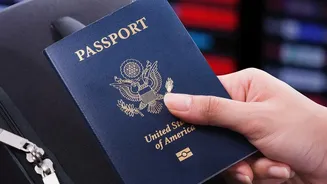





What makes a passport powerful? While visa-free travel is a key perk, a new index suggests true value lies in combining mobility with happiness. The 2026 'Happy Passports' Index does just that, and the results place Nordic nations at the top.
Redefining a Passport's Worth
For years,
the strength of a passport has been measured almost exclusively by one metric: the number of countries its holder can enter without a visa. But a new ranking from advisory firm Global Citizen Solutions challenges this notion. The 'Happy Passports Index' for 2026 broadens the definition of a passport's value by blending its travel power with the overall quality of life in its home country. This innovative approach provides a more holistic view, arguing that the best passport not only opens doors around the world but also belongs to a nation where citizens thrive. The index evaluates 50 countries based on four equally weighted pillars: mobility, wellbeing, freedom at home, and prosperity, health, and safety.
Finland and Iceland Secure the Top Spots
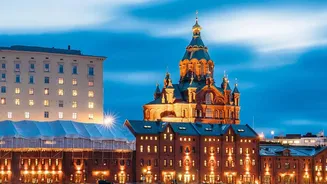
Leading the pack is Finland, which has been named the world's happiest country for nine consecutive years in the World Happiness Report. It secured the top spot on the Happy Passports Index with a score of 93.2 out of 100. Finland's success comes from high scores across the board, particularly in citizen wellbeing and mobility. Following closely is Iceland, with a score of 92.4. Interestingly, while Iceland's passport is not the most powerful in the sample for pure travel access (ranking 20th), the country scored highest for domestic freedom and is recognized as the world's most peaceful nation, showcasing that internal quality of life is a massive factor in its high ranking.
Denmark's Formula for Third Place
Denmark's passport was ranked third happiest with an impressive score of 92.1. The country stands out as the most balanced performer in the entire index. It is the only nation to place in the top four across all four of the study's pillars: wellbeing, freedom, mobility, and prosperity. This demonstrates a consistent excellence that few others can match. Danish citizens enjoy a high degree of civil liberties, a strong social safety net, and a passport that provides extensive travel freedom. This combination of internal stability and external mobility creates a powerful sense of security and opportunity, cementing its place among the global elite.
Why the Nordic Model Dominates
The overwhelming dominance of Nordic countries—with Finland, Iceland, Denmark, Norway, and Sweden all in the top six—is no coincidence. These nations have long been lauded for their high standards of living, robust social support systems, low levels of corruption, and commitment to personal freedoms. The Happy Passports Index reinforces that these internal strengths are just as crucial as a passport's travel power. While countries like Spain and Greece have passports with comparable visa-free access, they rank significantly lower on the index because of lower scores in wellbeing and prosperity, illustrating that mobility alone doesn't guarantee a 'happy' passport.
Beyond Europe: A Global Perspective
While Europe, and specifically the Nordic region, dominates the top of the list, other nations also feature prominently. New Zealand (8th) and Singapore (10th) are the only non-European countries to break into the top ten. Singapore is a fascinating case; it leads the entire 50-country sample in both mobility and the prosperity, health, and safety category, yet lands at tenth overall due to a lower score in wellbeing. Conversely, Costa Rica (13th) achieves a high ranking despite having a passport in the lower half for mobility, buoyed by its strong scores in citizen happiness and freedom. This highlights the index's core message: a passport's true power is a balance of global access and domestic contentment.