





The Search Shifts to Prospecting
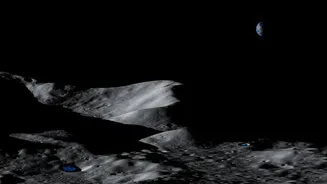
For years, orbital scans have shown us that water ice is hiding in permanently shadowed craters at the Moon's poles, areas that haven't seen sunlight in billions of years. But these glimpses from above are not enough to build a base on. The crucial questions
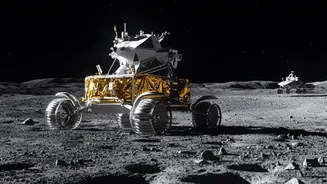
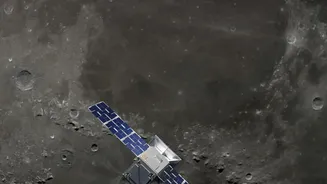
remain: How much ice is there? Is it in thick, pure sheets or mixed in with lunar soil? How deep do you have to dig to get it? Answering these requires 'ground truth'—data from the surface itself. To that end, NASA is now moving from detection to prospecting. Through its Commercial Lunar Payload Services (CLPS) initiative, the agency is paying private companies to deliver scientific instruments to the Moon, effectively hiring robotic geologists to scout the terrain. This new phase is less about discovery and more about creating a resource map for future Artemis astronauts.
A New Toolkit for Finding Ice
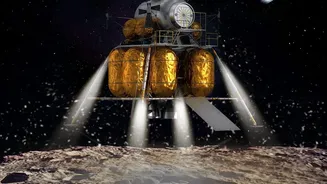
In late September 2026, NASA selected a new suite of investigations through its Payloads and Research Investigations on the Surface of the Moon (PRISM) program. One of the key payloads selected is the Depth Imager with Spectral and Color Optics, or DISCO. This instrument is specifically designed to hunt for ice in what are known as micro-cold traps—small, perpetually dark areas that could hold accessible frozen water. DISCO will provide the first direct, on-the-ground measurements of this ice, helping NASA pinpoint its location and quantity. This mission is not just about finding water; it's about assessing its practicality as a resource. It will also study the stability of the lunar soil and how it's disturbed by rocket exhaust, critical data for planning safe landing and surface operations for a future moon base.
Beyond the Ice Hunt
While finding water is a top priority, the latest PRISM selections reveal a broader strategy for long-term survival on the Moon. Two other payloads were chosen alongside DISCO. One is the Lunar Environment Monitoring Station–South Pole (LEMS-SP), an autonomous station that will monitor hazards like micrometeoroid impacts and seismic activity. The other, named GIMLI (Geophysical Instruments for Marius Lunar pit Investigation), will explore a pit to see if it leads to a subterranean lava tube. Such a cave could offer future astronauts natural protection from the Moon's extreme temperatures and dangerous radiation. Together, these three investigations aim to build what NASA scientist Nicky Fox calls an 'interplanetary survival guide,' gathering essential data on resources, shelters, and dangers before humans arrive for long-duration stays.
Why Lunar Ice is a Game-Changer
The intense focus on water ice is because it's the most valuable resource in space. Hauling water from Earth is prohibitively expensive, so being able to 'live off the land' is essential for a sustainable lunar presence. Beyond providing drinking water for astronauts, water (H2O) can be split into its component elements: hydrogen and oxygen. This provides breathable air. Even more significantly, hydrogen and oxygen are the primary components of rocket fuel. Access to large quantities of lunar ice could turn the Moon into a celestial refueling station, allowing spacecraft to launch from Earth with less propellant and top up at the Moon before venturing deeper into the solar system, such as on a mission to Mars. This transforms the Moon from a mere destination into a critical piece of infrastructure for exploring the cosmos.
The Artemis Connection
These scientific missions are not happening in a vacuum; they are foundational to NASA's Artemis program, which aims to establish that long-term human presence on the Moon. While missions like the now-cancelled VIPER rover were once central to the ice-hunting plan, the CLPS program allows for a more diversified and rapid approach, sending multiple smaller, specialized payloads on commercial landers. The data gathered by DISCO and other instruments will directly inform where NASA chooses to build its 'Moon Base' and what technologies astronauts will need to survive and thrive there. By verifying the existence and accessibility of these ice deposits, these small robotic prospectors are paving the way for the next human boots on the lunar surface, scheduled for Artemis IV in 2028.