




Understanding the Smoke Point
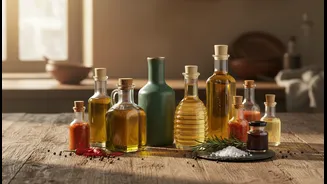
The single most important factor when choosing an oil for a specific task is its smoke point. This is the temperature at which an oil stops shimmering and starts to smoke. When oil smokes, it's not just a sign that your pan is too hot; it's a chemical
breakdown. The fats begin to degrade, releasing compounds that can give your food a bitter, burnt taste. More importantly, this process can destroy beneficial nutrients in the oil and create harmful free radicals, which are compounds linked to cell damage and inflammation when consumed. Therefore, matching the oil's smoke point to your cooking temperature is crucial for both taste and health. An oil that's perfect for a salad dressing may be a poor choice for deep-frying.
High-Heat Heroes
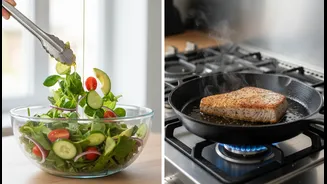
For high-temperature cooking methods like searing, deep-frying, or grilling, you need an oil that can take the heat without breaking down. These are typically refined oils, which have been processed to remove impurities, giving them a higher smoke point. Refined avocado oil is a champion here, with a smoke point soaring to around 271°C. Its neutral flavour makes it incredibly versatile. Other excellent choices for high heat include refined peanut oil, canola oil, and ghee (clarified butter), all of which have smoke points well above 200°C. These oils ensure that you can get a good sear on a steak or achieve crispy fried chicken without filling your kitchen with smoke or creating off-flavours.
Masters of Medium Heat
Sautéing, baking, and gentle stir-frying happen at medium temperatures, typically not exceeding 190°C. This opens up a wider range of oil options, including some less-refined varieties that offer more flavour and nutritional benefits. Many believe extra virgin olive oil can't be used for cooking, but its smoke point is generally around 190-207°C, making it perfectly suitable for most stovetop cooking. Similarly, virgin coconut oil and sesame oil are great for sautéing, lending their distinct flavours to the dish. Using these oils within their temperature limits preserves their unique characteristics and health benefits, such as the heart-healthy fats in olive oil.
Finishing Oils for Flavour
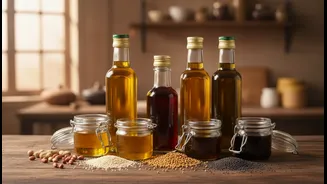
Some oils are not meant for heat at all. These are 'finishing oils', prized for their intense flavours and delicate nutrients which would be destroyed by cooking. Unrefined oils like extra virgin olive oil, walnut oil, flaxseed oil, and toasted sesame oil fall into this category. Their lower smoke points and rich array of compounds make them susceptible to heat damage. Instead of cooking with them, use them to add a final flourish to your dishes. Drizzle a good quality extra virgin olive oil over a finished pasta, use walnut oil in a salad vinaigrette, or add a few drops of toasted sesame oil to a noodle soup just before serving. This way, you get all of their flavour and nutritional upside without any of the risks of overheating.
When Good Oils Go Bad
Using the wrong oil is one issue, but reusing oil can be even more problematic. Each time oil is heated, its smoke point lowers, meaning it will start to break down at a lower temperature with every subsequent use. Repeatedly heating oil not only destroys its remaining nutrients but also increases the formation of harmful compounds, including trans fats and other toxins linked to numerous health issues like heart disease and inflammation. If your oil smells off, looks dark and murky, or foams when heated, it's time to discard it. Your best bet is to use fresh oil whenever possible, treating it as a key ingredient that's just as important as the food you're cooking in it.